
Thorn: Living and Working Amid Eight Centuries of European Court Culture
— where the world of noble canonesses meets Studio Myr —
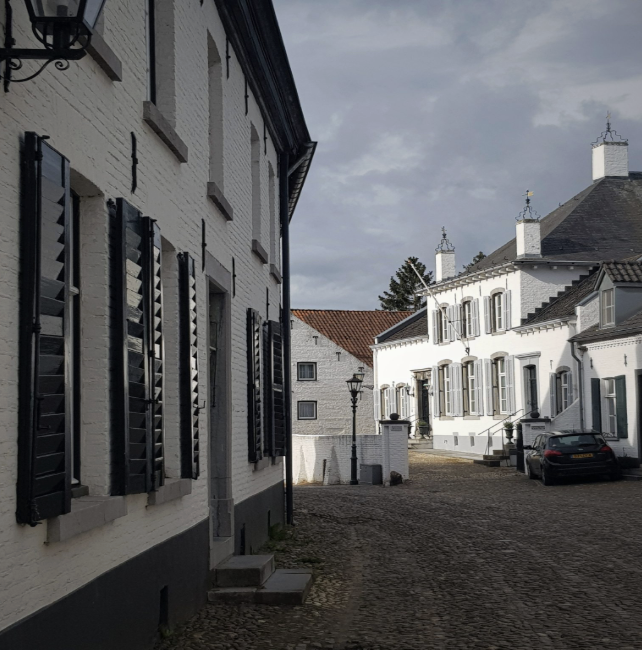
Huize De Kraek, a former canoness’s residence, seen from Studio Myr
My connection with Thorn began in childhood. I lived here briefly towards the end of primary school, and even then the town made such a deep impression on me that, years later, I made a conscious decision to return.
I already knew this eighteenth-century house from that time. Being able to make it my home filled me with joy. From the very beginning, it felt like the right place for me—a house where I truly belonged.
I have now lived here for more than forty years. It was from this house that I trained as a fashion designer, learned the craft of knitting and, later, founded Studio Myr. In its original marble-floored entrance hall, I created my own boutique.
To me, Thorn is far more than the place where I live and work. Its historic houses, cobbled streets, Abbey Church and the traces of the women who lived here for centuries are all part of my everyday surroundings. Over time, I have become increasingly curious about the history behind these familiar places.
Who were the noble canonesses who lived here? What was their world like? And what remains of it today?
In this story, I invite you to discover the Thorn I have known for so long—not only the picturesque White Town visitors see today, but a place where the past still feels remarkably close.
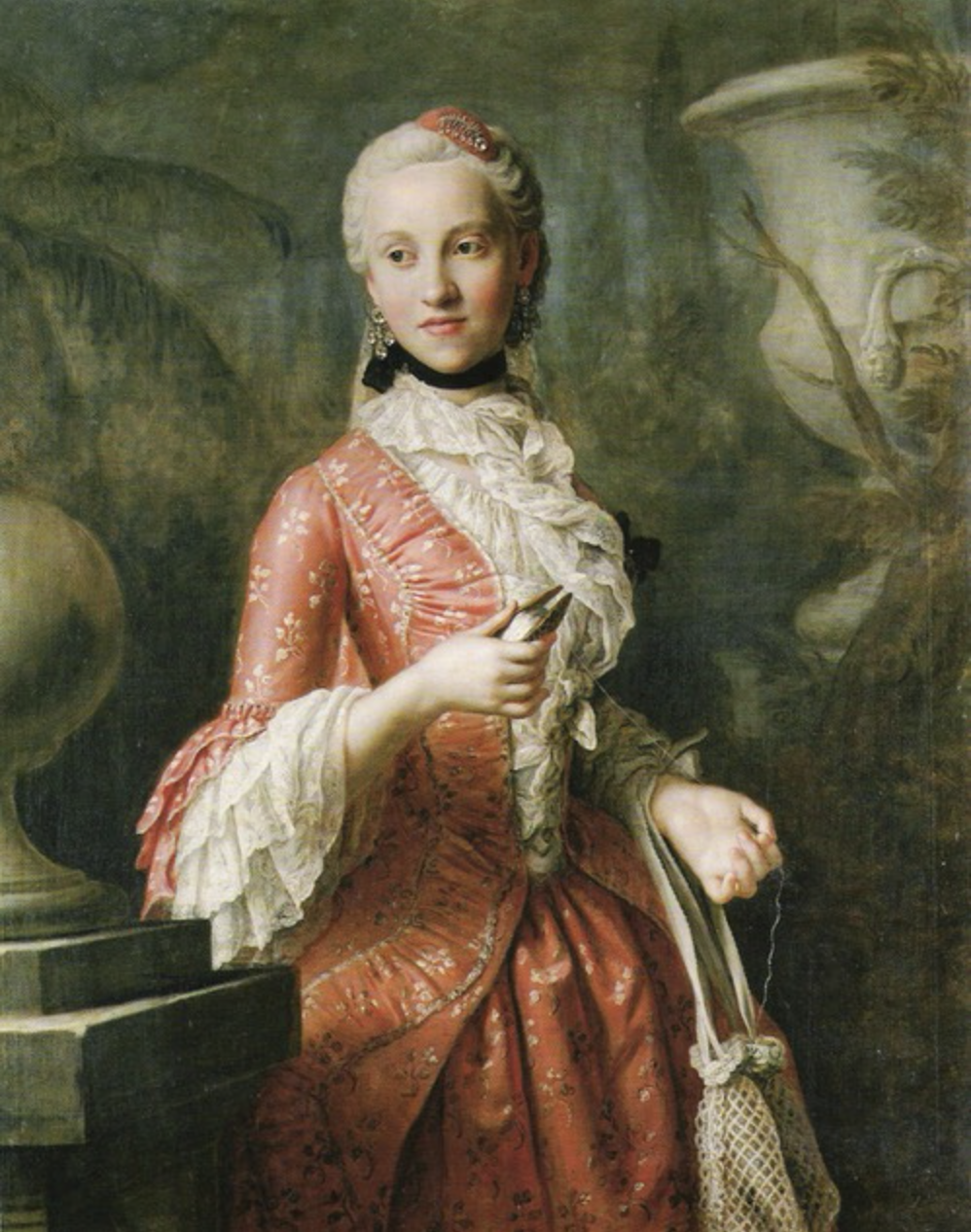
Cunegonda von Saksen Anhalt — the last Princess-Abbess of Thorn
In Thorn, history is never far away. It has also shaped the way I see my own work. Colour, femininity, refinement and craftsmanship have defined Thorn through the centuries, and they are equally important in my designs. Not because I consciously try to translate the past, but because, after so many years, these surroundings have become part of who I am and how I work.
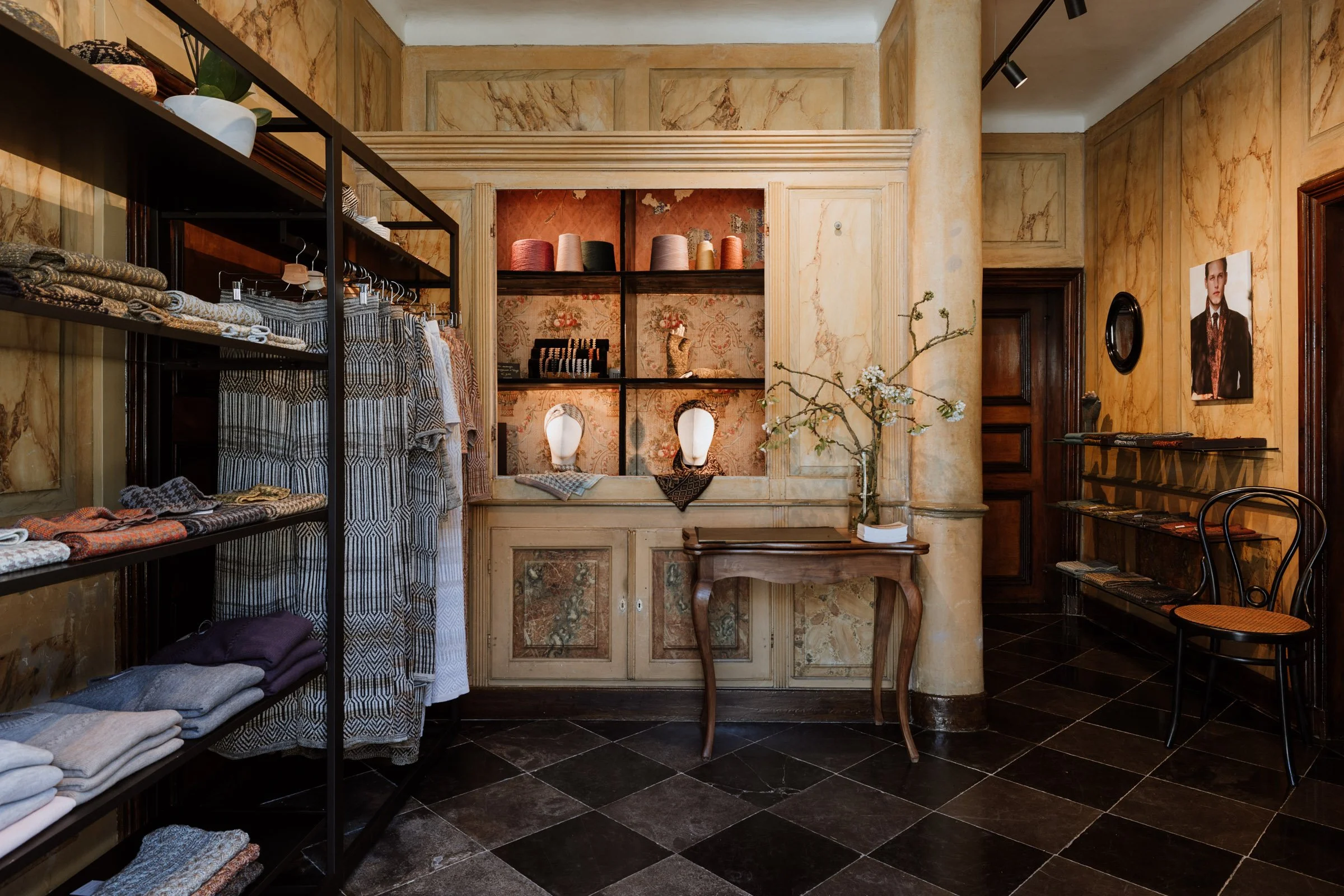
The boutique in the marble-floored entrance hall of my eighteenth-century home in the heart of Thorn
What makes Thorn so special?
Thorn’s history began long before there was an abbey or even a town. People lived here thousands of years ago. They travelled through the landscape, built their homes and left behind objects that now offer glimpses of their daily lives—from the Stone Age and Bronze Age to the Iron Age and the arrival of the Romans.
The significance of this distant past became vividly clear in 2020, when a hoard of Celtic coins was discovered in a field near Thorn. It included bronze coins, silver “rainbow cups” and gold staters. These precious coins must once have been deliberately left or concealed there. They reveal that the people who lived here before the beginning of the Common Era were far from isolated: they traded and maintained links with regions well beyond Thorn.
A selection of prehistoric and Iron Age objects and coins can now be seen at Museum Thorn, bringing a world hidden beneath the town’s soil for thousands of years briefly back within reach.
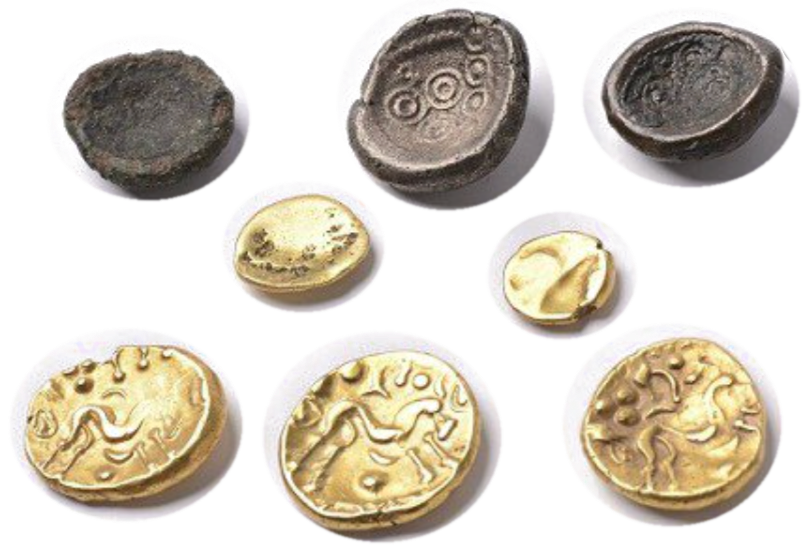
Organic, handcrafted and each one unique: the maker’s hand is still visible in these Celtic coins, like tiny pieces of jewellery from the distant past.
For me, this long history is one of Thorn’s most fascinating qualities. Every generation has left something behind: objects, buildings, gardens, music, paintings and stories. Its history is not a series of closed chapters, but a collection of layers that remain present in the landscape and in everyday life.
From abbey to European court culture
Thorn’s remarkable story took shape at the end of the tenth century, when Count Ansfried and his wife Hilsondis founded a religious community here. Over the centuries, the community gradually changed. Thorn developed into a secular collegiate abbey, where women from Europe’s highest-ranking noble families came together.
These canonesses did not live as nuns secluded behind convent walls. Most did not take perpetual vows and retained their personal property. They lived around the abbey in spacious houses of their own, with private households and domestic staff. They received relatives and guests, were free to travel, and brought the customs, fashions and refinement of Europe’s royal and aristocratic courts to Thorn. A woman who wished to marry could leave the chapter.
This exceptional degree of freedom was reserved for a very small group of women. In the eighteenth century, anyone wishing to enter the chapter had to prove that all sixteen of her great-great-grandparents belonged to the high nobility of the Holy Roman Empire. And so, in the heart of Limburg, an international circle of princesses and countesses lived whose family ties and connections extended across Europe.
The chapter was headed by the Princess-Abbess. She not only led its religious life but also governed the small, independent territory known as the Land of Thorn. The principality had its own courts, market and toll rights and, during certain periods, even minted its own coins. For centuries, Thorn was therefore governed by highly educated and accomplished women.
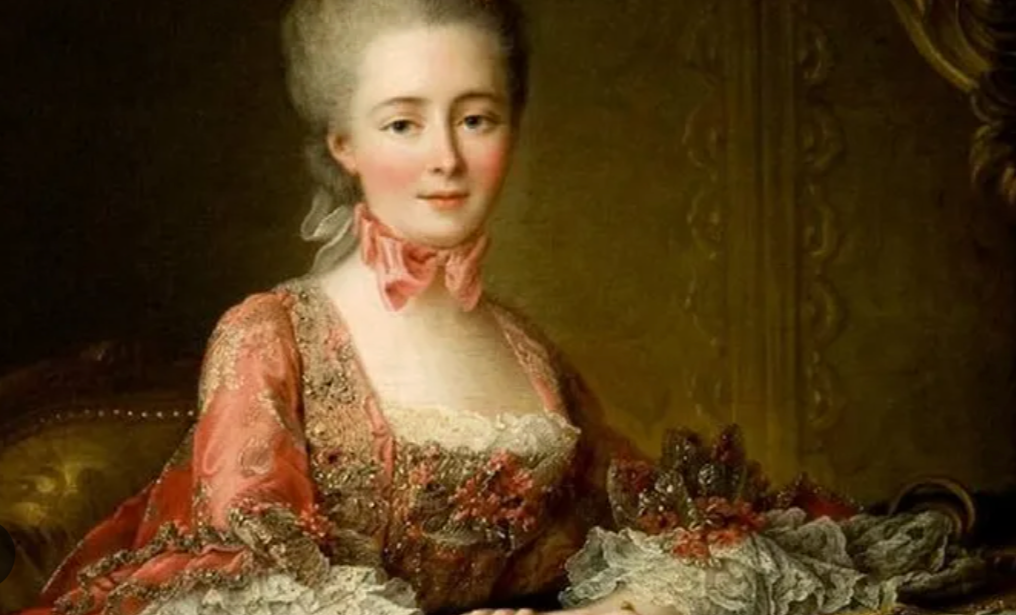
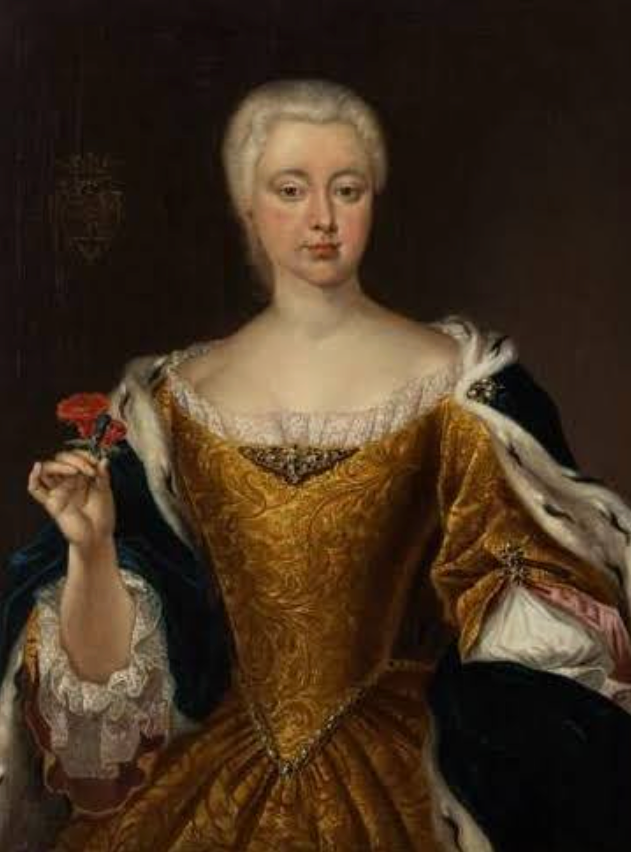
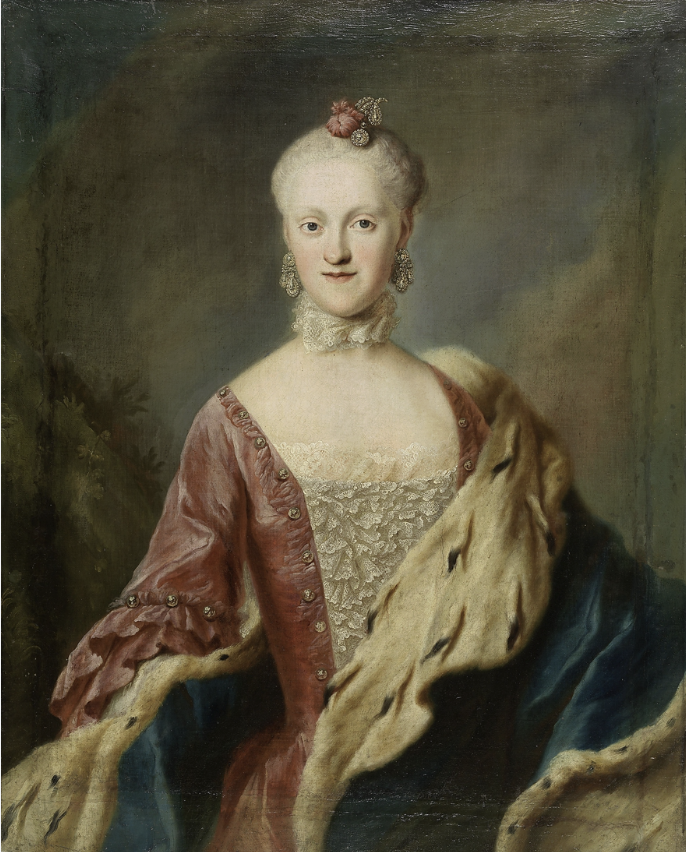
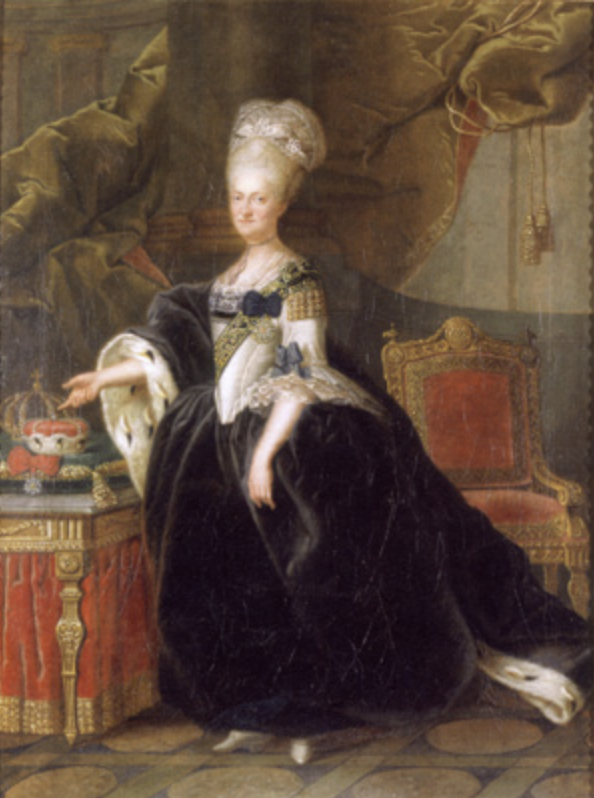

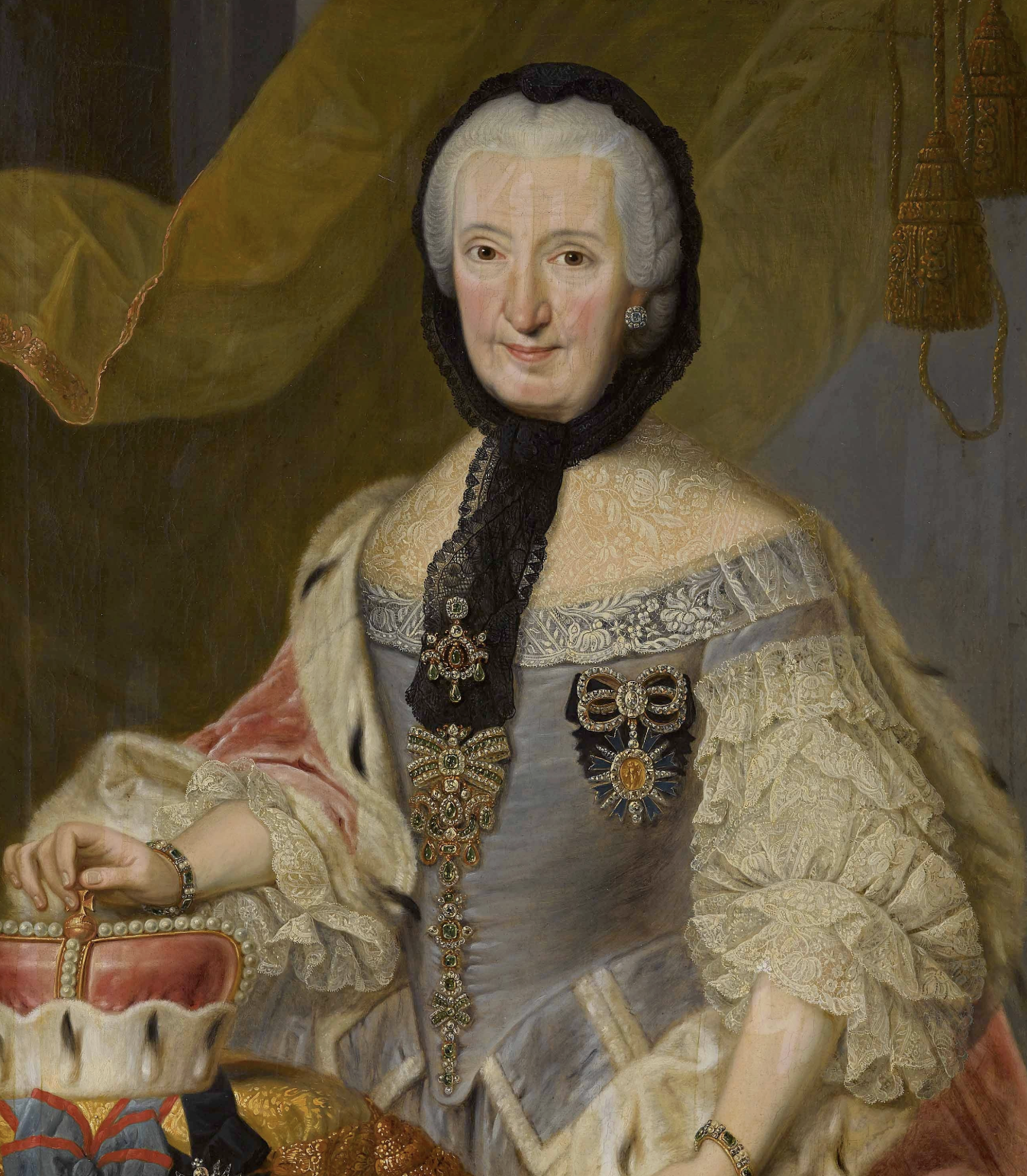
The women who gave Thorn its distinctive character
Yet it was not only their political position that made Thorn so exceptional. These women had grown up at or near Europe’s leading courts. They spoke French, studied singing and music, travelled, corresponded with relatives in different countries and followed the latest developments in fashion, art and interior design.
Through them, Thorn was directly connected to the sophisticated world of eighteenth-century Europe.
How did the canonesses shape Thorn?
The canonesses’ daily lives were shaped by their birth and by the refined social codes of their rank. The way a person dressed, furnished a home, laid a table, welcomed guests or conducted a conversation expressed both identity and social standing.
Fashion played an important part. The canonesses wore sumptuous gowns of silk and lace and followed the latest styles from Paris and other European cities. Through their travels, correspondence and family networks, fabrics, accessories, furniture and new ideas found their way to the small town of Thorn.
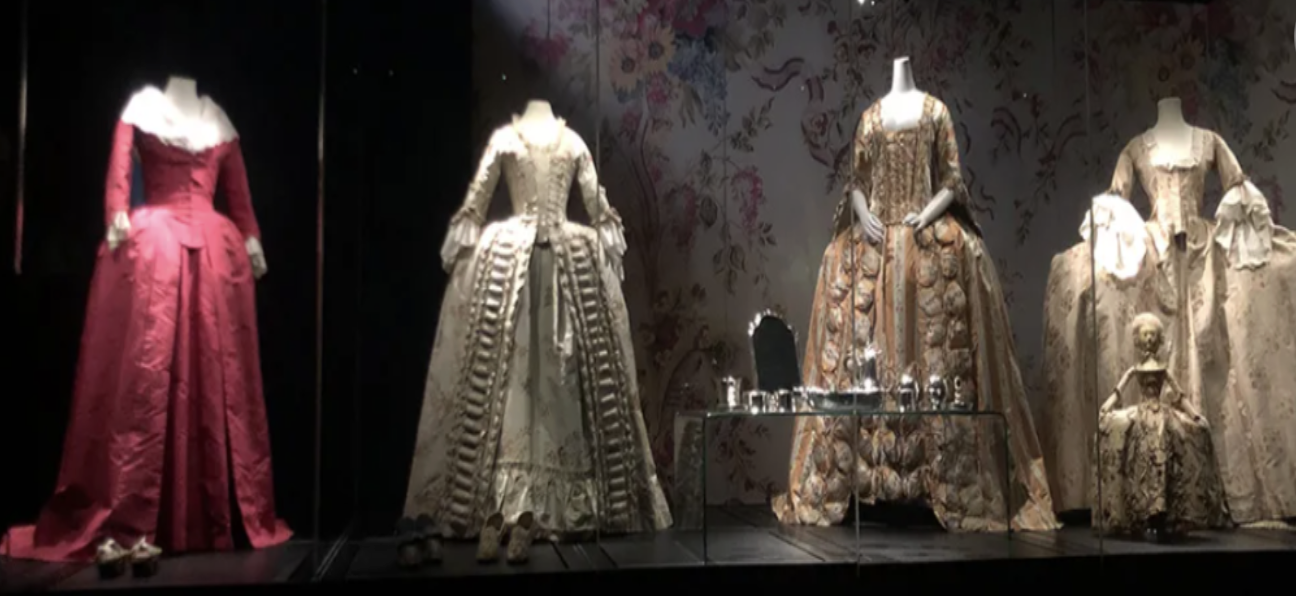
Eighteenth-century gowns reveal how clothing in the world of Thorn’s noble canonesses was far more than decoration. Luxurious fabrics, exquisite details and the latest European fashions expressed heritage, status and personal taste. © Limburgs Museum
Music and art were equally central to their education. They took singing and music lessons, hosted dinners and dances and maintained ties with the cultural world of the European courts. In this setting, beauty was not merely decoration; it was woven into everyday life.
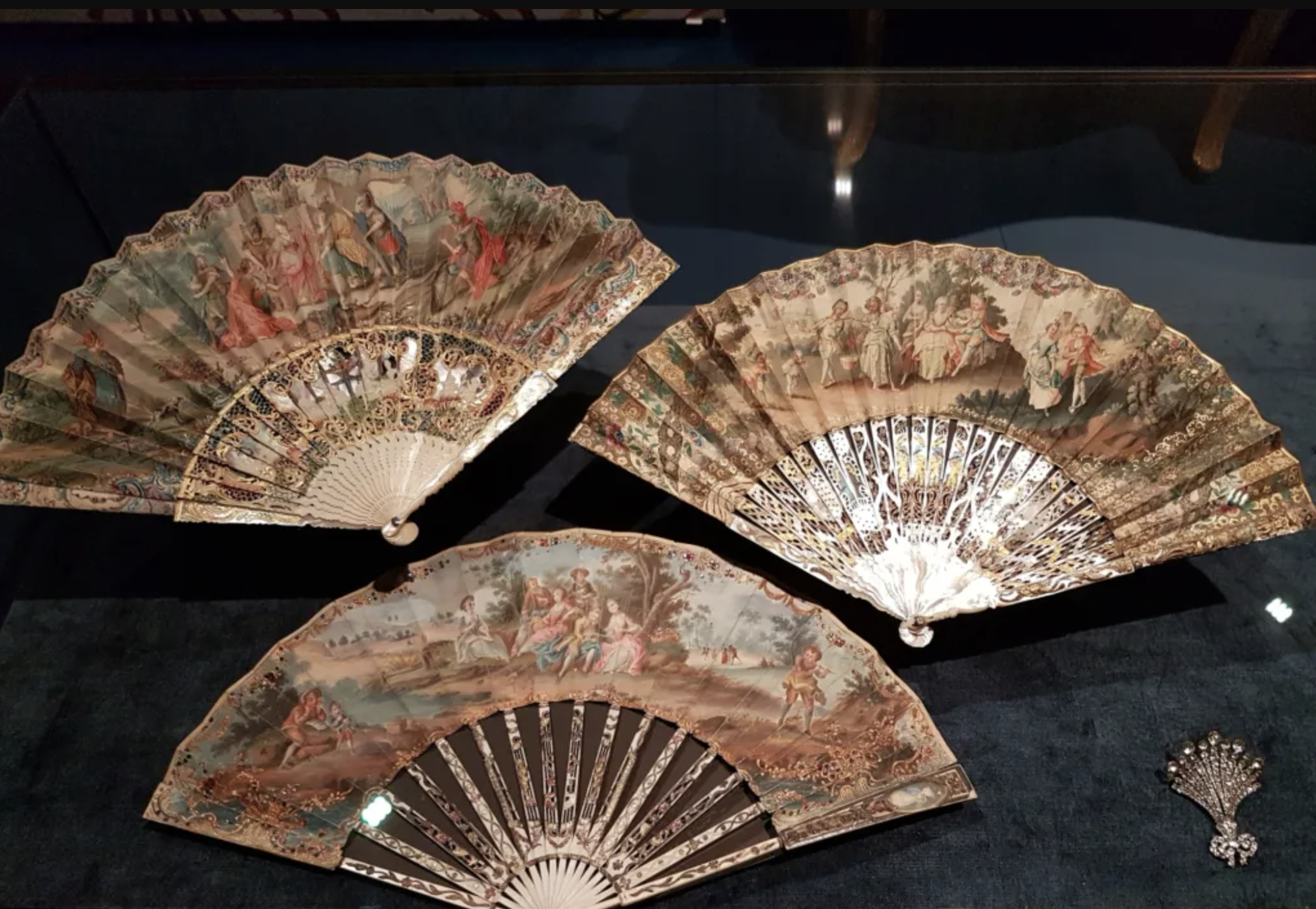
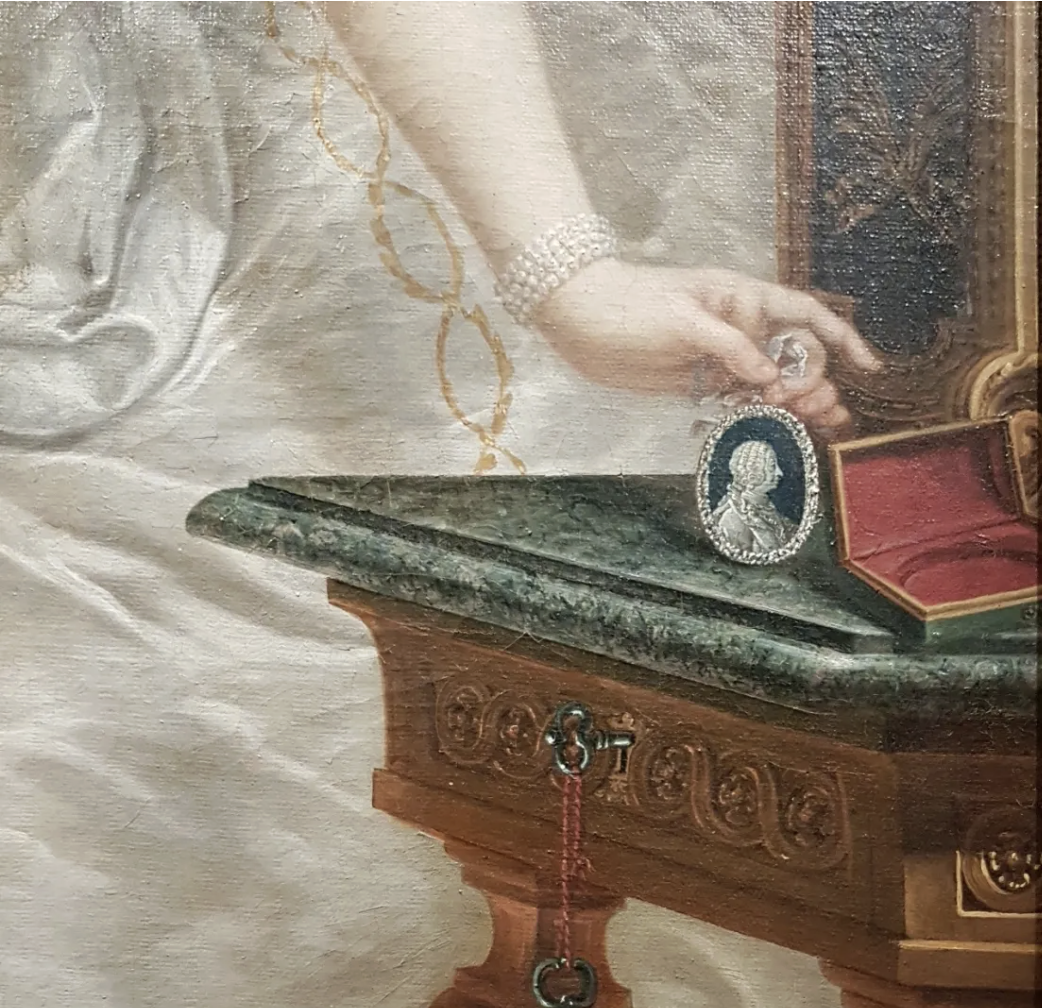
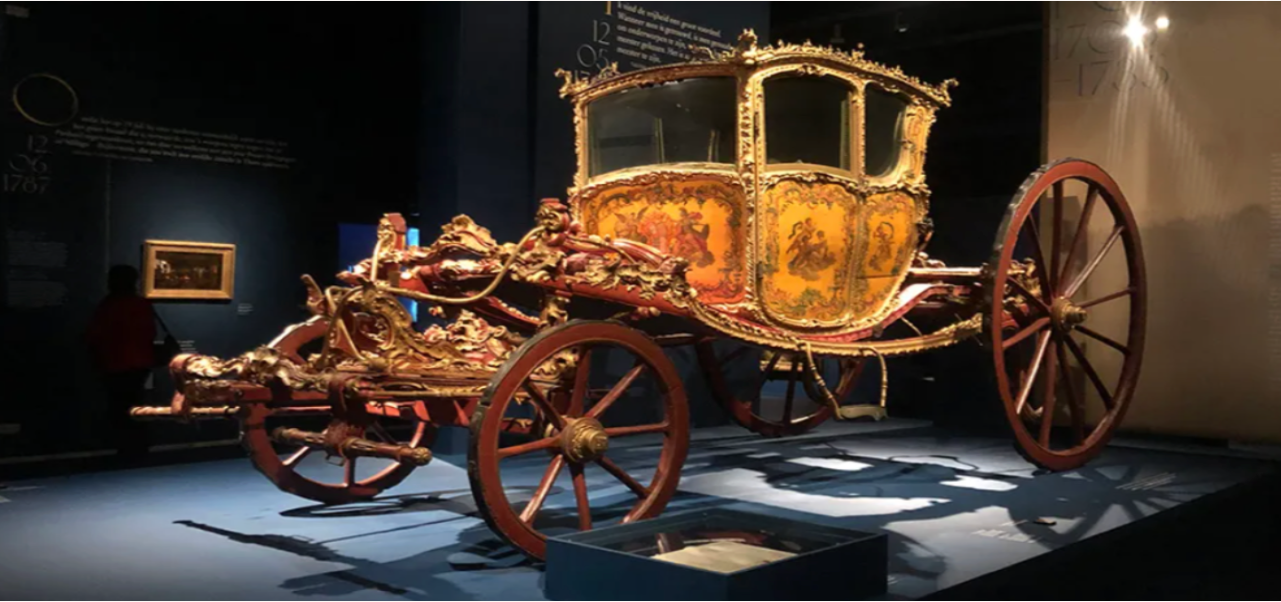
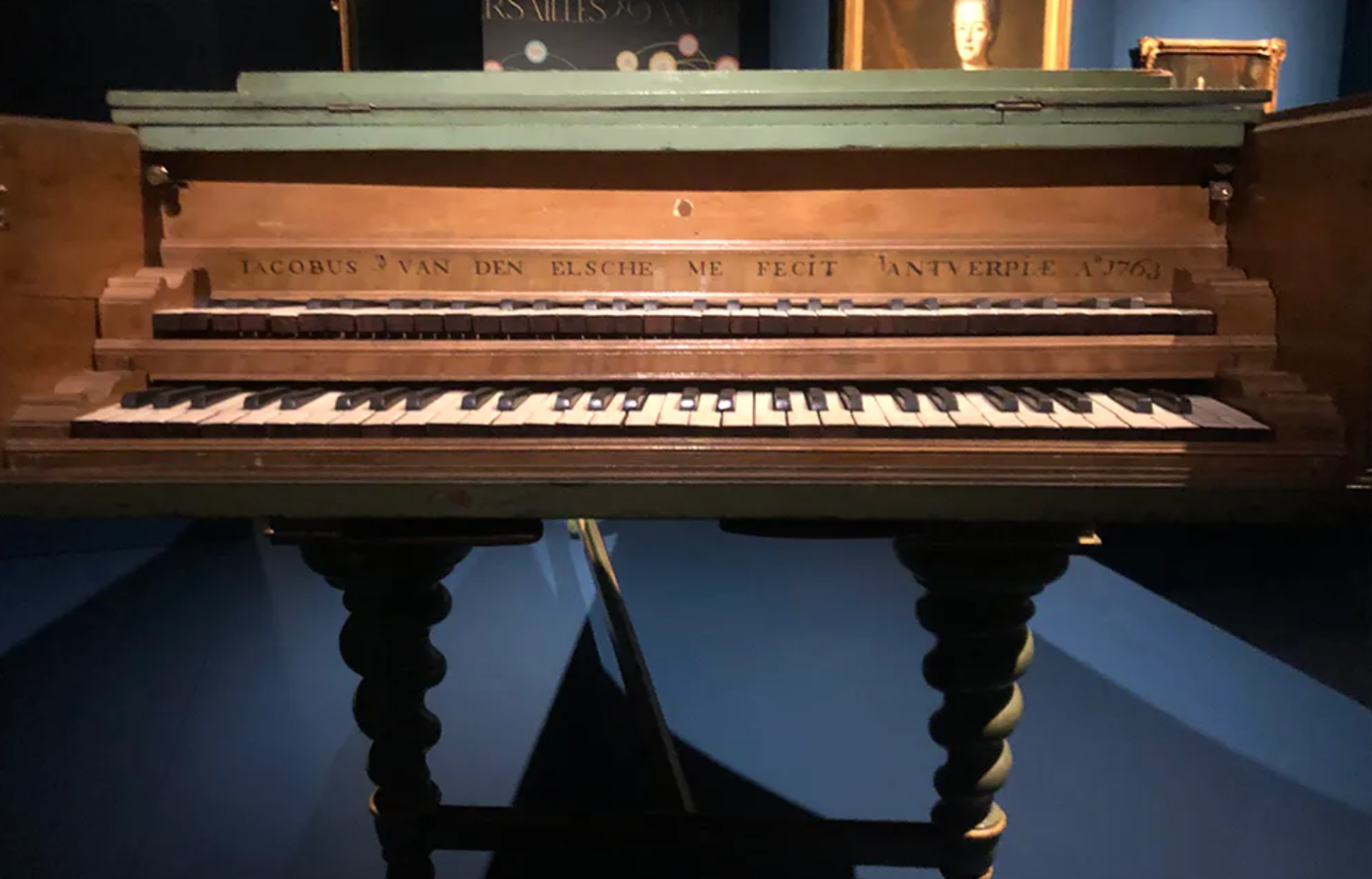
This does not mean that their lives consisted solely of freedom and refinement. Their futures were strongly influenced by family interests, dynastic marriage strategies and strict expectations. Yet within those constraints, they created a world of their own in which culture, presentation and personal taste played a major role.
That world inevitably left its mark on Thorn. The canonesses employed architects, master builders, domestic staff and craftspeople. They altered their residences, created gardens and reception rooms and introduced international customs to a small community by the Meuse.
Architecture that holds stories
Anyone walking through Thorn today can still see how the former abbey chapter shaped the town. The stately houses surrounding the Abbey Church were once the private residences of the canonesses. Behind their façades and walls lie courtyards and secluded gardens that are not always visible from the street.
The area now known as the Wijngaard—literally “vineyard”—was once genuinely home to gardens and vines. Some houses could be reached from the stream by small bridges. Formal entrances, private rooms and walled gardens formed a carefully ordered world in which public life and seclusion existed side by side.
© Limburgs Museum
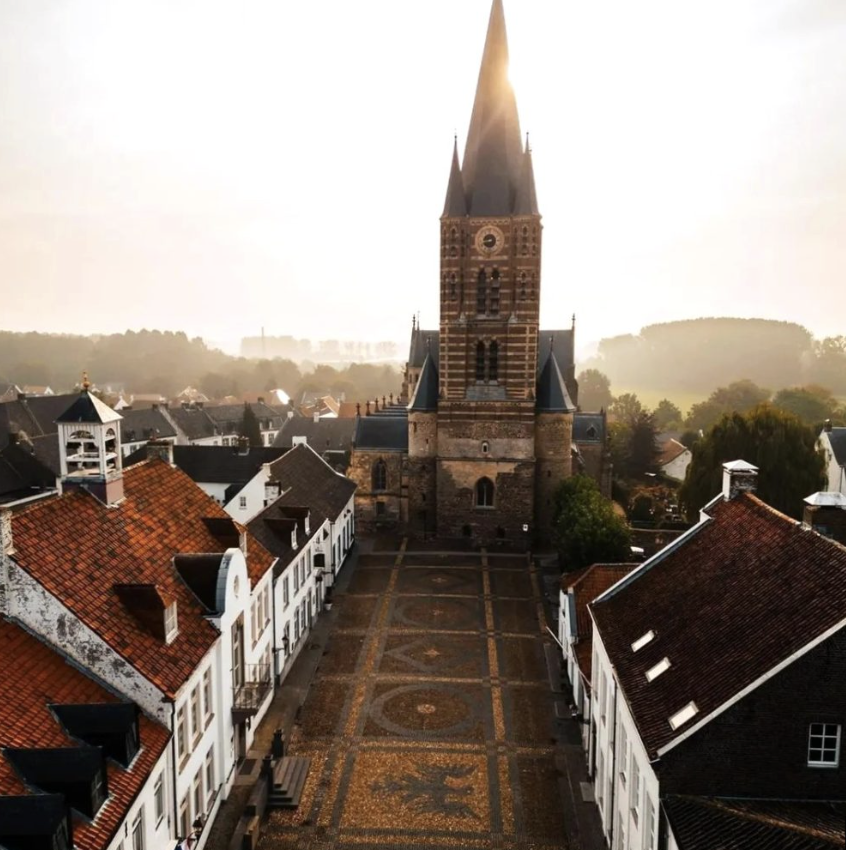
he present-day Wijngaard, with the Abbey Church in the background
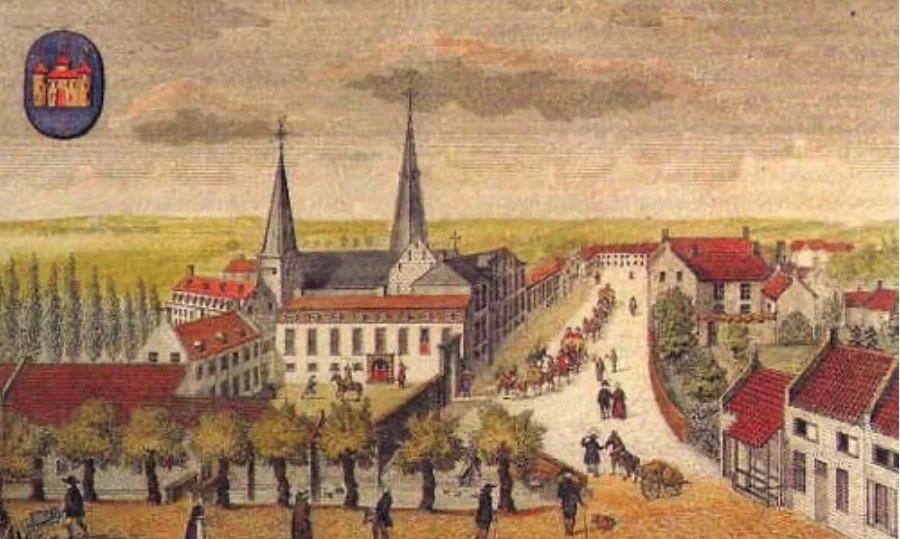
The most impressive building was the palace of the Princess-Abbess. Thorn’s last Princess-Abbess, Maria Cunegonda of Saxony, spent years enlarging and modernising the existing palace in the late eighteenth century. She was the daughter of the Elector of Saxony and King of Poland, and her family connected her to the royal houses of Spain and France. Her residence in Thorn had to reflect her exceptionally high rank.
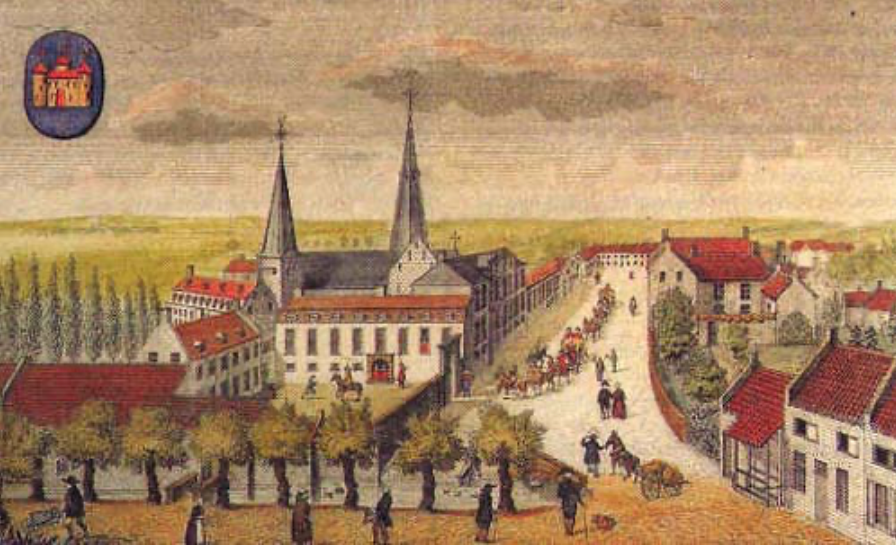
View of the palace before 1795. As you walk through Thorn, you will still recognise many of the buildings © Museum Thorn
The arrival of French revolutionary troops in 1795 brought the principality of Thorn to an abrupt end. The canonesses fled, taking whatever they could carry. Their possessions were confiscated, and a centuries-old world of female power, international connections and court culture collapsed in a remarkably short time.
The Princess-Abbess’s palace did not escape the upheaval. It had been modernised and embellished only a year earlier; now it was left to the local population. Farmers and craftspeople dismantled the building and reused its bricks, woodwork and parts of its interior in their own homes. The spacious residences around the abbey were divided into smaller dwellings for several families.
The consequences for Thorn were profound. With the canonesses, the town lost not only wealth and possessions but also the patrons and customers who had supported local craftspeople, shopkeepers and service providers. Prosperity gave way to poverty, the effects of which were felt well into the twentieth century. The international court culture, art, music and refined way of life that had characterised the town for centuries disappeared almost overnight. The collegiate abbey would never return.
Yet not everything was erased. The Abbey Church, several canonesses’ houses, old garden walls and a number of outbuildings survived. In the twenty-first century, many of these houses and buildings have been carefully restored. The world of the chapter may have vanished, but its presence can still be felt throughout Thorn—in the streets, walls and houses that have outlived it.
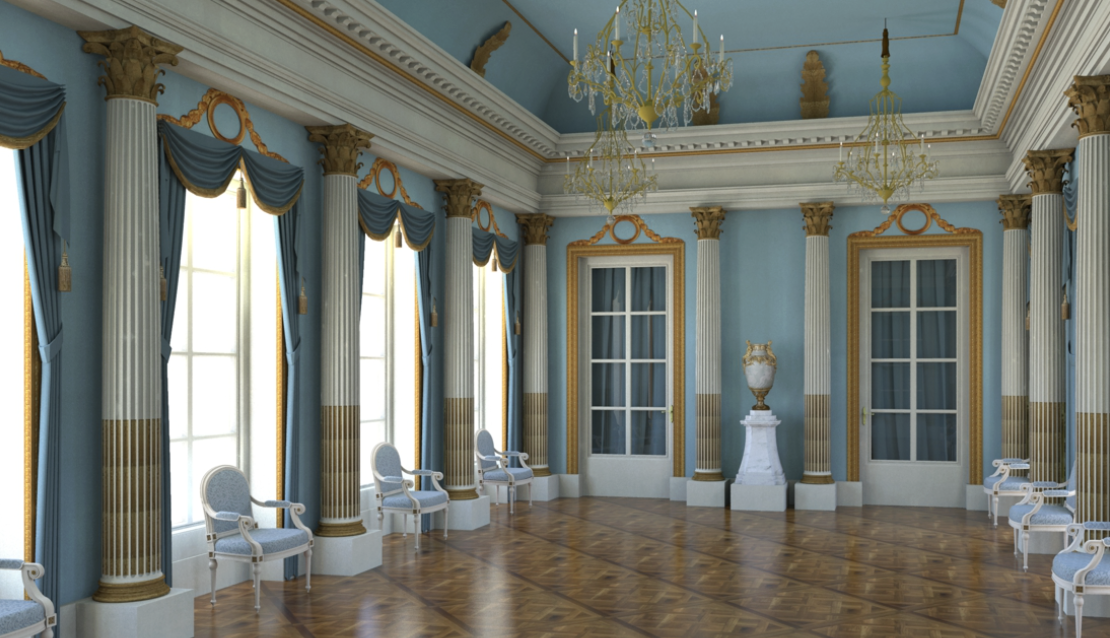
Reconstruction of a room in the palace of Thorn’s Princess-Abbess © Museum Thorn
Precisely because so much of the palace has disappeared, Thorn rewards attentive looking. A gateway, an old wall, an unusual proportion in a façade or a sudden glimpse into a garden may reveal something of a world that is no longer fully visible.
Why are the houses in Thorn white?
After the canonesses left, many of the large residences stood empty. Local people moved into them but lacked the means to maintain them in their original condition. French taxes were partly calculated according to the size of a building’s windows and doors, as these were seen as signs of prosperity. Openings were therefore made smaller or bricked up completely.
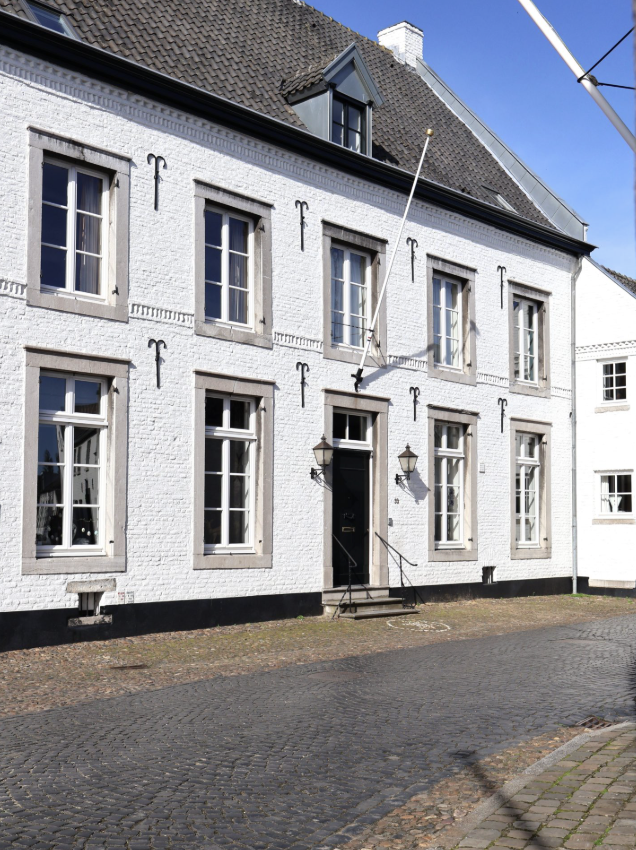
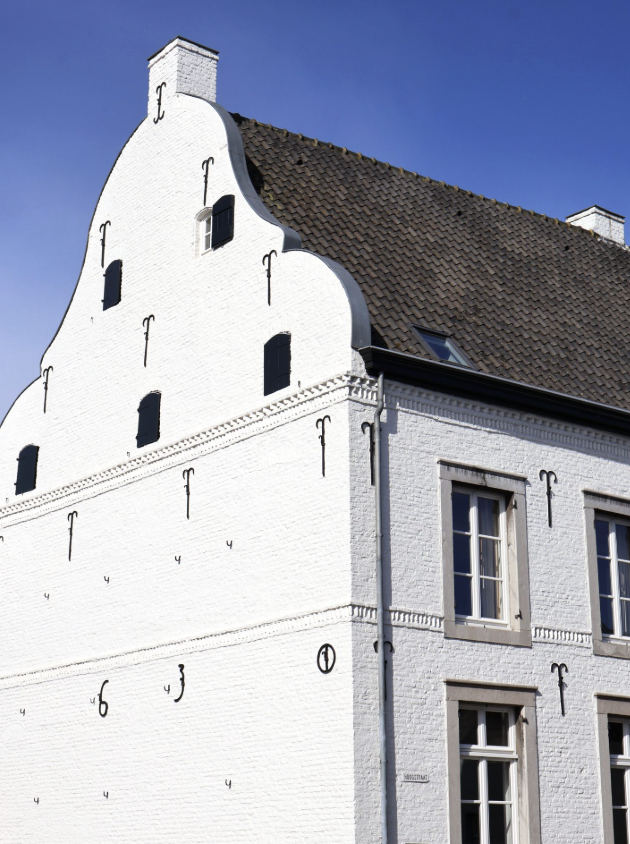
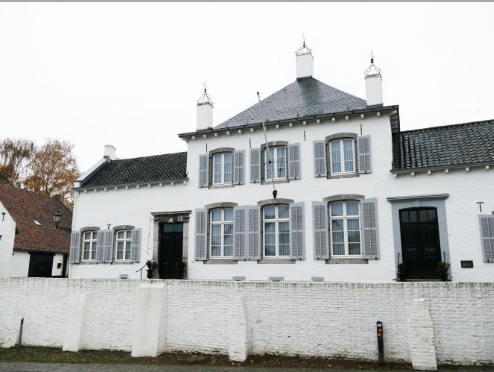
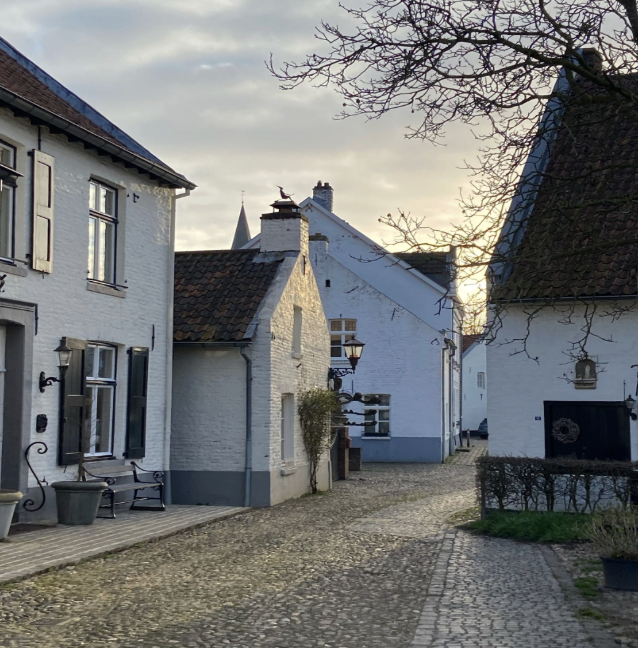
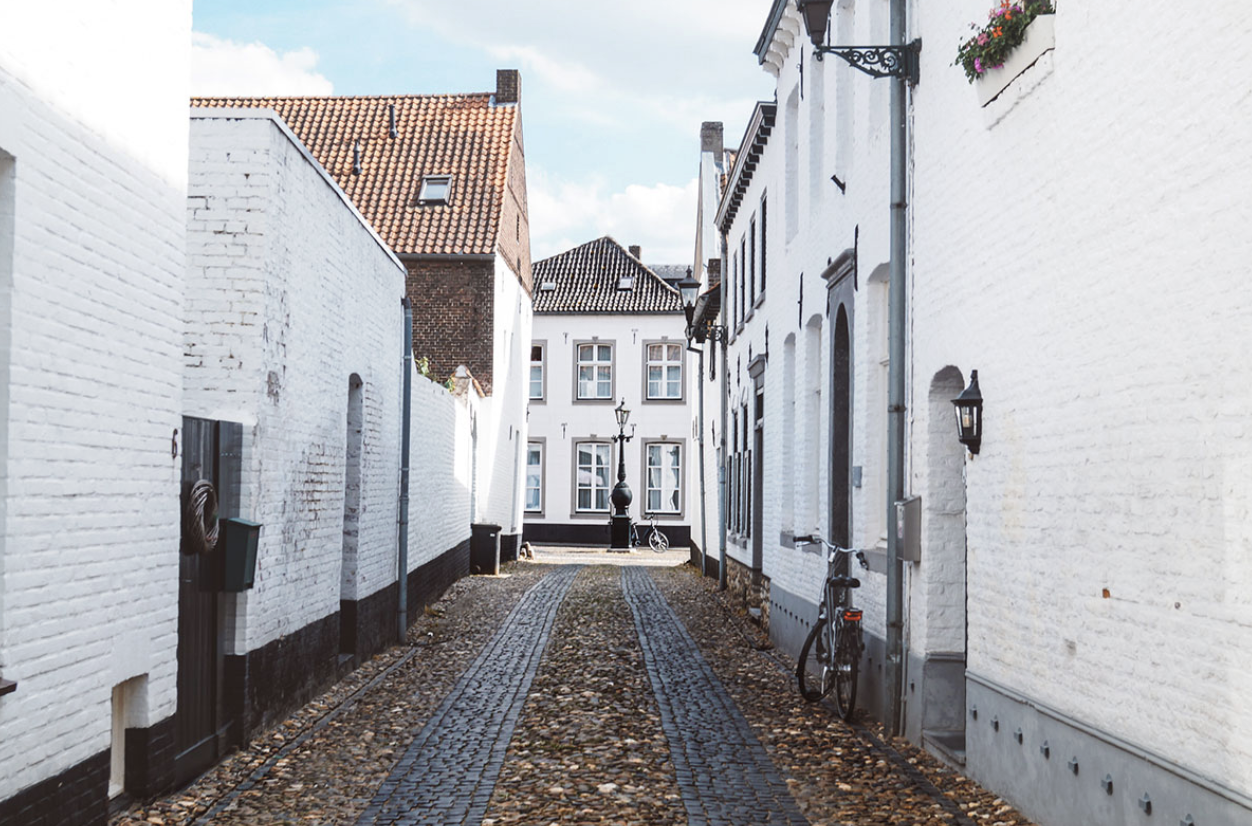
Several of the princesses’ townhouses have survived and been beautifully restored
The contrast between the old and new brickwork was then concealed beneath white limewash. Thorn’s white façades, which give the town its harmonious appearance today, therefore also tell a story of loss, adaptation and poverty.
What is now seen as Thorn’s signature feature emerged from a rupture between two worlds. This gives the beauty of the White Town a deeper meaning: behind its luminous façades lie both visible and hidden traces of change.
Music in Thorn
Music played an important role in the lives of the canonesses. They studied music and singing, and services, receptions, dinners and celebrations were accompanied by music and dancing. When they were forced to leave Thorn in 1795, much of this sophisticated musical culture disappeared from the town as well.
Music still holds a special place in the Abbey Church. Its magnificent interior and beautiful acoustics lend concerts an atmosphere that feels entirely at home in Thorn.
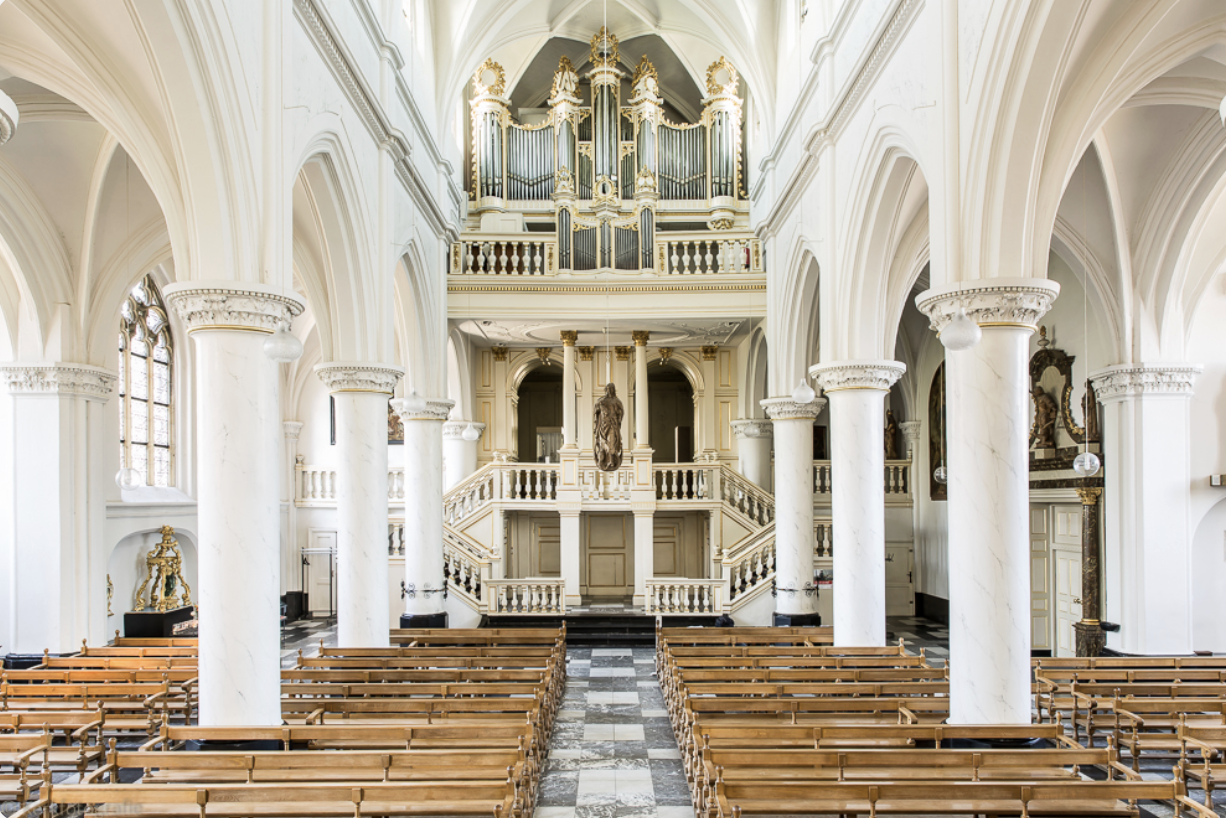
Interior of the Abbey Church © Stichting Abdijkerk
Why does Thorn attract artists?
Over the years, Thorn’s distinctive architecture, light, stillness and sense of seclusion have attracted many artists.
Frans van den Berg lived and worked in Thorn for part of his life. In his watercolours and oil paintings, he returned to the town again and again: its white houses, quiet streets, glimpsed views and familiar perspectives. Sometimes he painted a small detail, at other times a broader vista, revealing a different side of the place he loved in each work.
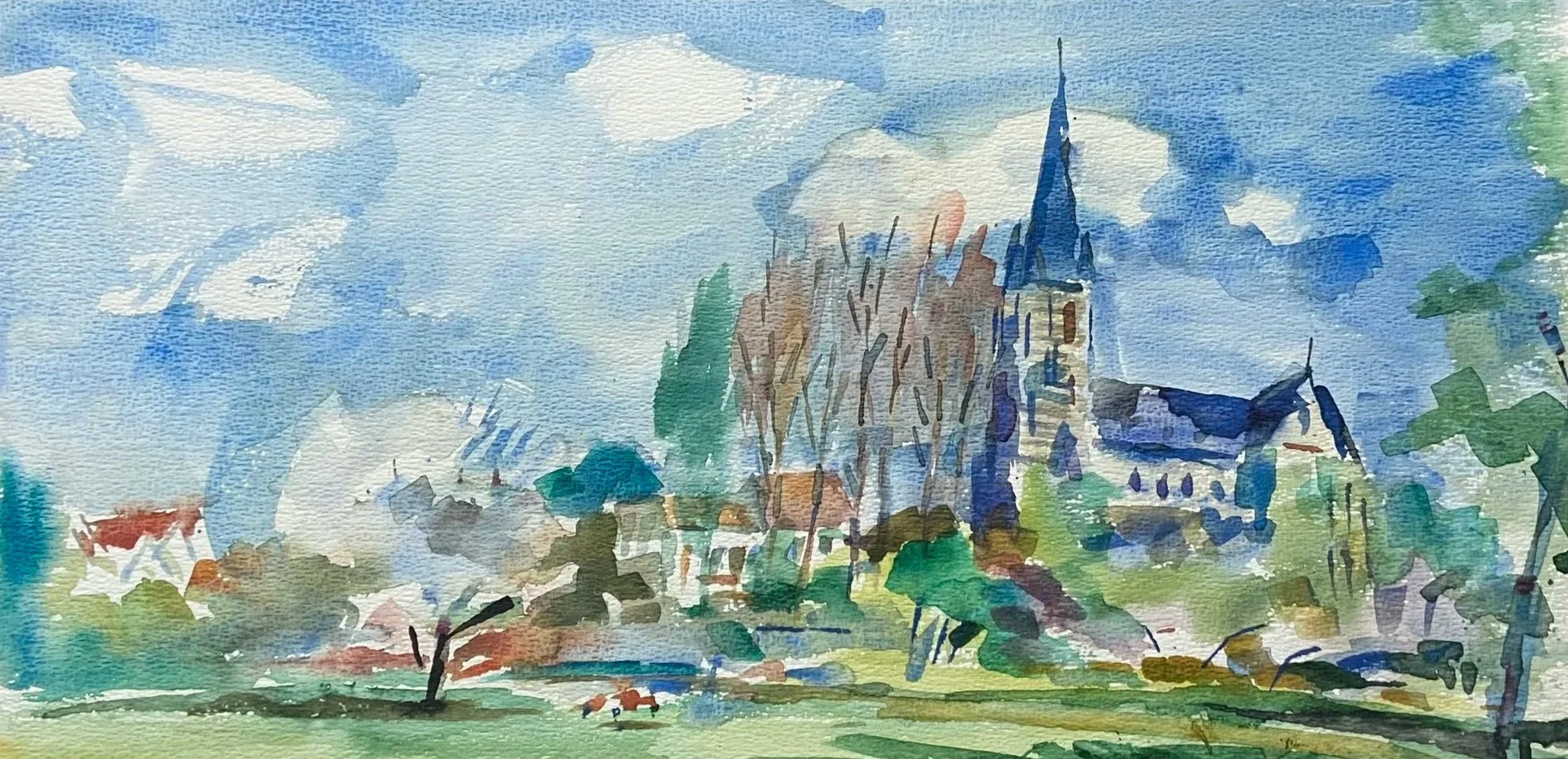
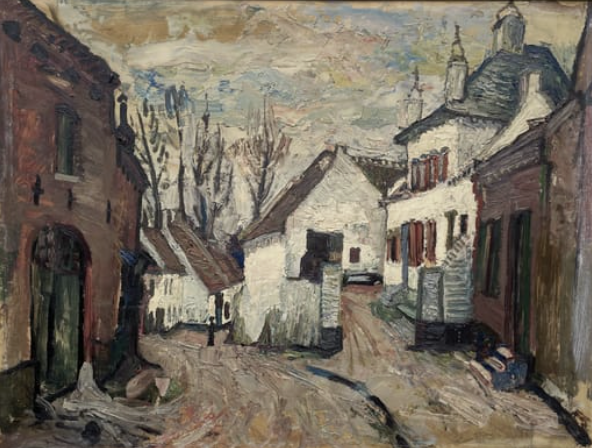
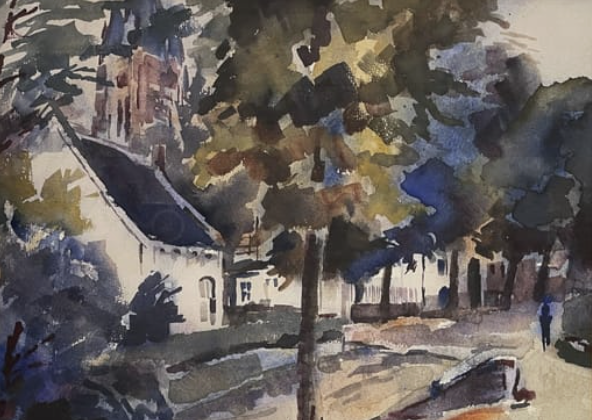
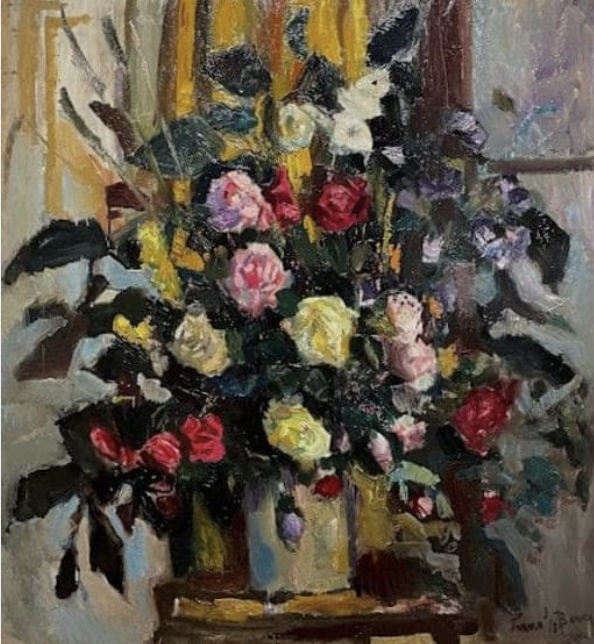
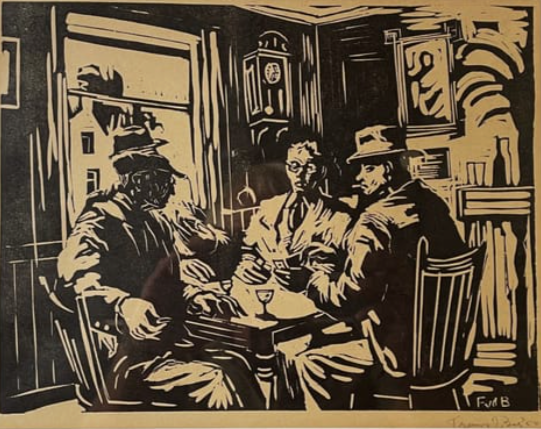
Frans van de Berg — selected works © Stichting Frans van de Berg
Harrie van de Boel was born in Thorn in 1928. His paintings are known for their powerful colours and dynamic forms, from which people, animals and landscapes emerge. Visual artists Desirée Tonnaer and Guido Geelen were also born in Thorn.
Artists from elsewhere also came to capture the town or draw inspiration from it. Museum Thorn names Piet Wiegman, Joep Nicolas and Karel Appel among them. During the Second World War, Appel painted a street beside the collegiate church. In the 1980s, poet Hans Bouma wrote poems inspired by Thorn.
“Thorn, where the light rests completely in your hand”
An excerpt from Hans Bouma’s poem about Thorn, published in Dromen over Limburg (Dreaming of Limburg)
Each of these artists looked at the same place in a different way. They did not simply reproduce Thorn, but translated what they saw into their own visual language.
I recognise that impulse. My collections do not depict Thorn literally either. Yet the light on the old floors, the proportions of the houses, the white façades, the green of secluded gardens and the colours of weathered materials all live on in my visual memory.
Those same qualities make Thorn wonderfully photogenic. It is not only visual artists who continue to capture the town, but photographers too. The white façades hold the light differently from one moment to the next, while narrow streets, old walls, gateways and glimpsed views offer ever-changing compositions.
Every photographer sees a different Thorn. Some focus on its monumental architecture; others on a quiet detail, a shadow across a façade or the greenery beyond a half-open gate. The season, the weather and the time of day transform the scene once again. The photographs in this gallery reveal something of Thorn’s many faces.
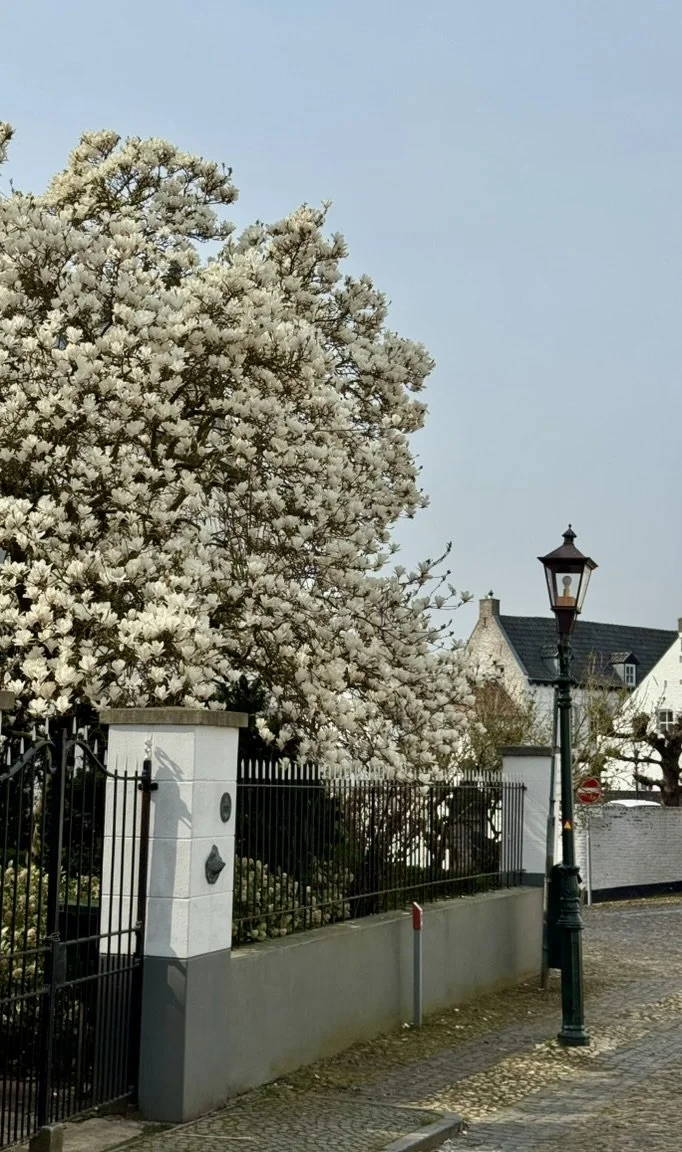
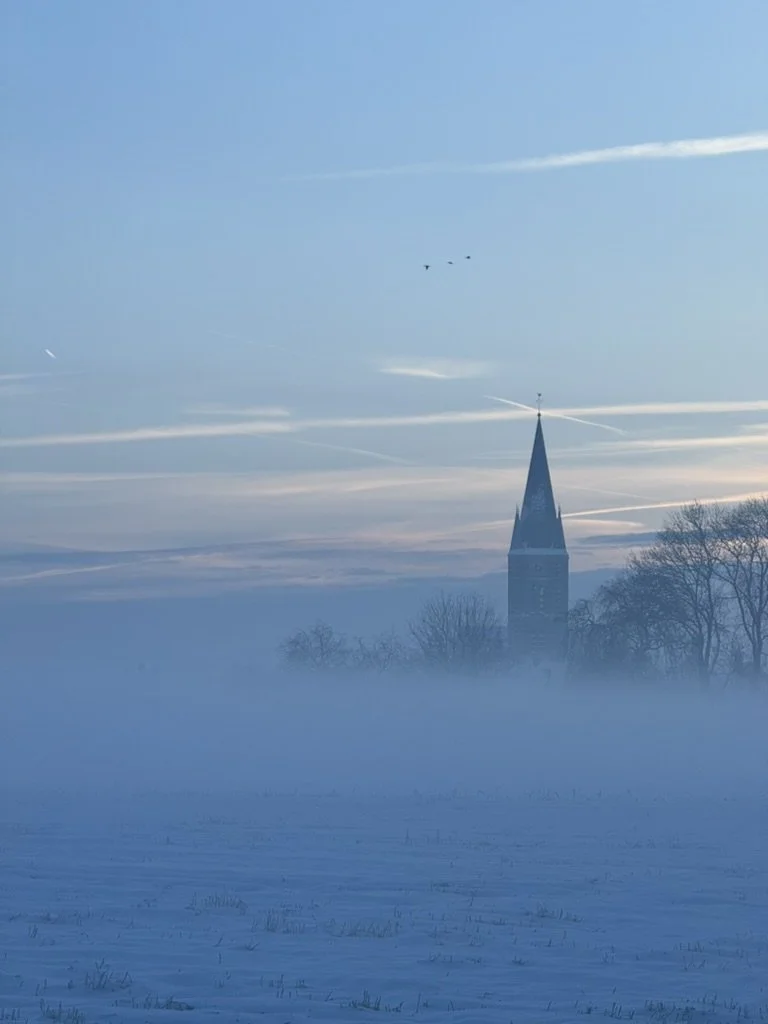

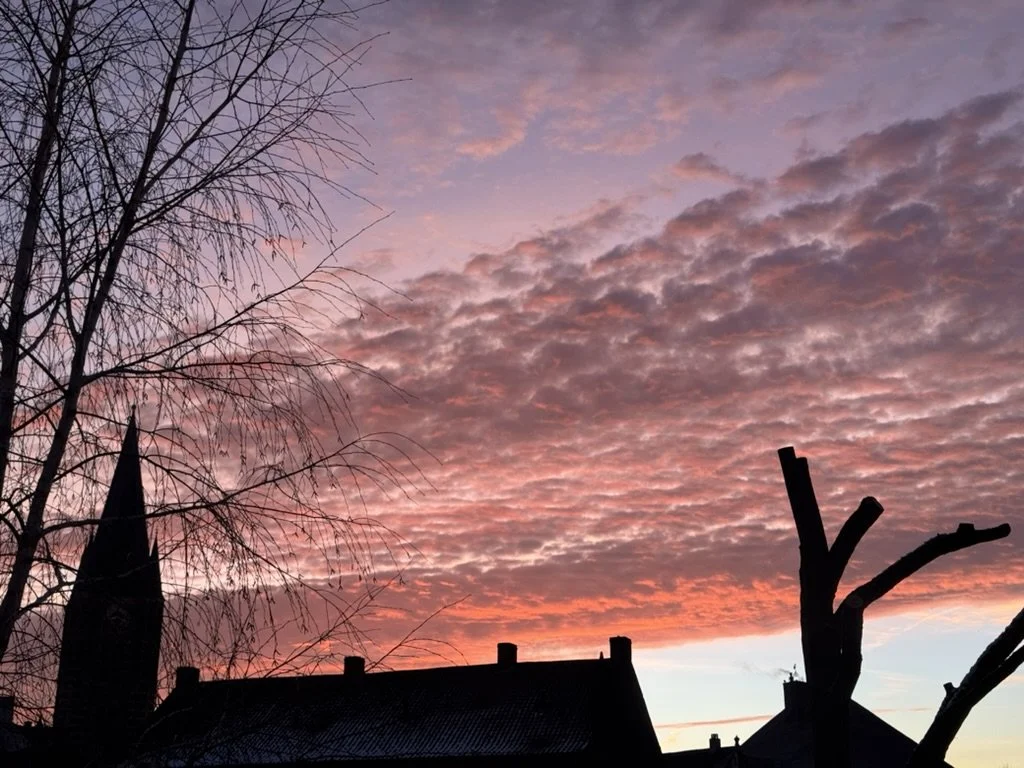
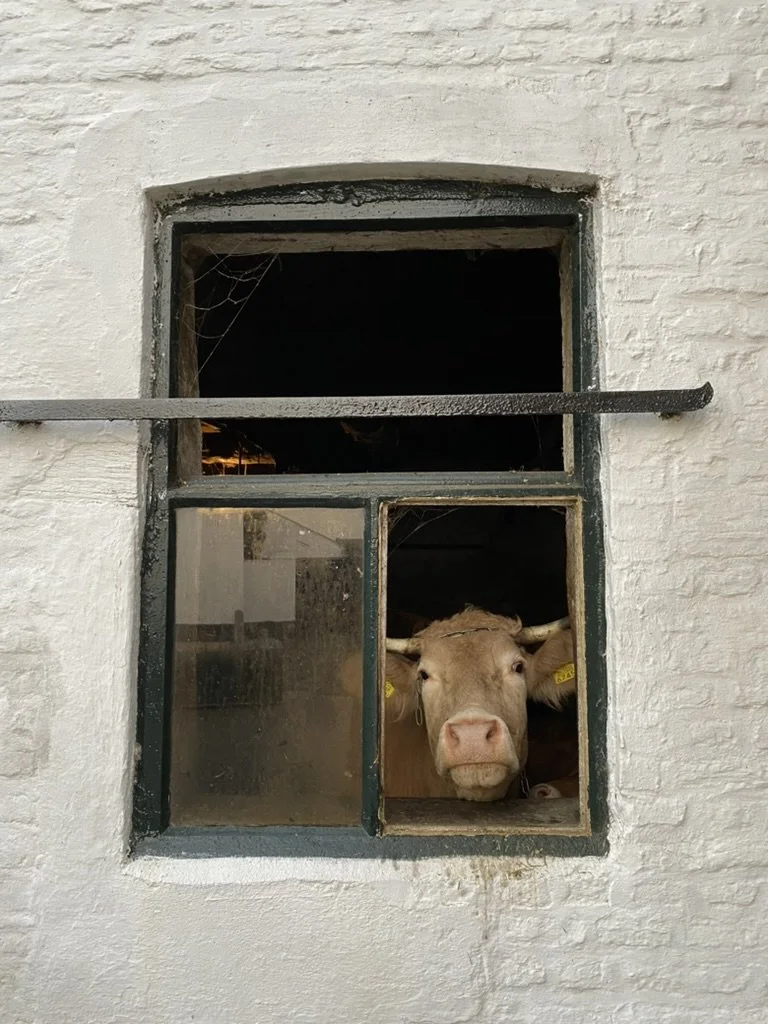
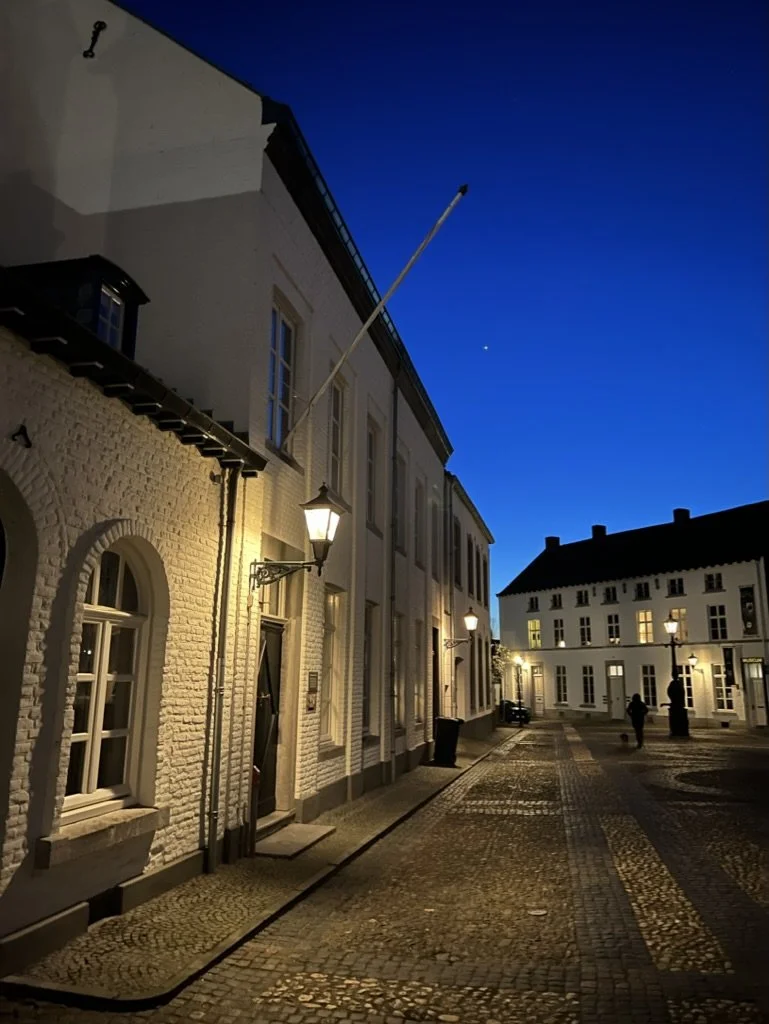
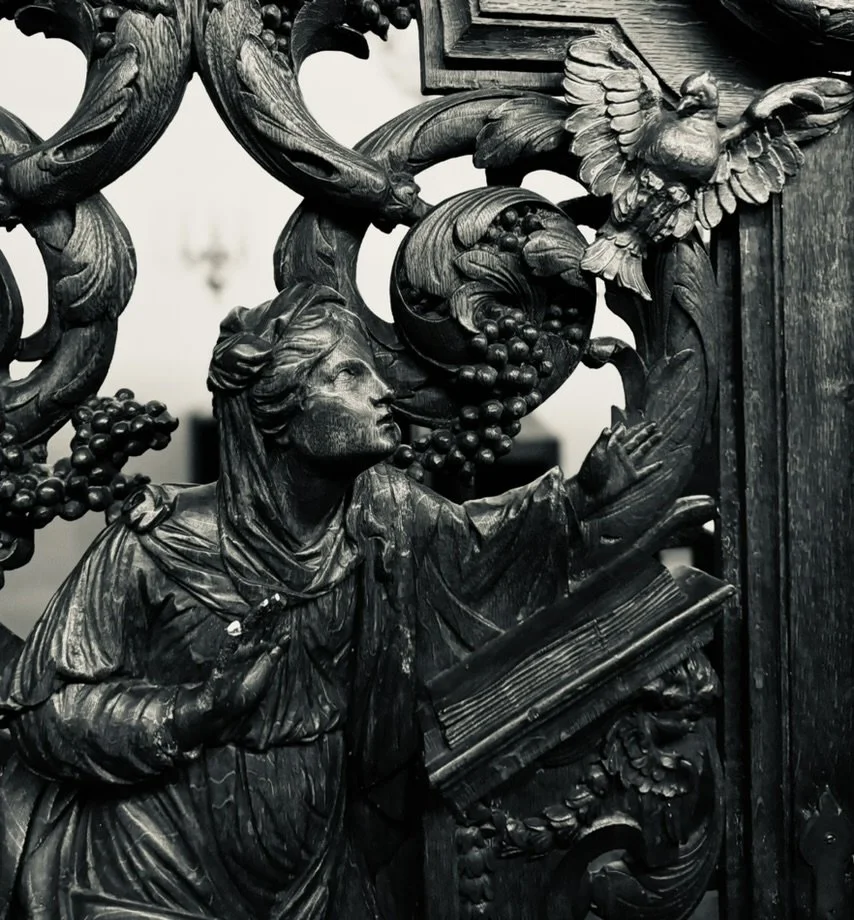
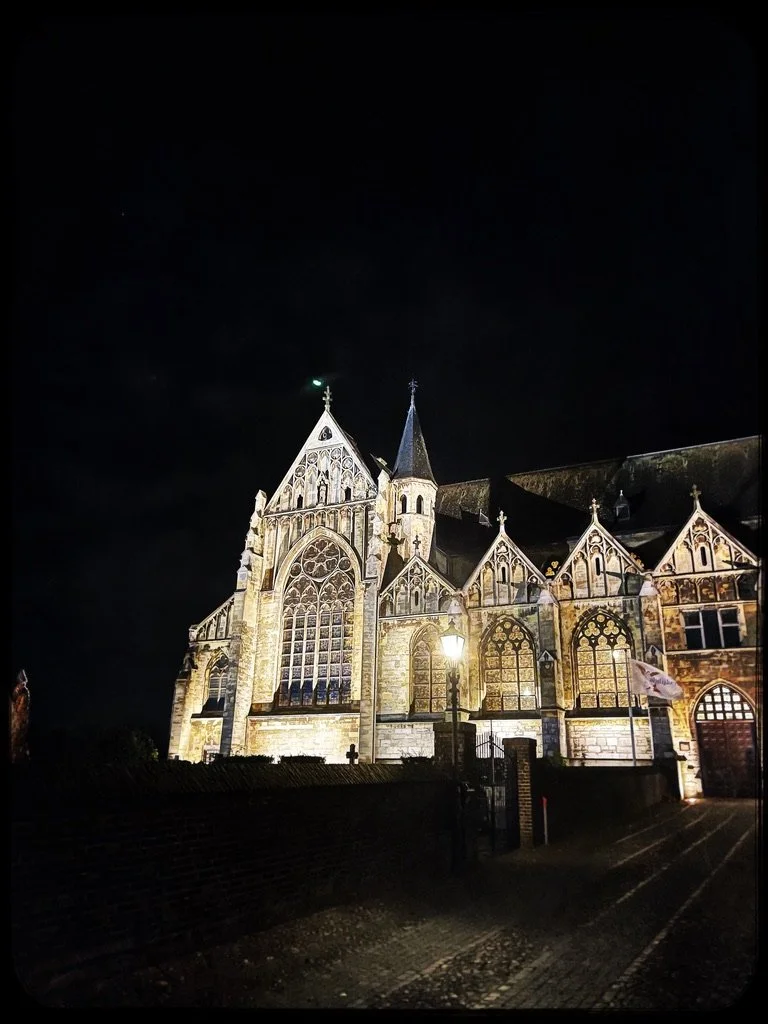
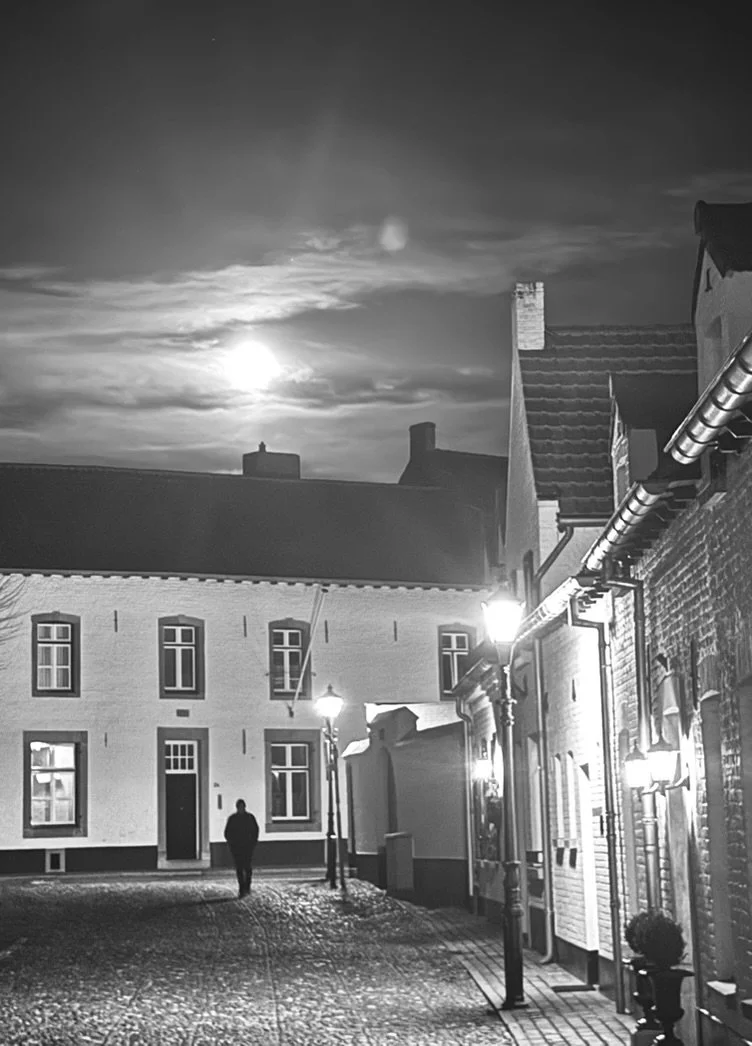
Photography © Vladan Ilic
Studio Myr is therefore neither separate from Thorn nor a contemporary addition that happened to find its way here. It grew from this setting and continues to be nourished by it. Thorn’s history is not simply the backdrop to my work; it is part of the soil in which that work was able to take root.
Studio Myr
The Studio Myr boutique is situated in the marble-floored entrance hall of my eighteenth-century home. Visitors experience the collections in a setting where history, architecture and contemporary design come together naturally. The boutique is inseparable from the house, just as the house is inseparable from Thorn. Together, they form a single experience.
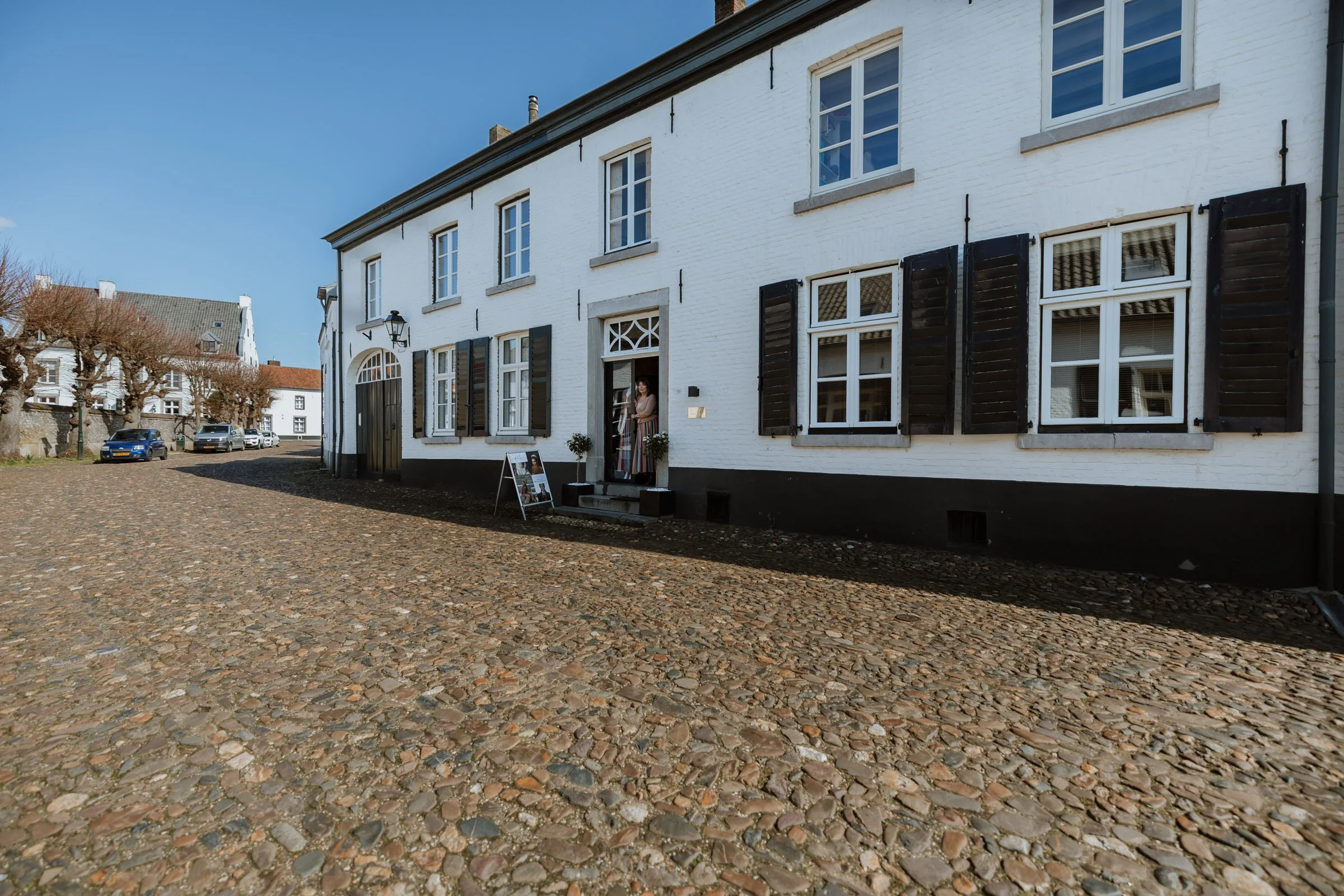
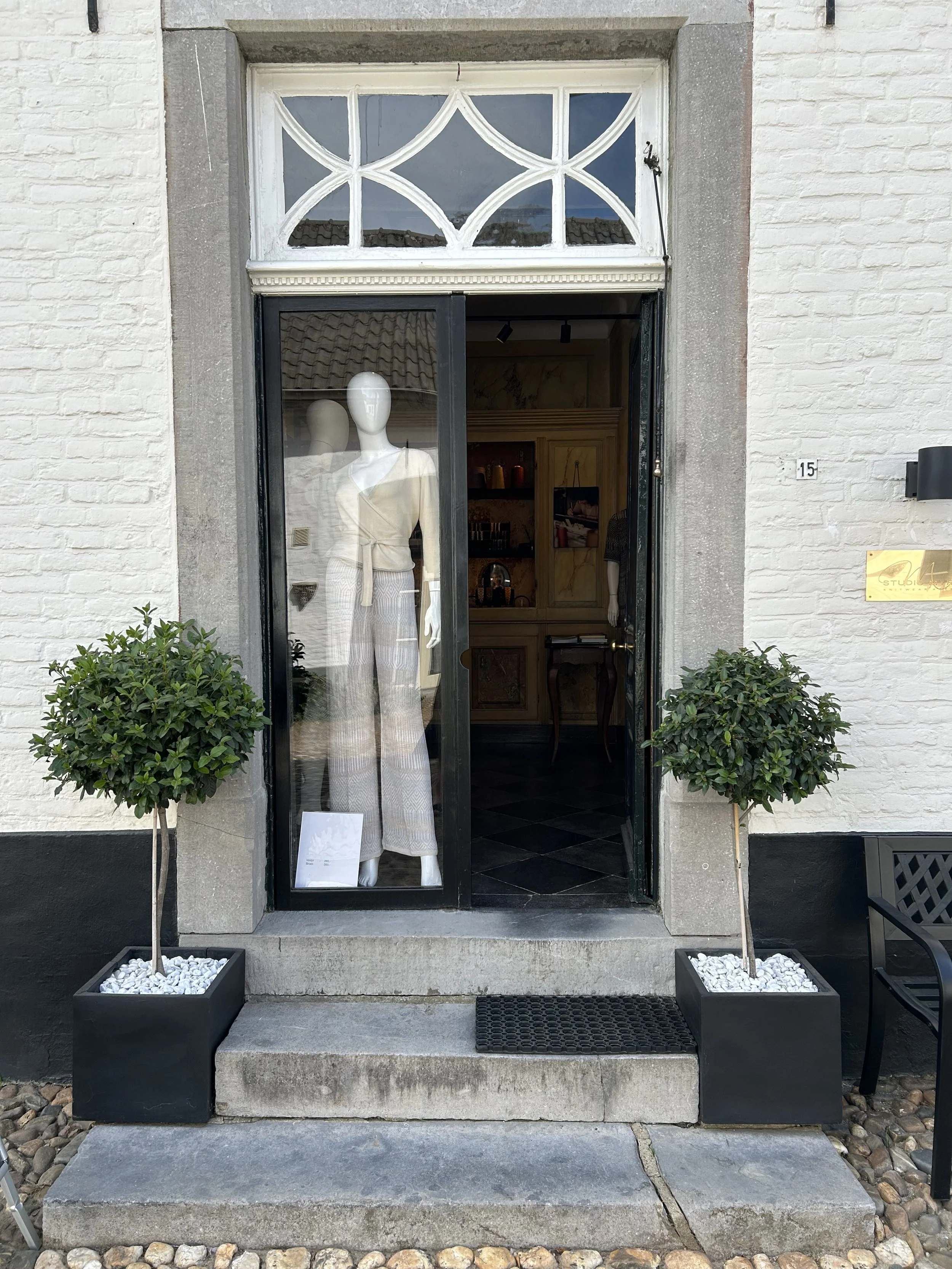
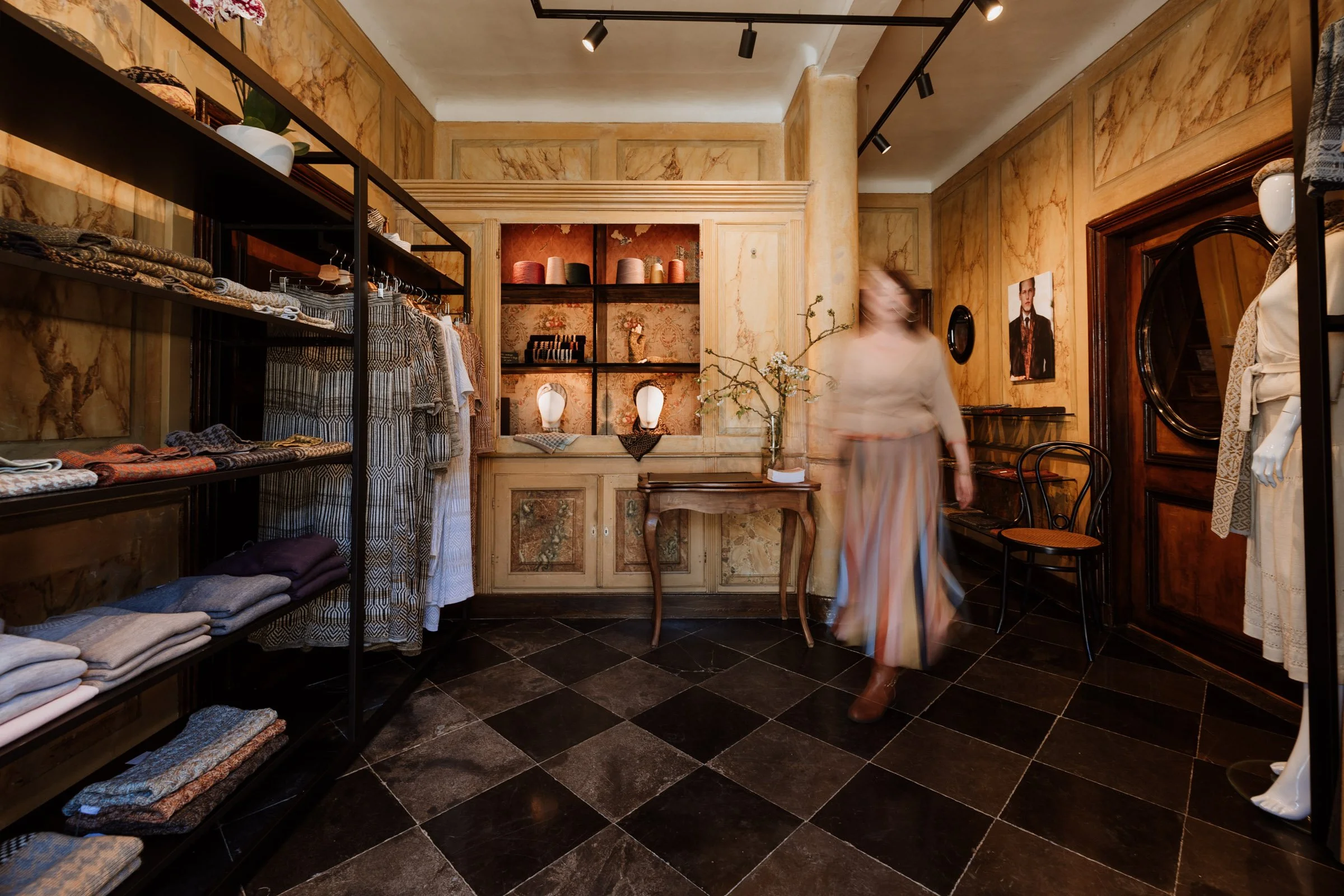
Studio Myr’s boutique and atelier are housed in a beautiful eighteenth-century building in the heart of Thorn.
A living history
What moves me most is that Thorn’s history did not end when the canonesses left or when the palace was demolished.
People have been leaving their mark here for thousands of years. Some traces are small and were rediscovered in the earth. Others are monumental, such as the Abbey Church and the former canonesses’ residences. Still others live on in music, paintings, poetry, craft and memory.
Each generation sees Thorn anew and gives something back to the place.
Studio Myr, too, is part of that continuing movement. My designs are contemporary and have a language of their own, but they do not emerge in a vacuum. They are shaped by surroundings in which architecture, material, culture and creativity have been intertwined for centuries.

Winter collection Studio Myr photographed in the streets of Thorn
Perhaps that is ultimately what makes Thorn so special. The past is not merely preserved or displayed here; it remains tangible in the white streets, the historic houses and the way people continue to live, work and create.
Whenever I look out from Studio Myr, I feel that closeness every day. In this eighteenth-century house, the world of the noble canonesses meets the work of today—in a shared appreciation of beauty, material, craftsmanship and femininity.
And so, in Thorn, time sometimes seems to stand still, even as past and present blend effortlessly into one another.
Miriam Lenarts
www.studiomyr.com