
The History of Headbands
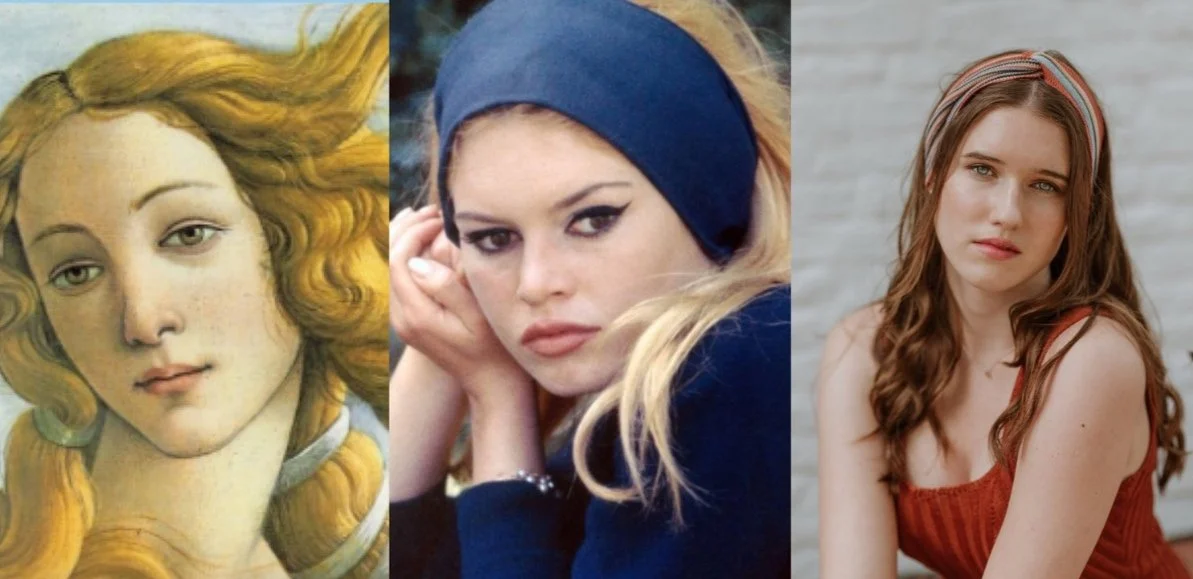
Left to right: The birth of Venus by Botticelli 1485, Brigit Bardot ca. 1965, Headband Denîmes Studio Myr
The hairband is probably the most versatile accessory that women have used to decorate their hair for thousands of years.
With designing our own series Studio Myr steps into an age-old tradition of women adorning their hair with precious textiles.
But first a bit of history.
Prehistory
One of the first proofs of women decorating their hair with textile, is the figurine of the Brassempouy Venus. This miniature head, 36.5 mm high, 22 mm deep and 19 mm wide, carved from mammoth ivory, was discovered at Brassempouy, Landes, France in 1892. It may be 25 000 years old. It is one of the few Ice Age figures with facial features and a detailed hairstyle. It suggests that women at that time styled their hair with a kind of braided net.
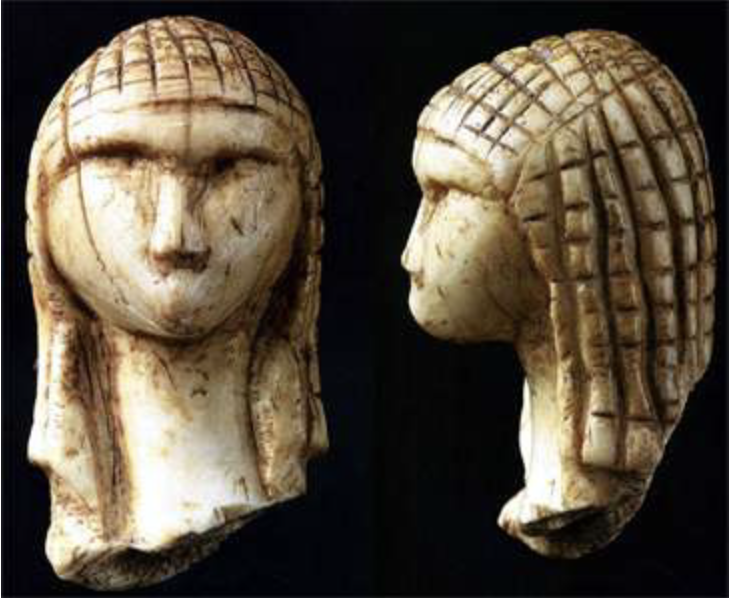
Venus of Brassempouy, c.25,000 BC
Mesopotamia
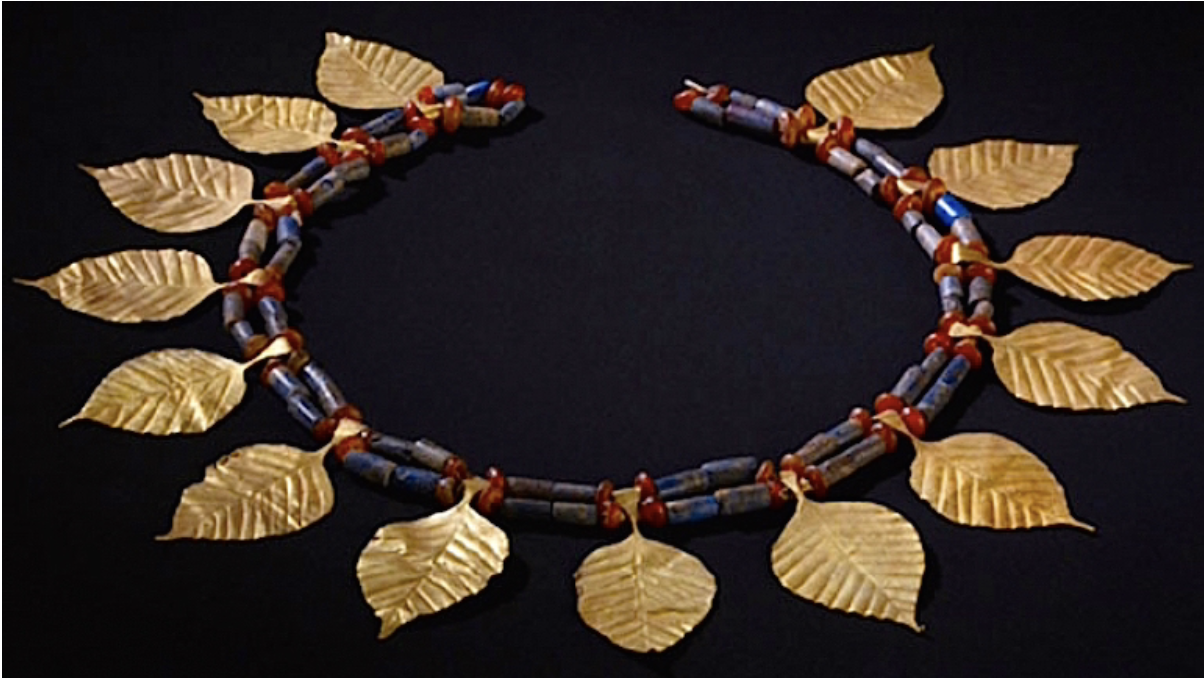
Ancient Mesopotamian gold leaf headpiece with intricate beads
Mesopotamia is called the cradle of our civilisation. Unfortunately no head textiles of this period have survived the ages. On the other hand, beautiful specimens of precious metal have been found.
This gold leaf headdress with lapis lazuli and carnelian is over 4500 years old. It is part of the famous Ur jewellery. Ur was a Sumerian city by River Tigris, about 200km north-west of Basrah in modern Iraq.
Ancient Greece
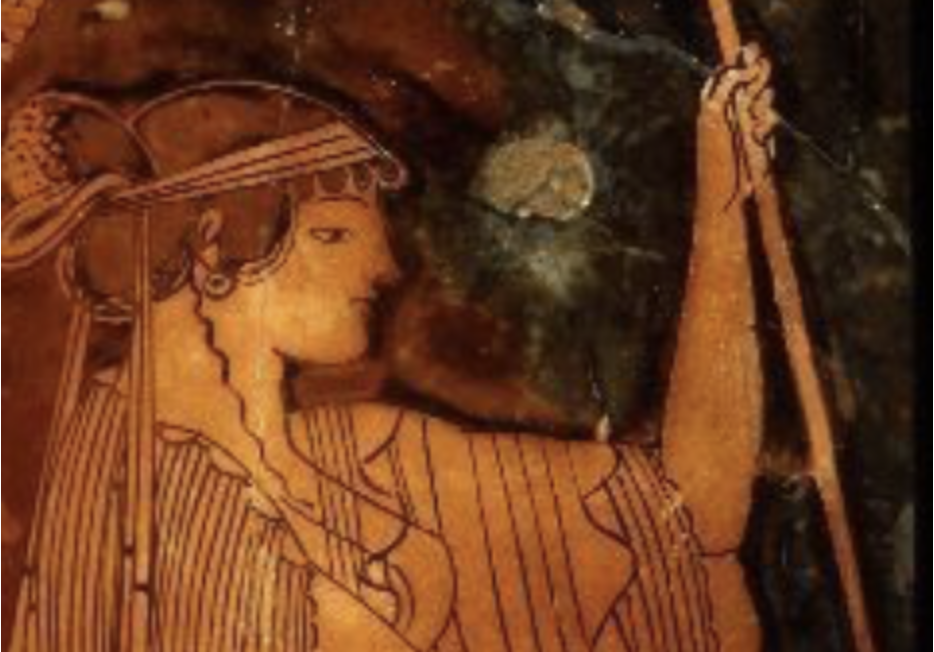
Image of the goddess Hera
The women of Greek antiquity used veils of light or precious fabric and ribbons of various colours in their artistic hairstyles, to keep the hair together.
Bands were also wound around the forehead to make it look smaller, since a low forehead was considered a sign of beauty.
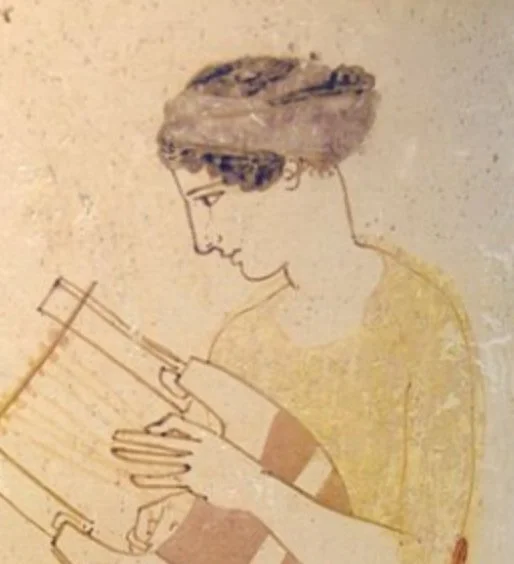
Woman wearing a Sphendone
The so called Sphendone served to keep the hair together: wide in the middle, it narrowed towards the sides. It was also often folded backwards with the wide end, which then summarized the hair like a net, protecting it from dehydration by the sun.
Byzantium
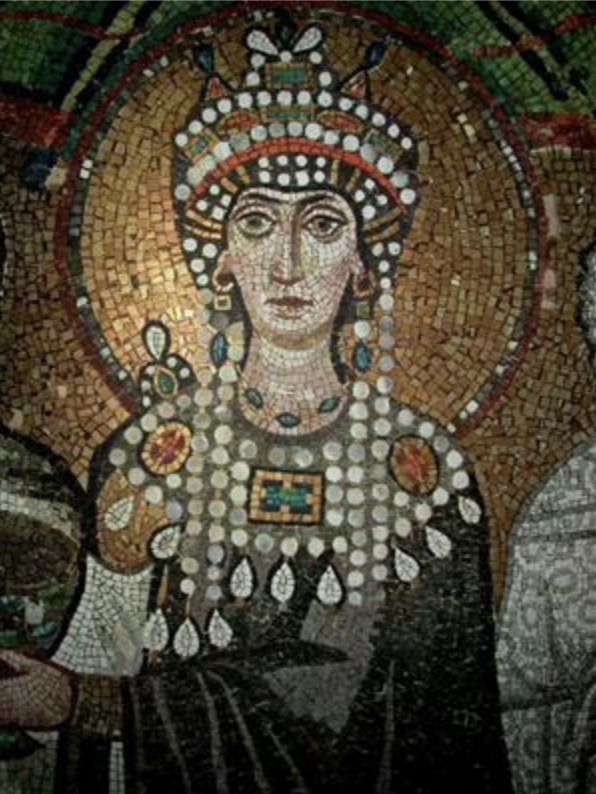
Mozaïc of Theodora, San Vitale Ravenna, Italy, c. 547- 750
Upper class women in Byzantine society wore the most elaborated and luxurious head adornments, like in this mozaïk of the Empress Theodora.
Middle ages and Renaissance
In the following centuries women of wealth continued to use hairbands of all sorts of expensive materials, such as silk and velvet, to decorate their hair, as you can see from the images below.
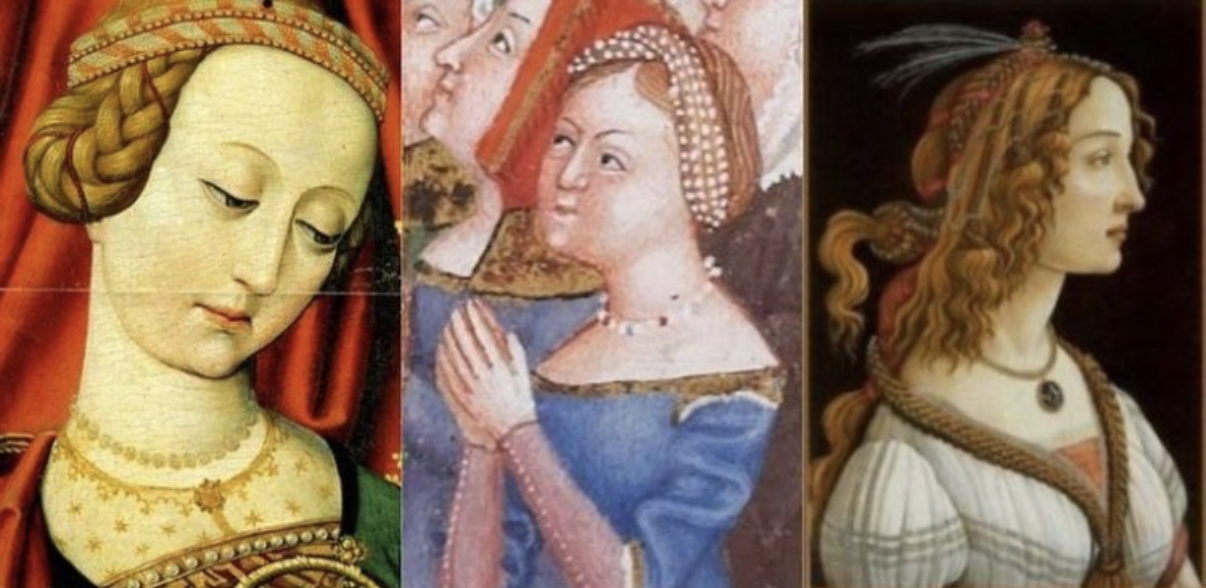
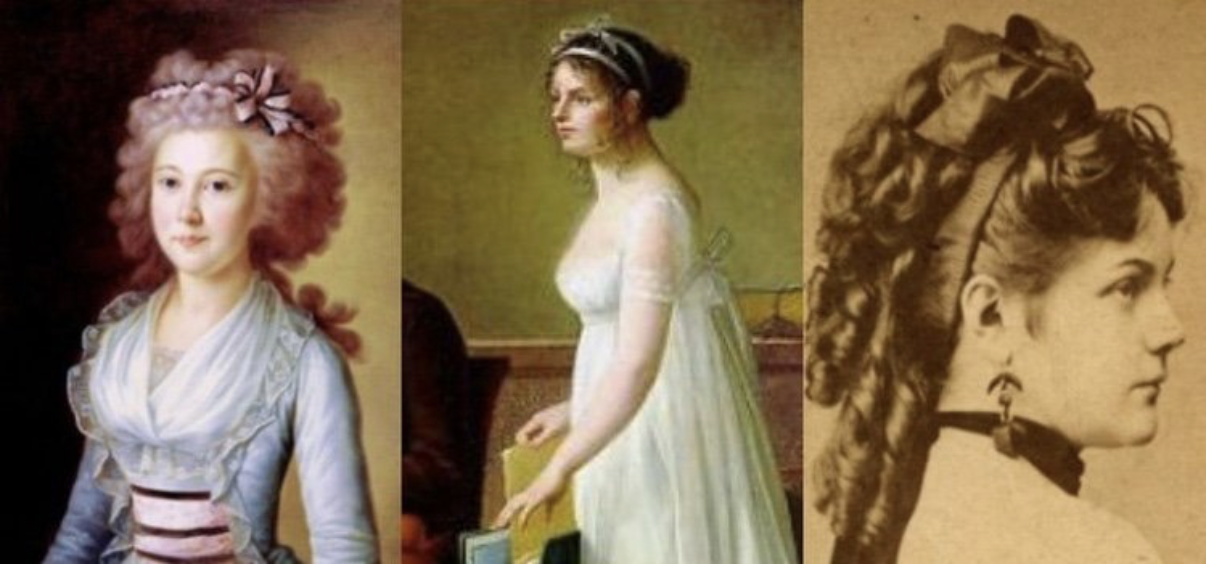
18th and 19th Century
20th Century
Moving forward to the 20th century, designers like Paul Poiret and Gabrielle Chanel looked to the Orient and the exotic costumes of the Ballet Russes for head-turning inspiration. A means of channeling the glamour and mystery of the east, turbans, headwraps and silk scarves became the accessory of choice for stylish Hollywood starlets. Best worn over the sharply chopped ‘bob’ of the female ‘garcons’ or across the forehead of a fringed-clad ‘flapper’, the accessory served up serious style when worn on the court by tennis star Suzanne Lenglen in 1921. A symbol of increased female liberation, this simple hair accessory was part of a whole host of clothing and accessories that allowed women to engage in a more independent and active lifestyle. Thanks to the hairband, women could run, jump or dance their way into the twentieth century without hair in their eyes.
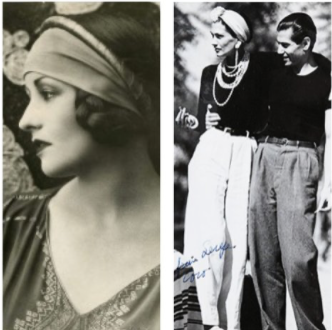
Left: hairband by Poiret ca.1923
Right: Coco Chanel ca. 1930
The 40’s
In the 1940s, headwraps and hairbands were popularised by the American Ministry of Information as a means of promoting ‘war-time’ chic. They became an utilitarian essential for women working in ammunition factories.
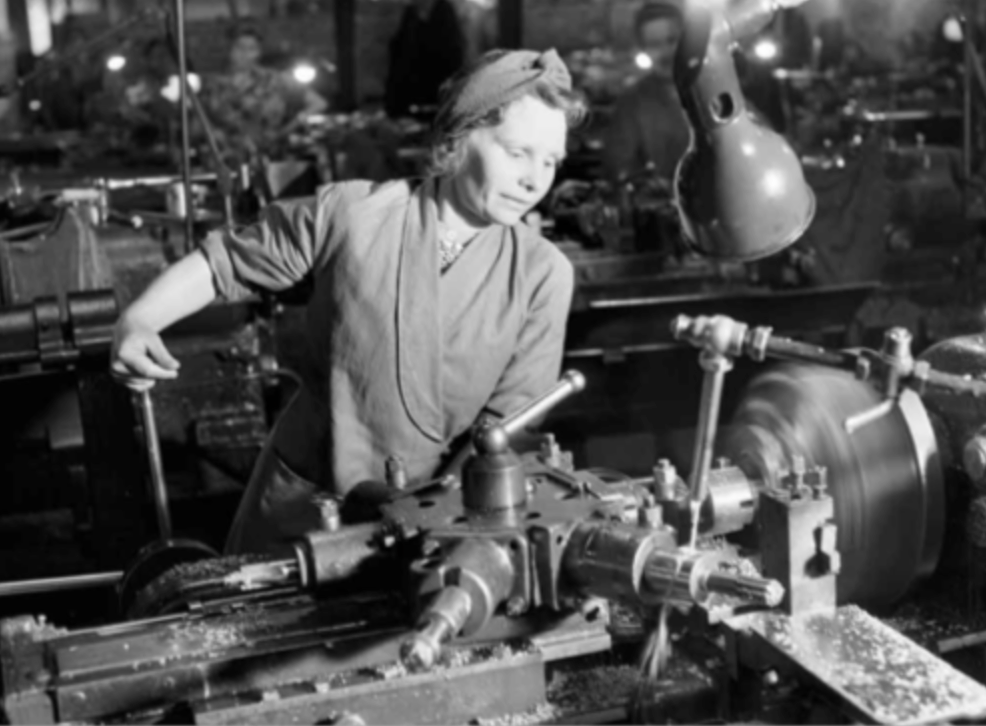
Ammunition Factory Worker, 1942
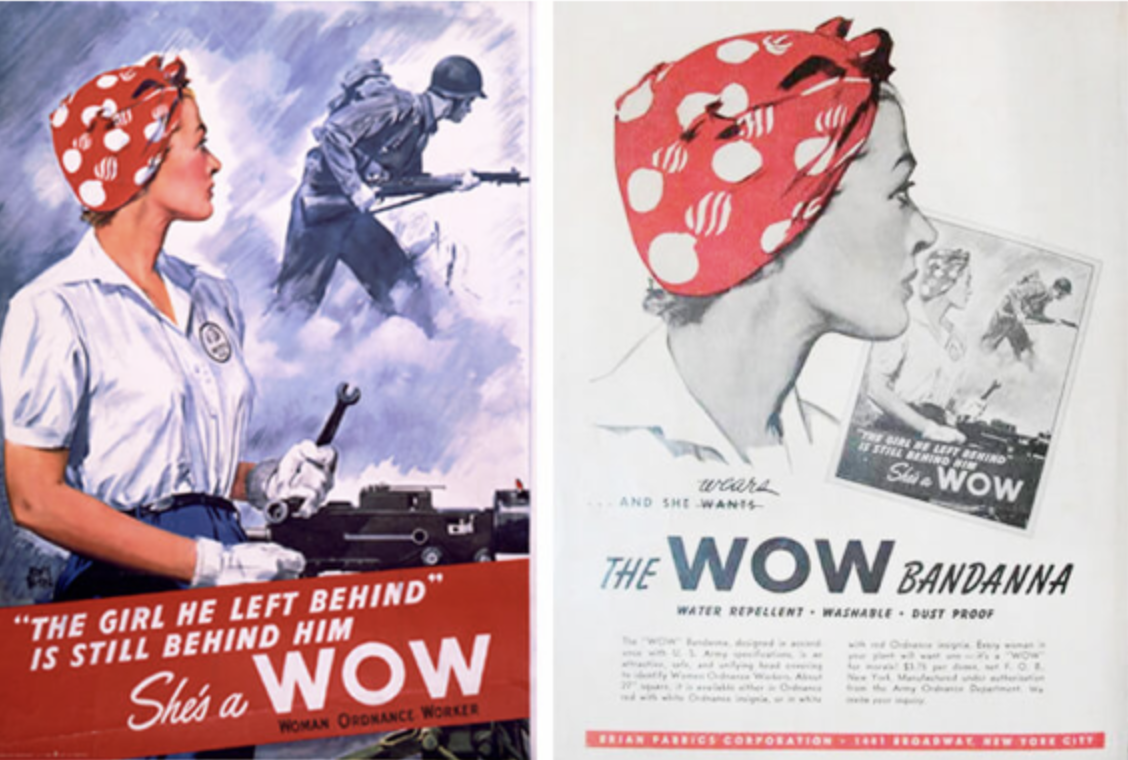
Advertisement of American government for wearing headbands
The 50’s
Post-war, headbands returned to their ornamental roots. They were embraced by the rich and famous again.
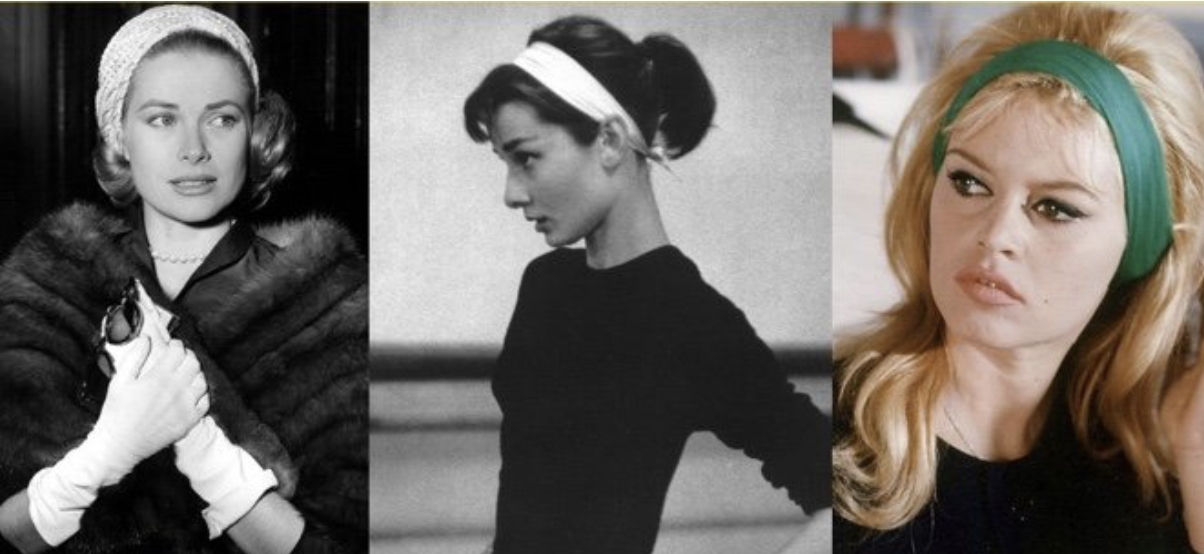
From left to right: Grace Kelly, Audrey Hepburn and Brigit Bardot wearing their versions of hairbands in the fifties and sixties
The 60’s and 70’s
In the sixties and seventies hairbands got to a whole new level. They became a symbol for revolution and the upcoming youth culture, an accessory belonging to the hippie culture.

Actress Sharon Tate wearing a hairband in 1968
Present times
So headbands have seen a number of iterations over the last centuries, but one thing that has been consistent is their popularity as a fashion accessory.
Today, headbands are as popular as ever. Whether it be women of power, like Hilary Clinton, film and music stars like Jennifer Lopez and Gwyneth Paltrow, or just regular people expressing themselves with their favourite accessory, now almost everyone seems to be wearing them.
They turned out to be a full fashion item during the Covid lockdowns, making our home outfit zoom worthy with little effort and maximal effect.
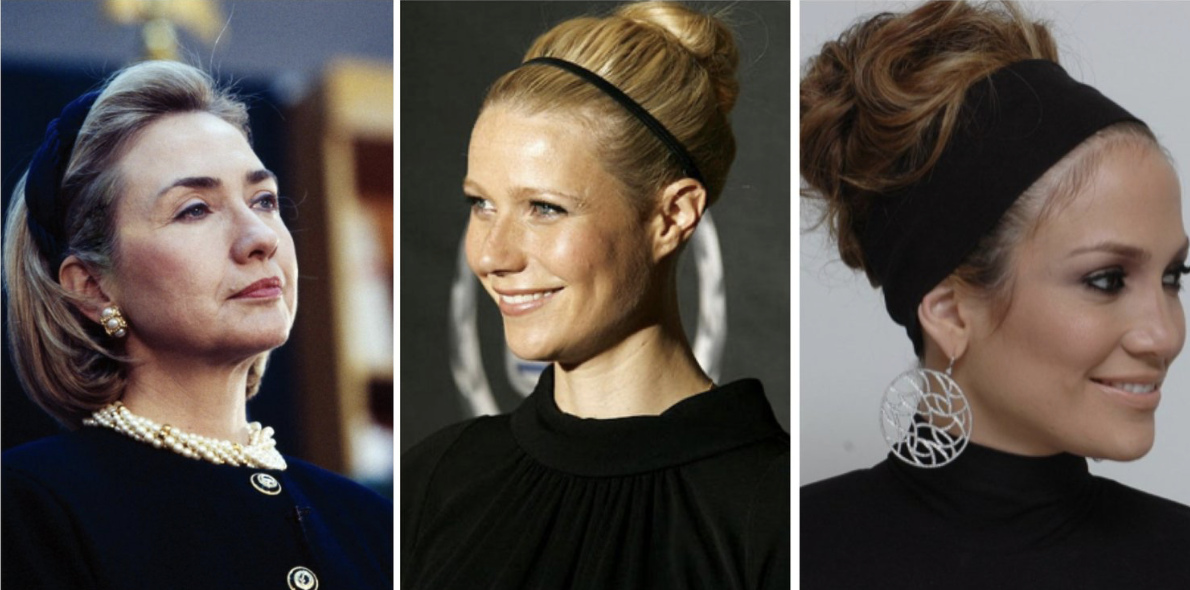
From left to right: Hilary Clinton, Gwyneth Paltrow, Jennifer Lopez
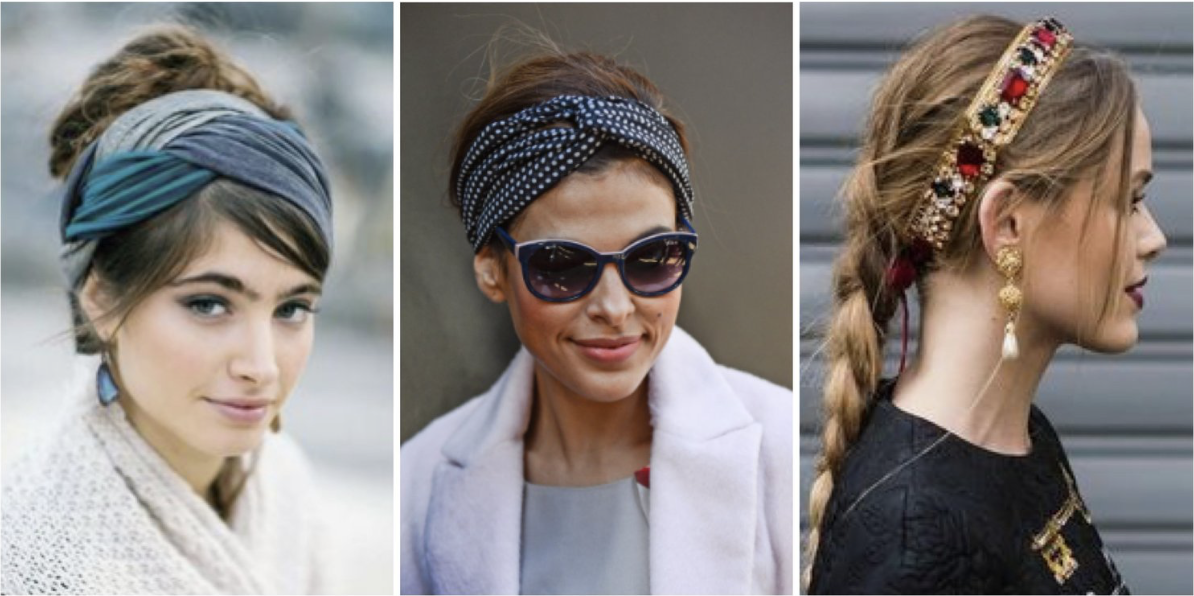
Women wearing their favourite hairbands in various ways
Prada’s power statement
At their Spring/Summer 2019 show, Prada introduced a headband that took the accessory to a whole new level. This so-called 'powerband' reconnected with women's empowerment, making them look as queens again.
With the poignant return of the girlish to a grown woman style, Miuccia Prada set out to make a feminist statement and signaled a shift to dress from the head down (rather than feet up).
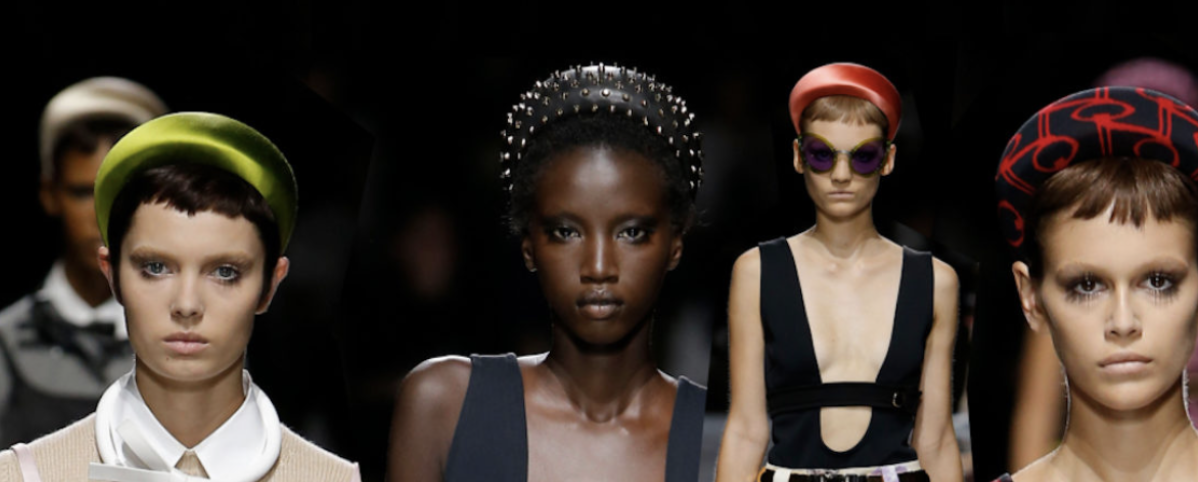
Prada SS 2019
The style was embraced by many, and was given a boost by the poet Amanda Gorman, who wore a powerful red one during her performance at President Biden's inauguration in 2020.
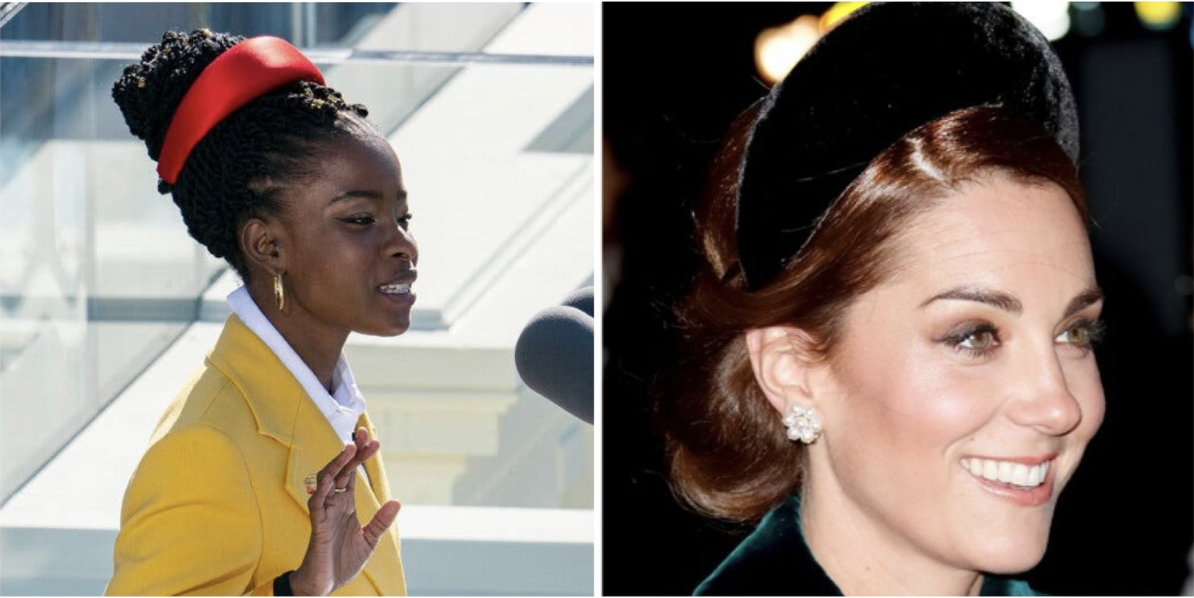
Amanda Gorman and Prinses Catherine
Studio Myr
As a luxury knitwear label that has femininity as one of its main characteristics, headbands fit perfectly into Studio Myr's range. We designed several luxury variants like hairbands, headbands and diadems for both summer and winter.
As always we used only natural yarns, and like all our designs they were knitted in Holland and finished by hand in our studio in small production runs in an ethical way. Due to their quality and timeless appearance, they can be part of your collection for many years to come.

Headband Fair from our Pied de Poule Collection
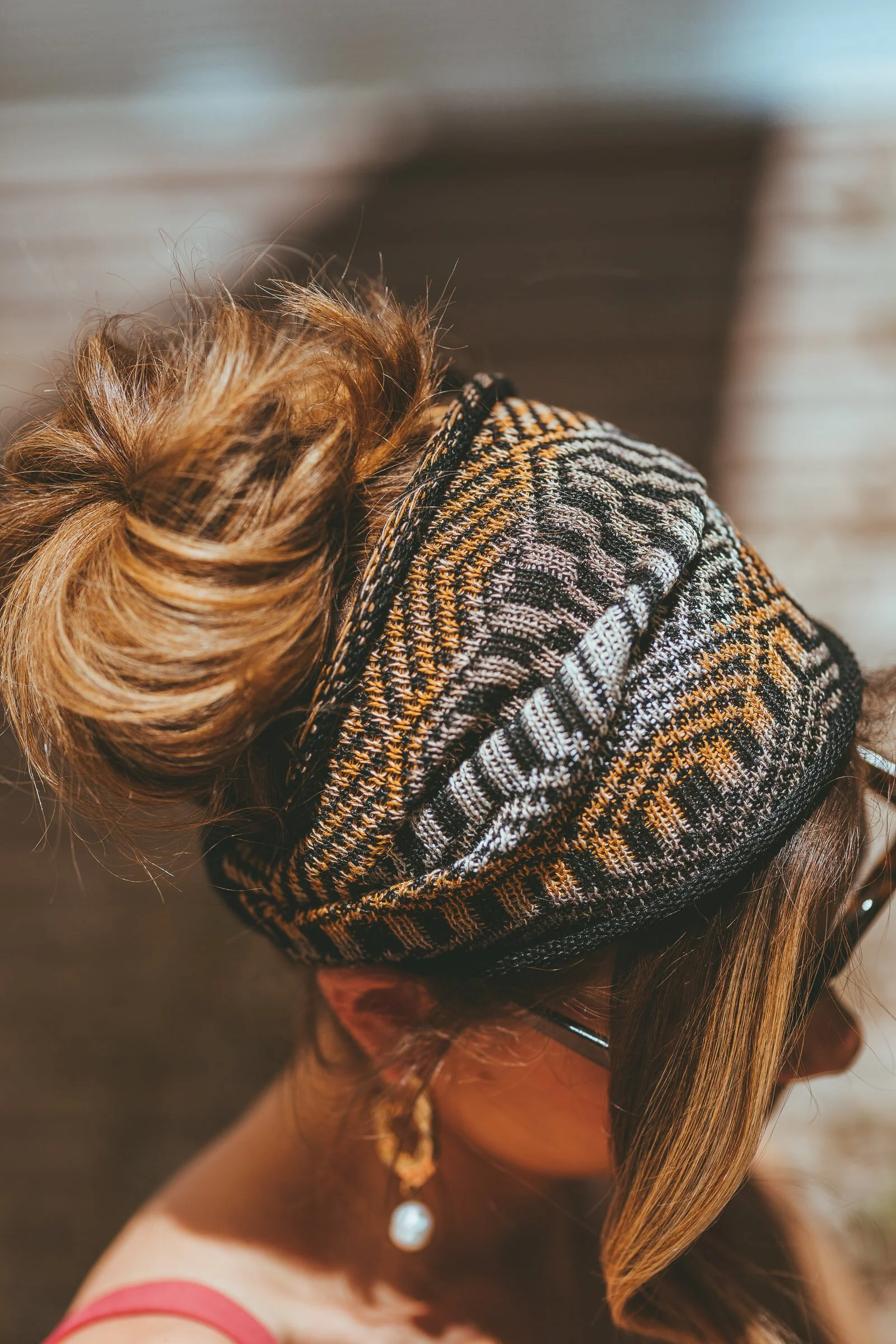
Bandana Dogon from our African Nomads Collection
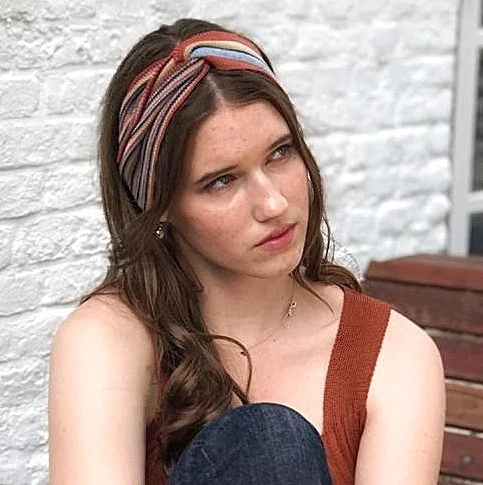
Hairband Denîmes
As a final touch, we would like to introduce you to our latest design, the Velvet diadem. I developed this collection after a visit to Venice, where I was completely enchanted by the magnificent clothing and hair ornaments women wore in the 15th and 16th centuries.
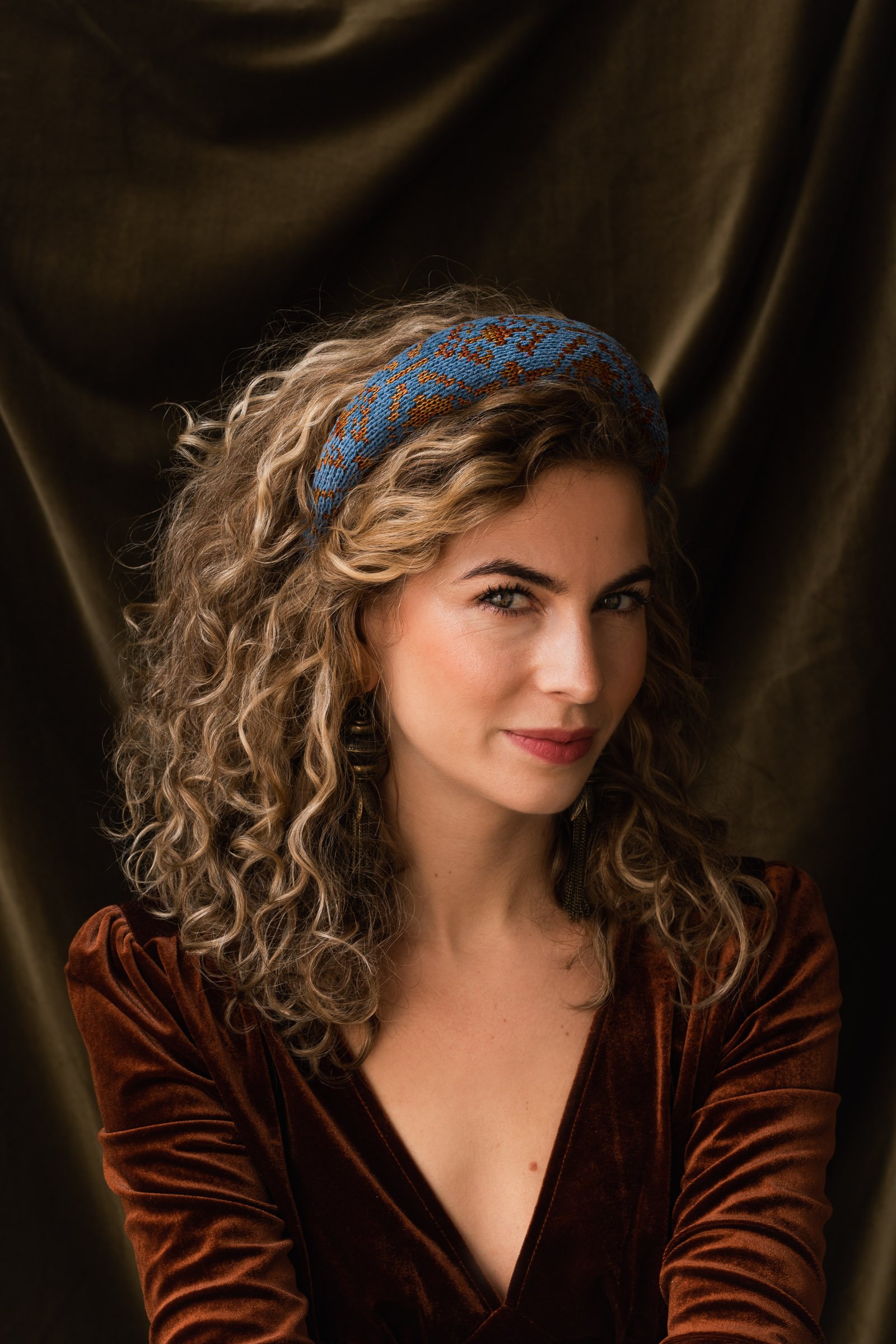
Diadem Veronica of our Velvet Collection
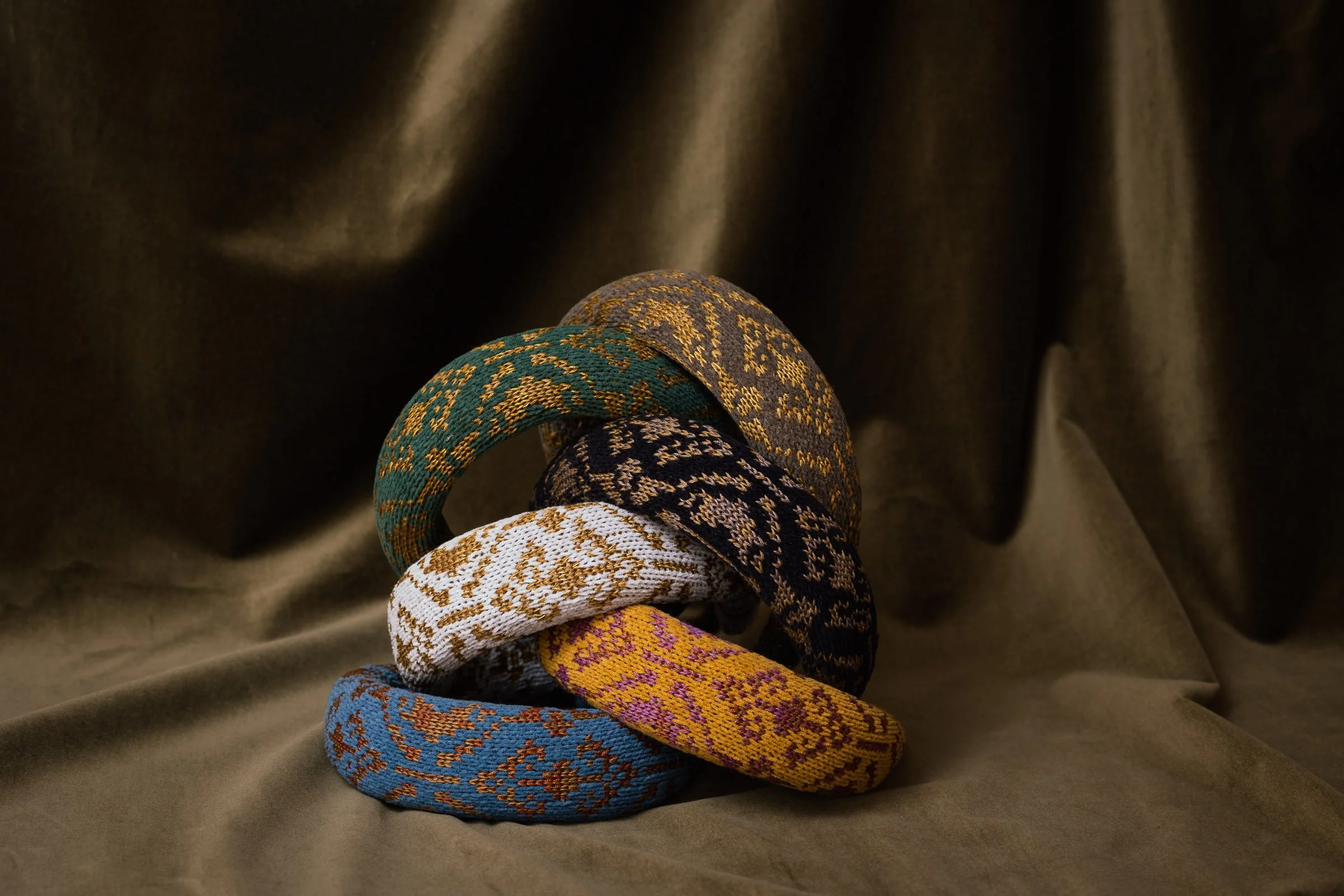
Our Diadems are available in 6 different colors
The fact of the matter is this: the hairband has been a powerful accessory for centuries. Far from frivolous and exceptionally functional, the simple bands can elevate an outfit and evoke a variety of moods. Whether knitted, padded or topped with sequins, they allow us to dress our bodies from head to toe.
The secret behind the success of this seemingly juvenile accessory lies in its combination of practicality, prettiness and power.
With so much history behind it, it’s clear the headband is a trend that’s here to stay.