
The Universal Language of Craft
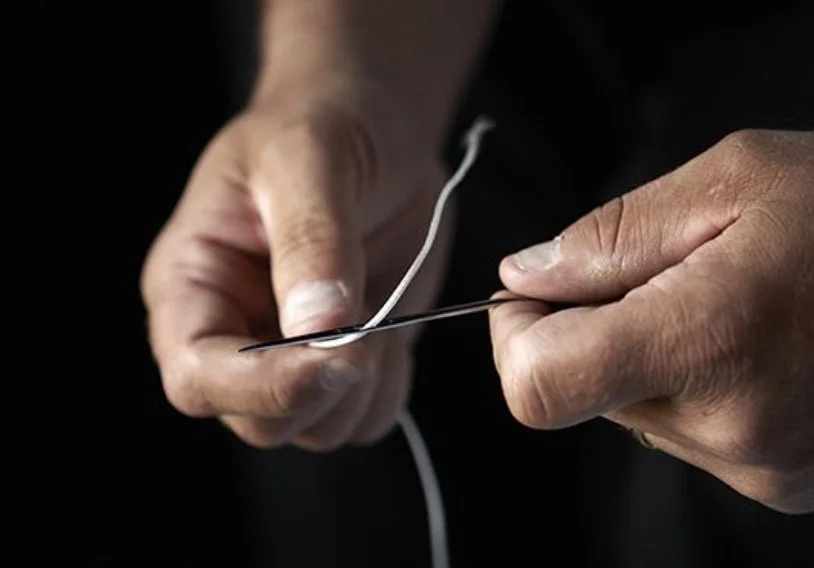
Ancient Craft Requires
No Validation — Only Autonomy
For me, craft knows no geographical boundaries. Wherever in the world people create with attention, time, and dedication, I recognise the same attitude: respect for material, knowledge that is not rushed, and the patience to keep refining until something truly feels right. Whether it involves wood, stone, metal, or textile — craft speaks a universal language.
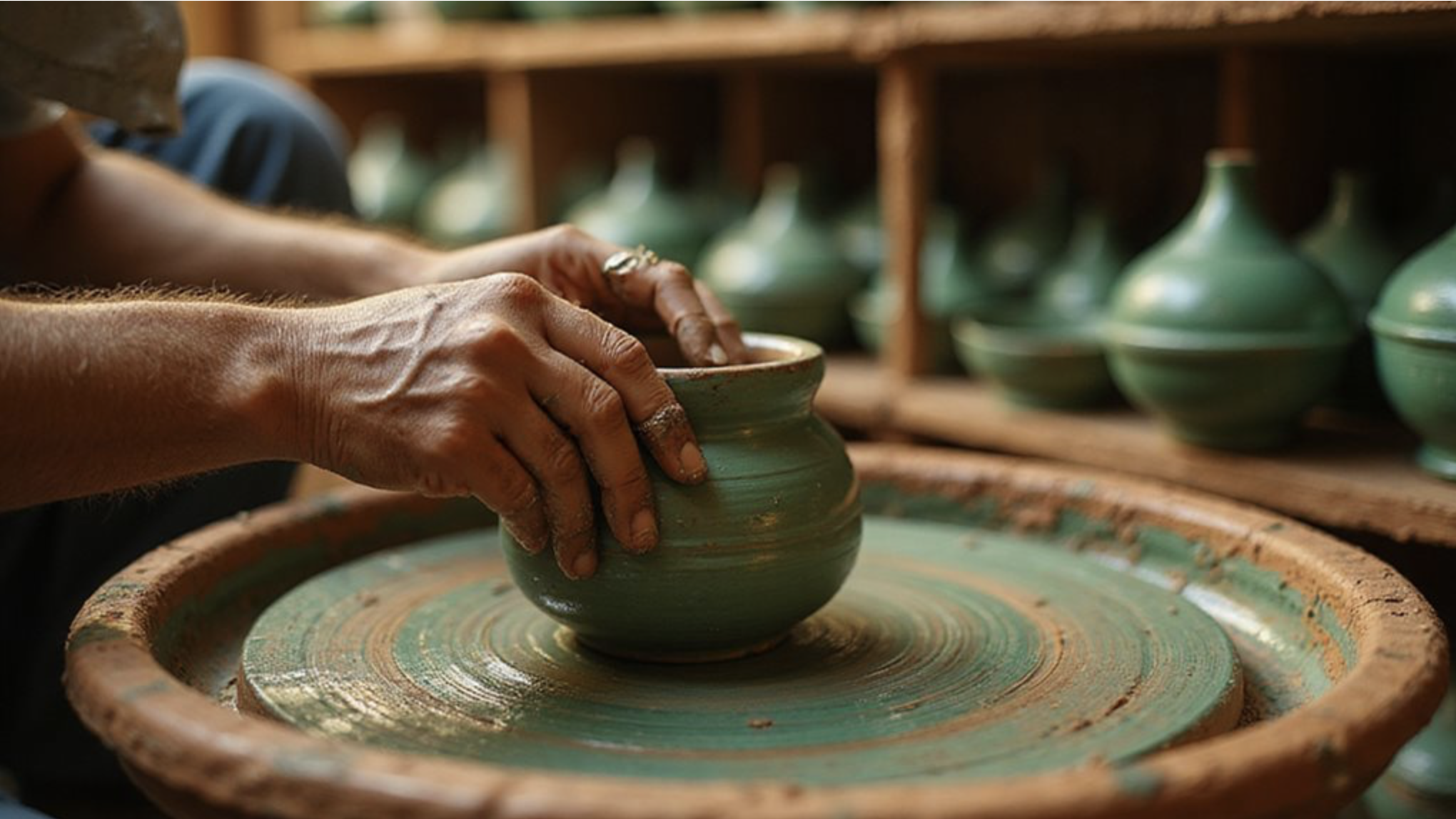
The art of making Tamegroute ceramics - Morocco
That attitude has long been an inexhaustible source of inspiration for my collections. Not because I seek to translate techniques literally, but because the act of making itself moves me. The understanding that quality emerges through concentration and repetition. That beauty is not imposed, but grows out of craftsmanship. That making is allowed to take time.
In every well-executed craft, I recognise the same values: care, dedication, and a profound respect for material and process. Values that are not driven by trends, but are timeless.
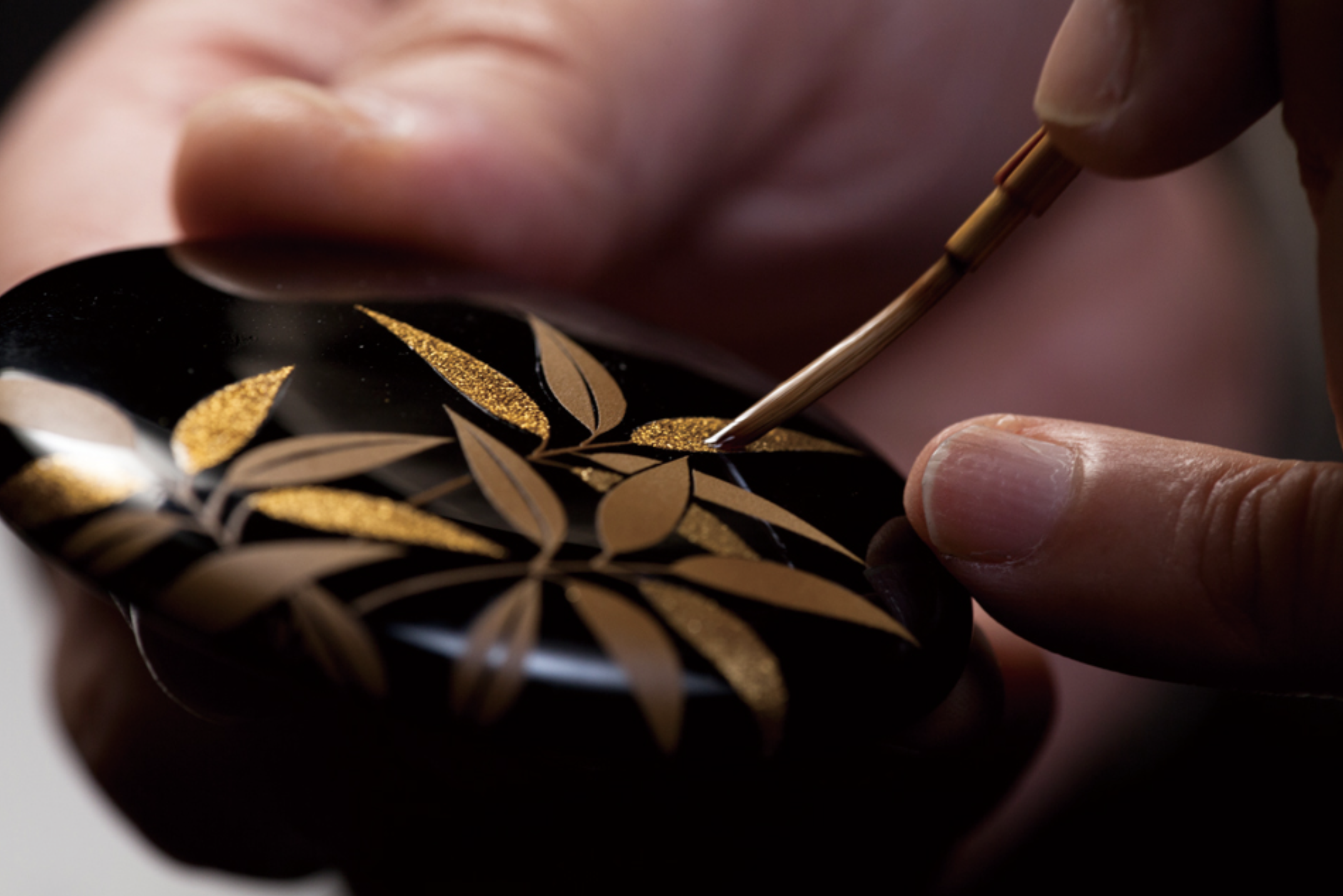
Japanese lacquerware has 33 to 36 processes that take at least one to two years to glaze. Lacquer was used in Japan as early as 7000 BCE
Textile as a personal origin
Within this broad field of craft, textile techniques hold a particular place for me. Not only because I work with them myself, but because they are part of my own history. I came to know them through my mother — not as theory, but as practice. By watching, touching, trying. By making together.
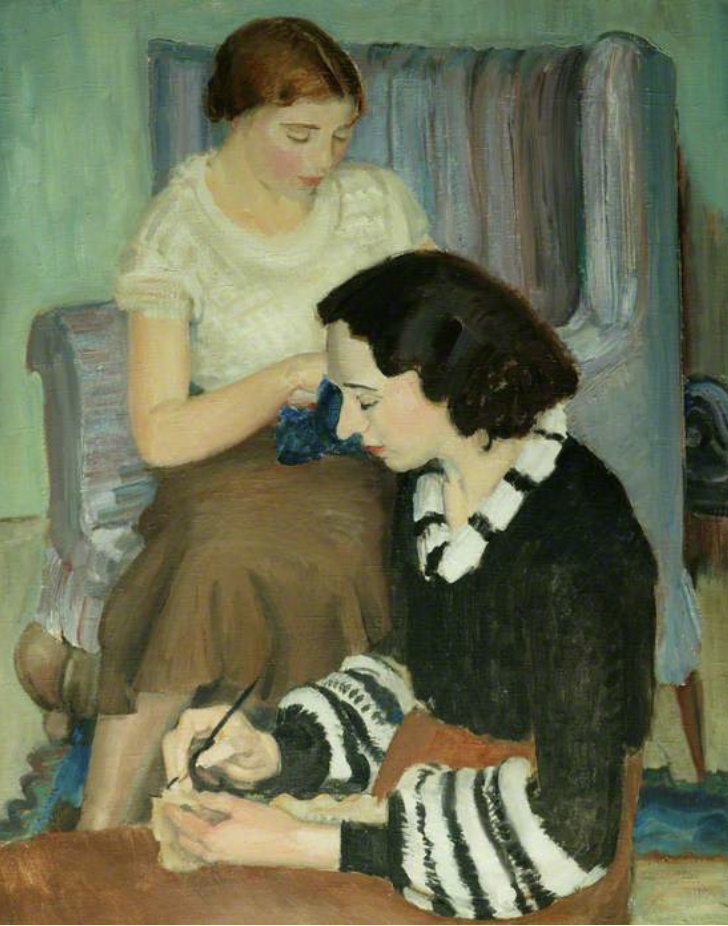
Knitting - Raymond James Coxon (1896–1997)
Textile is, above all, a craft in which time becomes visible. Every stitch, every repetition carries traces of attention. It is a discipline in which mistakes do not disappear, but become part of the whole. It is precisely this slowness and physicality that make textile crafts so meaningful to me.
Transmission across generations
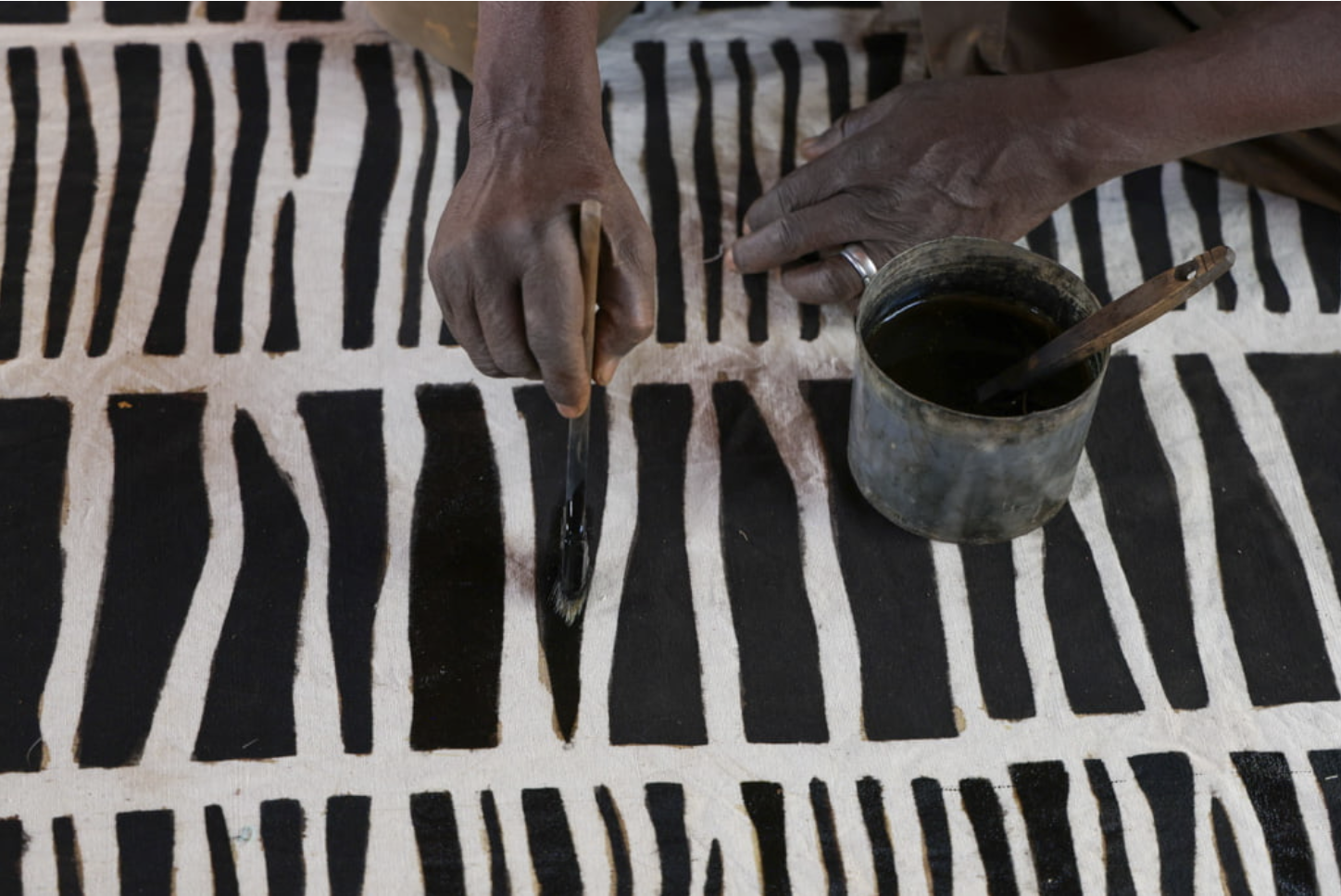
Mud cloth or Bogolan from Mali
What moves me deeply in craft worldwide — and in textile crafts in particular — is the way knowledge has been passed down for centuries, from father to son, from mother to daughter. Not through systems or manuals, but through proximity and practice. By doing. By observing. By repeating. Sometimes over the course of a lifetime.
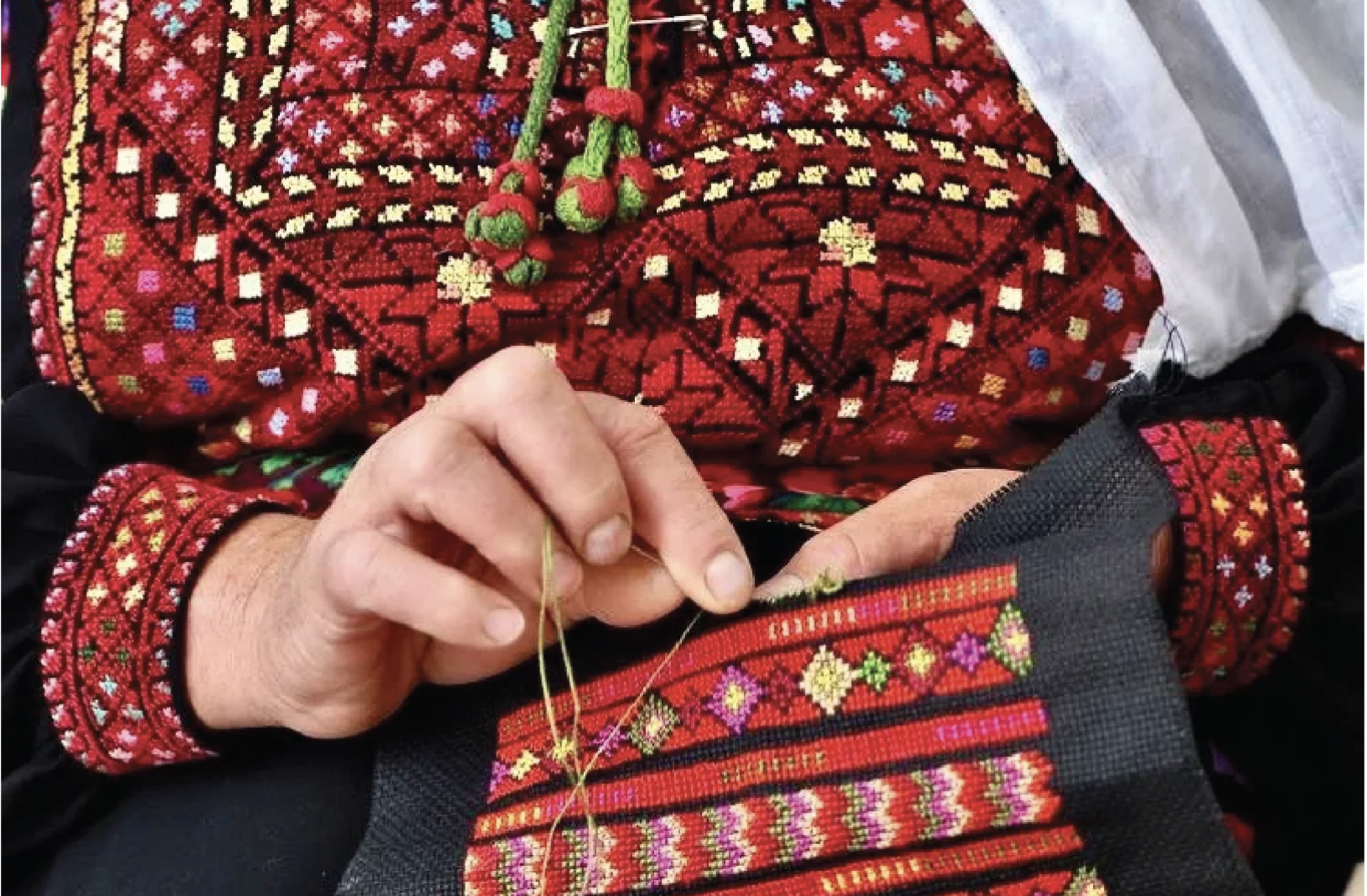
The art of Palestinian Tatreez. This ancient craft represents generations of artistic expression, weaving together narratives of identity, resistance, and community bonds.
This transmission is about more than technique alone. It also carries values: patience, responsibility, care for material, and reverence for the work itself. It is knowledge that is not claimed, but carried.
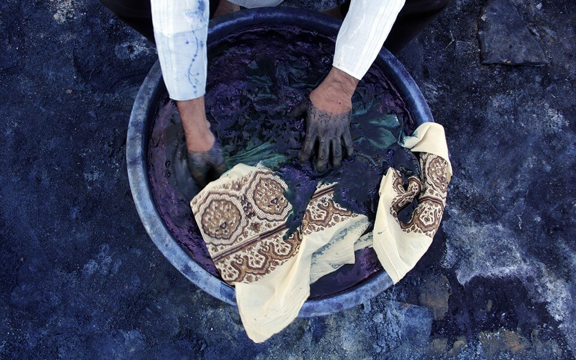
Indigo dyeing has been used for thousands of years, with important traditions in West Africa (Kano, Nigeria) and Asia (India, Japan).
The fact that many of these techniques have remained largely unchanged for hundreds, sometimes thousands of years speaks volumes about their strength and uniqueness. Not because they are static, but because they are already so refined that every change carries meaning. What endures across generations proves its value by continuing to function — by being made again and again, with the same care and attention.
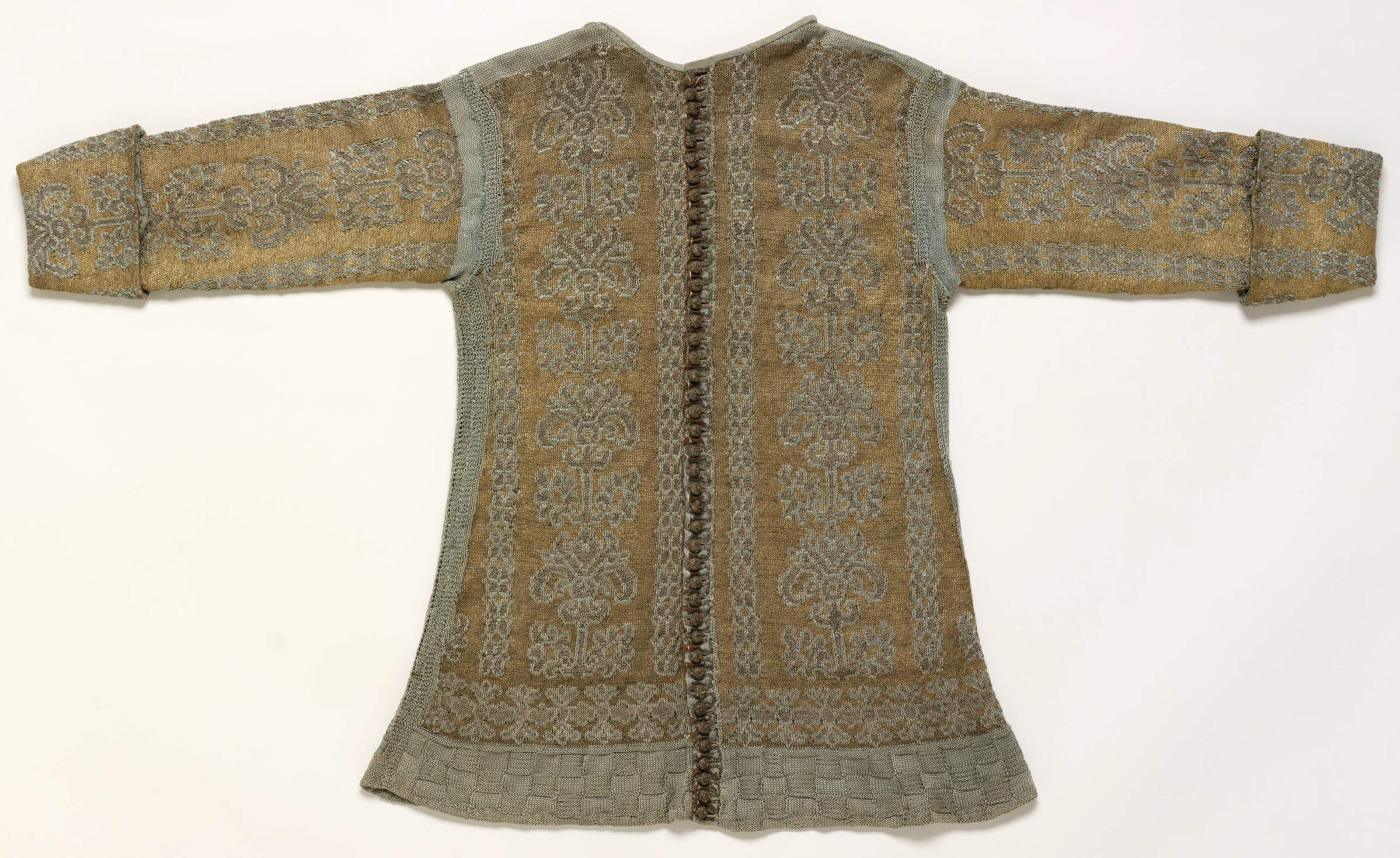
Knitted jacket, 1600 – 1620, Italy. © Victoria and Albert Museum, London
When admiration turns into Interference
Precisely because my love for craft is global, the question of responsibility inevitably arises. Admiration alone is not enough. The way we engage with this knowledge — and with the people who carry it — matters.
Especially in the case of non-Western craft traditions, this touches on a charged history. Colonialism did not only extract raw materials and labour; it also systematically devalued knowledge, even as that same knowledge was simultaneously exploited. These patterns persist today in contemporary production models.
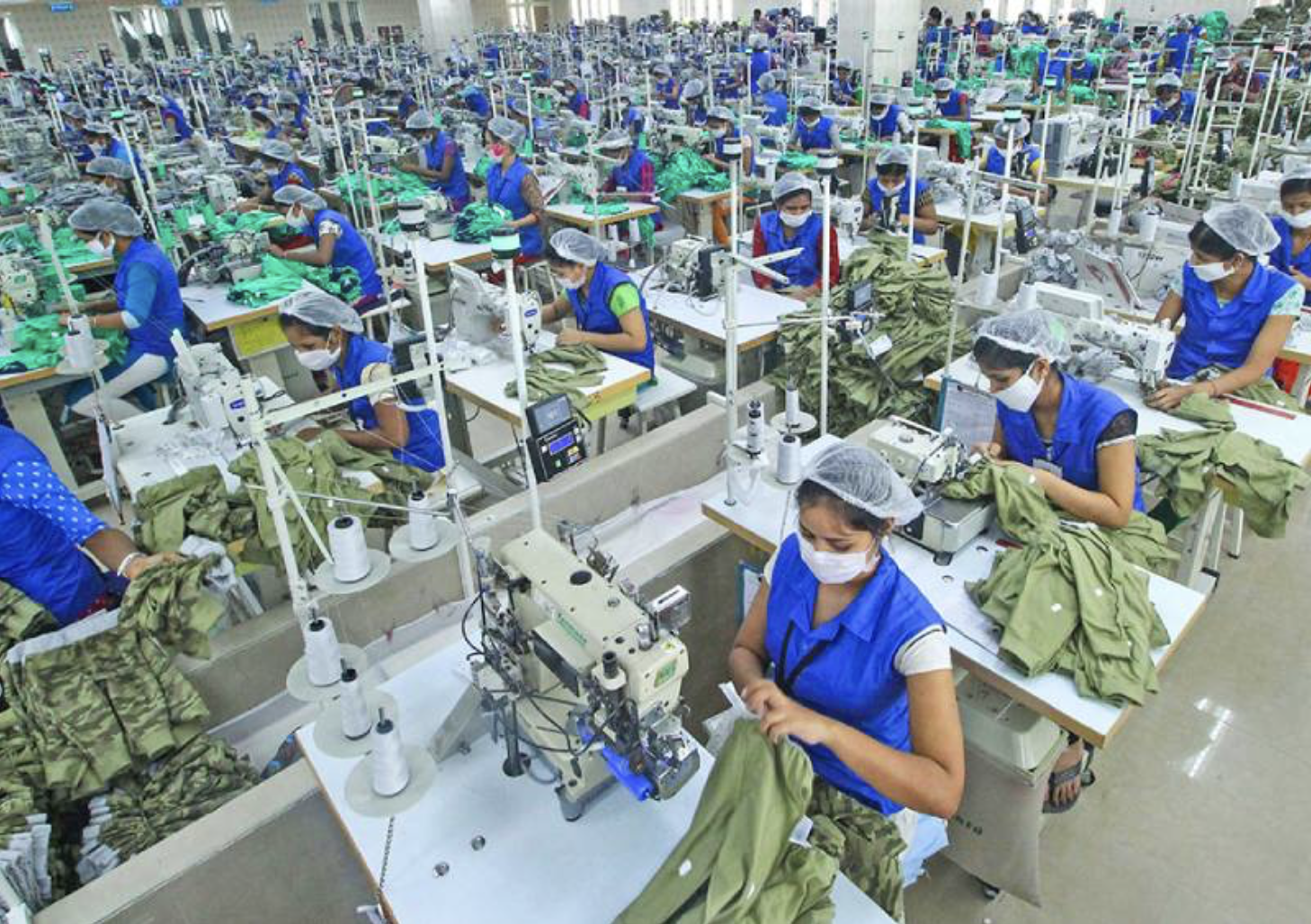
Textile factory in Bangladesh
What is often presented as collaboration takes place within an unequal playing field. Western systems determine pace, scale, and market; artisans provide labour and skill. The aesthetic is admired, but autonomy disappears. Craft becomes a production tool within a capitalist framework that measures value in output and profit — a framework deeply entangled with white-supremacist assumptions about who gets to define what is valuable.
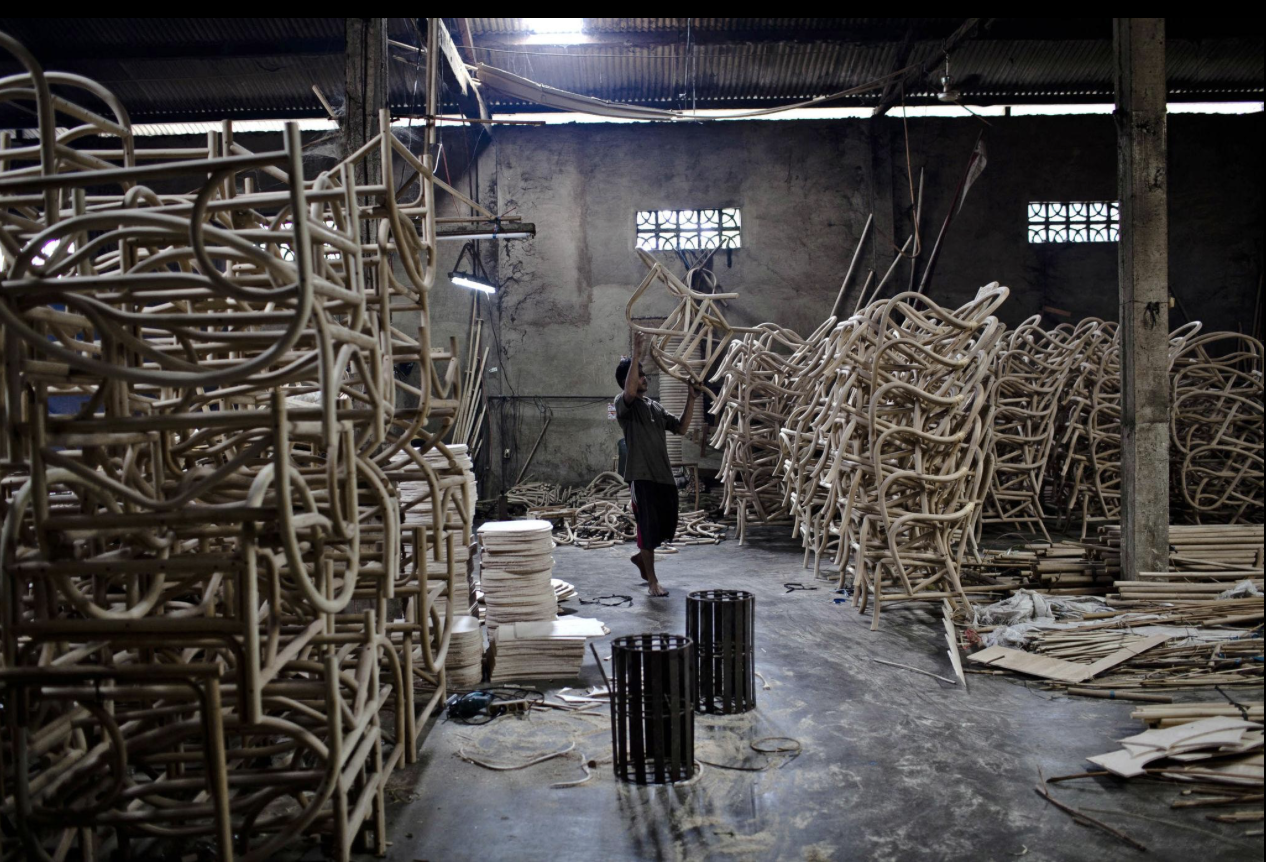
Mass production of Rattan chairs - Indonesia
This leads to disruption. To exploitation — sometimes overt, sometimes subtle. And to a quiet form of disregard: the notion that craft only has legitimacy once it is validated by the West.
Autonomy as an ethical principle
Ancient craft requires no external confirmation to be valuable. Its meaning already resides within it — shaped by time, community, and transmission. What it needs is autonomy: the space to develop on its own terms, without interference, without appropriation, without pressure to prove itself within an external system.
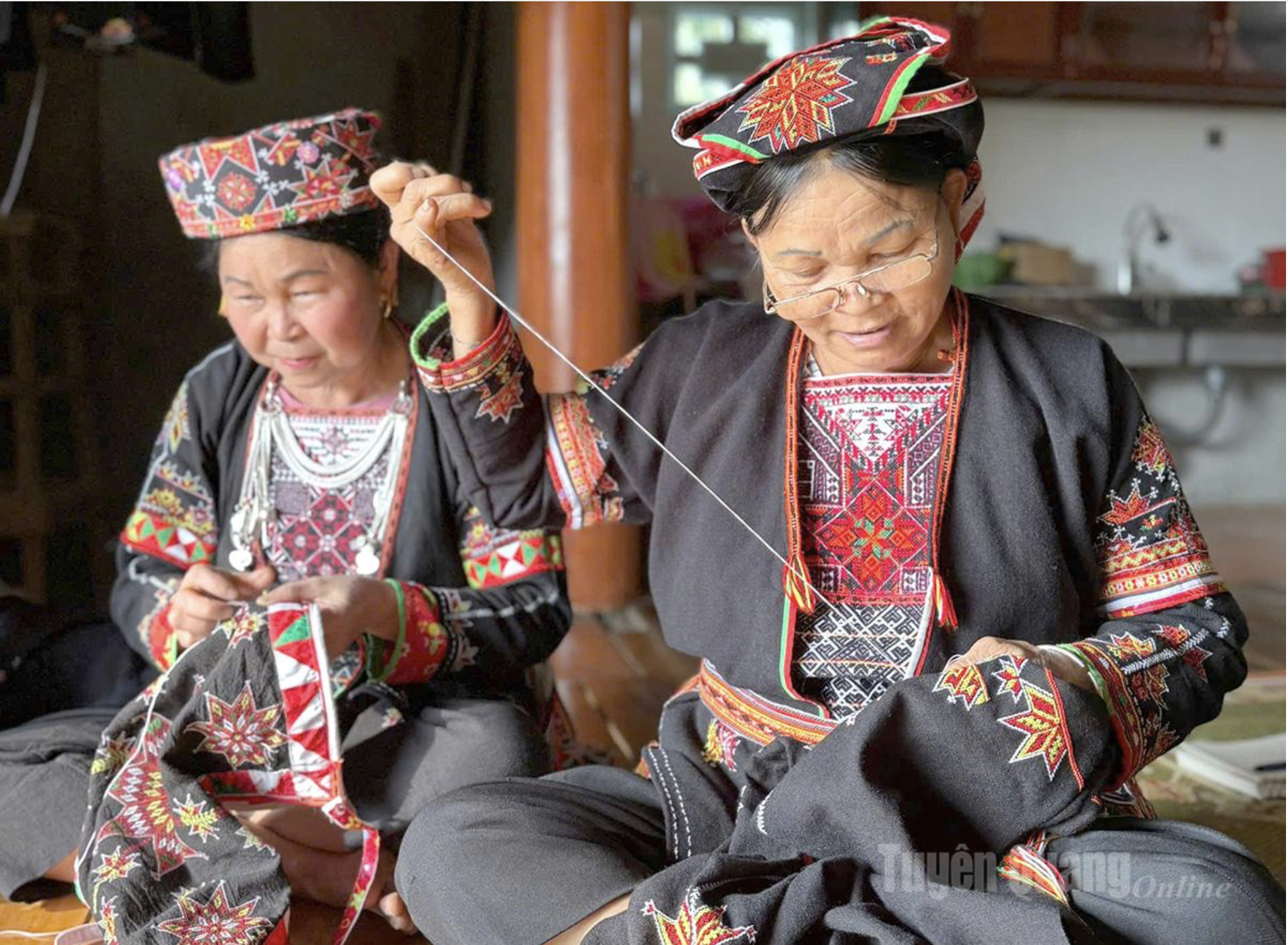
Dao Da Ban women (Vietnam) pass on their embroidery skills
Inspiration therefore also calls for restraint. For recognising that not everything that inspires needs to be used. That respect sometimes means maintaining distance.
Why Studio Myr produces locally
From this understanding, Studio Myr consciously produces in its own country. Not out of convenience, but out of conviction. By working locally with craftspeople within our own cultural and historical context, I avoid allowing my admiration for other traditions to turn into disruption or exploitation.
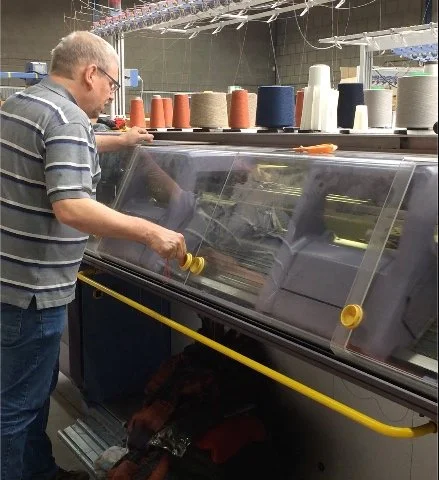
Our collections are being produced by KNIT-IT in Lichtenvoorde, The Netherlands
In my own practice, I strive for the same principles I admire worldwide: attention, repetition, love for material, and the patience to keep refining. Not to copy traditions, but to honour their attitude — where I bear responsibility.

I designed my collection African Nomads, inspired by the beauty of the Dogon culture
The value of not appropriating
In a system that constantly demands more — more production, more stories, more “authenticity” — I believe restraint is an act of integrity. That consciously refraining can sometimes say more than participation.
Perhaps the question is not how we can use craft, but how we can avoid subjecting it once again to our own standards. And whether we dare to acknowledge that some forms of knowledge require no stage, no market, and no translation.
Ancient craft requires no validation —
only autonomy.
That is the space I choose to leave.
And the reason Studio Myr creates where it is rooted —
so that other roots elsewhere may continue to grow, undisturbed.