
Houndstooth Fashion History — From Bronze Age Textiles to Modern Couture

What Is Houndstooth? A Pattern Recognised Across the World.
Houndstooth — or pied-de-poule in French — is one of the most enduring patterns in fashion. Characterized by broken checks that resemble the shape of a bird’s footprint, this distinctive weave has journeyed through centuries, cultures, and social classes to become a symbol of elegance, rebellion, British heritage, and high fashion.
But its story begins far before the runways of Paris and London.
How the Houndstooth Pattern Is Constructed
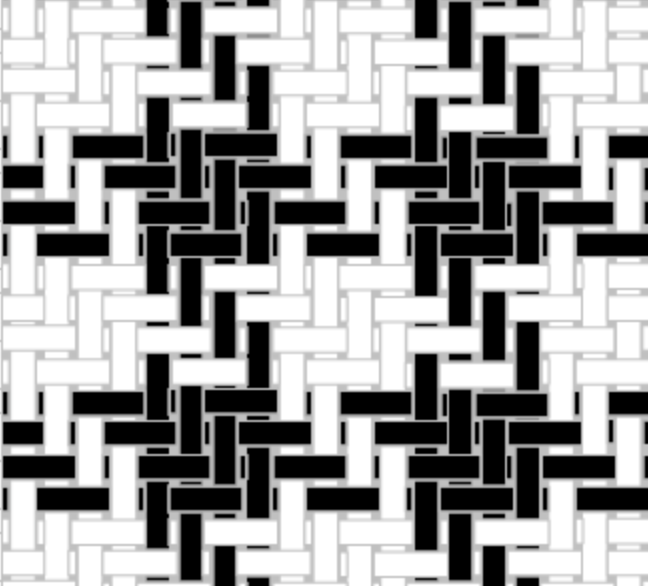
Houndstooth is traditionally created through a two-tone weaving technique using alternating bands of light and dark threads across both warp and weft. The distinctive jagged silhouette appears when the loom repeats a sequence of four over and four under, forming the broken geometry that gives houndstooth its name. In earlier centuries, this effect was achieved using naturally tinted wool or fibres taken directly from sheep of different colours—a simple method that produced a strikingly modern textile.
Houndstooth is traditionally created through a two-tone weaving technique using alternating bands of light and dark threads across both warp and weft. The distinctive jagged silhouette appears when the loom repeats a sequence of four over and four under, forming the broken geometry that gives houndstooth its name. In earlier centuries, this effect was achieved using naturally tinted wool or fibres taken directly from sheep of different colours—a simple method that produced a strikingly modern textile.
Houndstooth in Ancient Times — Woven Patterns Before Fashion Existed
Long before fashion houses adopted it, houndstooth appeared surprisingly early in human history. Textile fragments and cloaks have been discovered featuring recognizable variations of the pattern, proving that its origins stretch back thousands of years.
Long before fashion houses adopted it…

The oldest Bronze Age houndstooth textiles date from 1500 - 1200 BC. They were found in the present area of Salzburg in Austria and made by people of the Hallstatt Culture, who lived there during the late Bronze age
The Gerum Cloak — An Iron Age Masterpiece
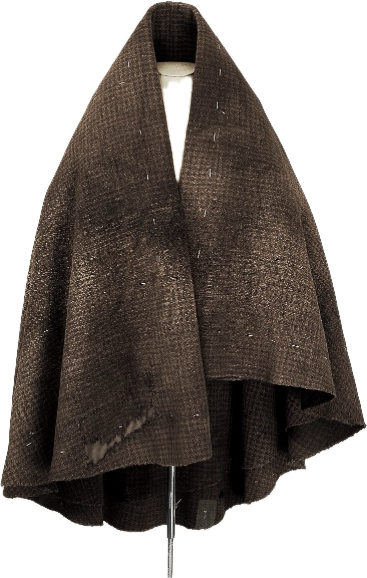
The Gerum Cloak 360 - 100 BC
One of the best known early occurrence of houndstooth is the Gerum Cloak, a garment discovered in the 1920s on Gerum mountain in the county of Västergötland, Sweden. It was found in a peat bog. It had been folded up and 3 stones were placed on it presumably by whomever left it in the bog. They also discovered there were several of gashes in the cloak, speculated to be caused by a bronze dagger.
Years later, the Swedish National Laboratory of Forensic science analyzed it and agreed the cloak has five cuts made by a knife or dagger. If the cloak was worn, the stabs would have struck the body in the chest, abdomen, spine, and neck. The person who wore this cloak was possibly murdered with a dagger. But where is the body? And why was the cloak neatly folded with 3 stones on top? Some mysteries may never be solved.
The Gerum cloak looks very brown now because it lived in a bog for 2000 years, but the original colours were brown and white.
From Rural Scotland to British Heritage
Houndstooth quietly shifted from working-class utility to upper-class symbol, beginning a duality it still carries today: practical yet refined, everyday yet aspirational.
The Shepherd’s Cloth
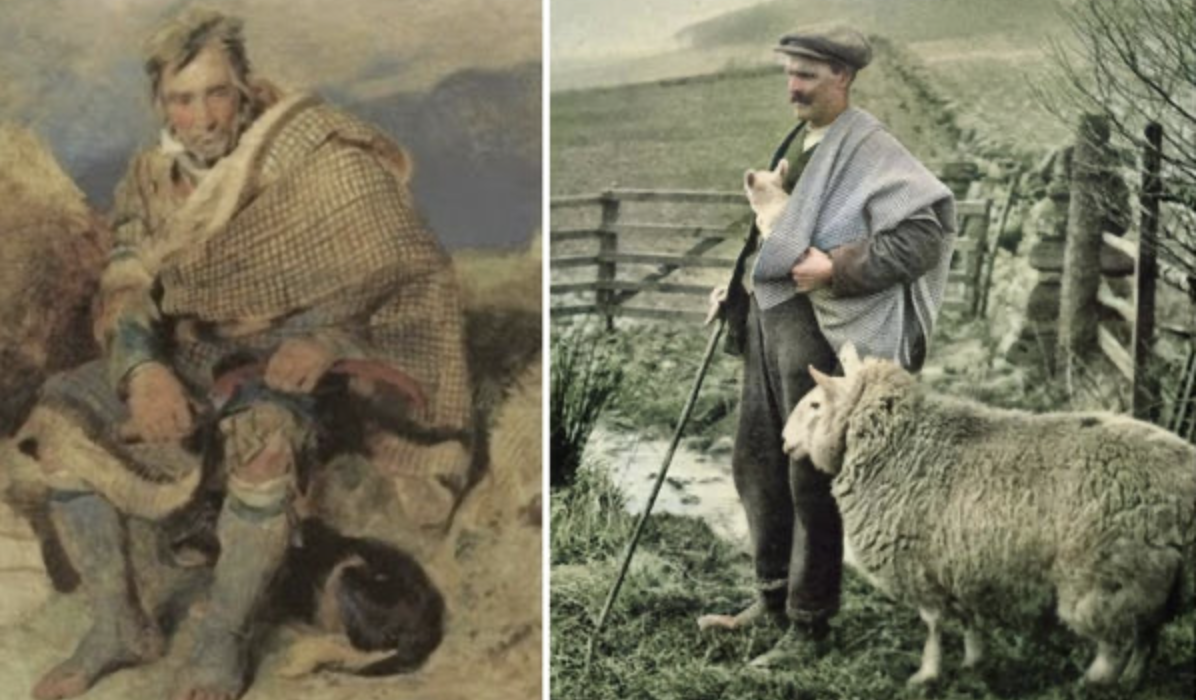
Worn first for protection — before it ever became fashion
In its earliest recognisable form, houndstooth belonged to the shepherds of the Scottish lowlands. Woven from local wool, the pattern served not as decoration but as durability — a garment to withstand wind, rain, and rugged terrain. Each piece was practical, warm, and long-lasting, reflecting the land and the lives shaped by it. Yet even in its humble beginnings, the play of light and dark threads revealed a quiet artistic instinct — proof that beauty often emerges from necessity.
Adoption by the British Elite
As trade expanded and textile production refined, the pattern made its way beyond farmland and pasture. The British aristocracy took notice of its distinctive geometry and understated elegance, and houndstooth soon became a sartorial marker of status. What once wrapped shepherds at work now lined drawing rooms, hunts, and estate gatherings. Clothing, once purely functional, transformed into a visual language of belonging — from practicality to prestige.
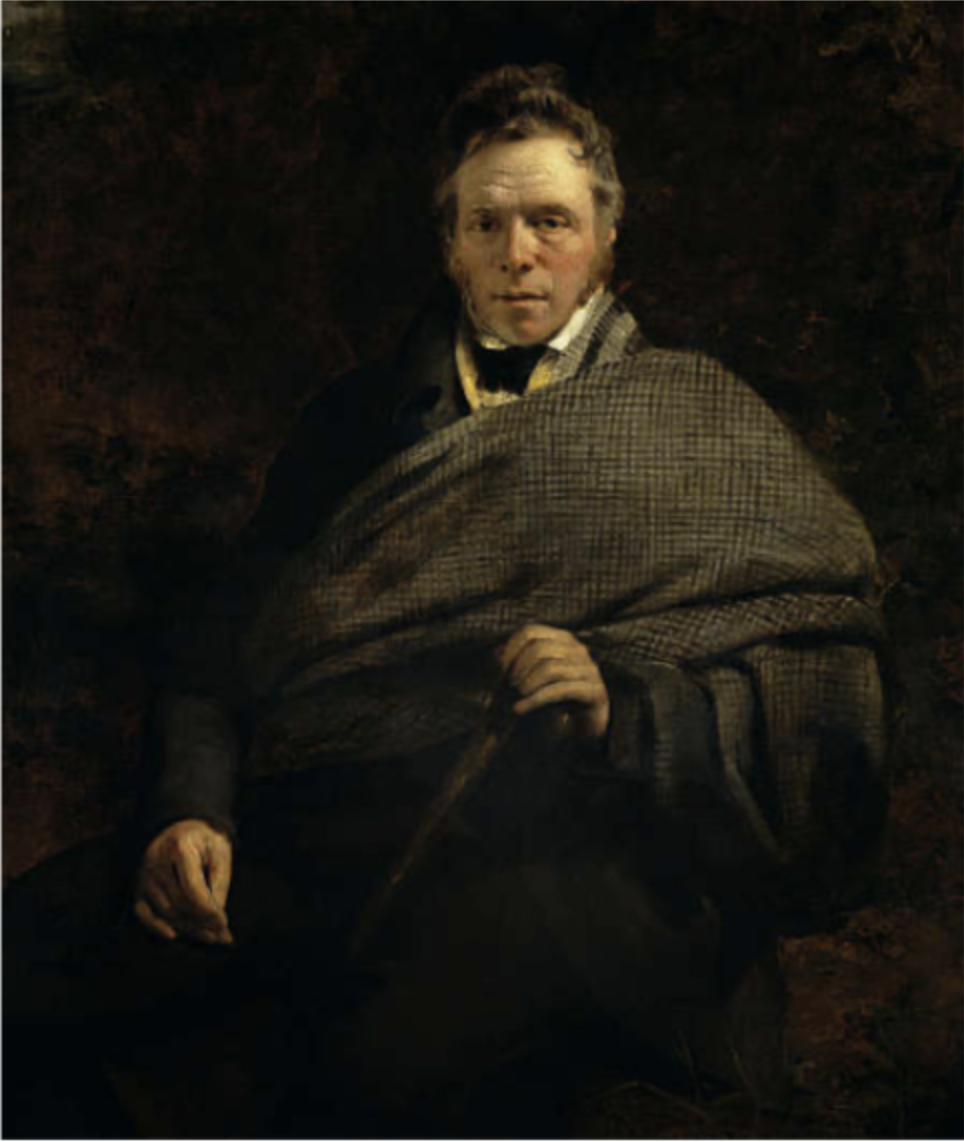
Portrait of an English gentleman 19th century - after Sir David Wilky
How Weaving Techniques Evolved

Make it stand out
With the introduction of improved looms during the 18th and 19th centuries, artisans gained greater control over tension, thread density, and repetition — allowing the houndstooth motif to become sharper, bolder, and more consistent. Industrial advancements later made production faster and more accessible, while modern knitwear techniques opened entirely new interpretations.
Today, houndstooth can be expressed in wool, silk, jacquard, digital patterning, and three-dimensional knit structures — a timeless idea continually rewritten by human hands.
Houndstooth Arrives in High Fashion
It wasn’t until the mid-20th century that houndstooth truly captured the world of high fashion. Designers recognised its potential as both classic and modern — geometric yet expressive, bold yet refined. The black-and-white contrast became a visual statement: confident, architectural, unmistakable.
From tailored coats and structured suits to opera gloves and evening dresses, the pattern transcended utility and entered the language of luxury. It became a hallmark of couture houses and a favourite among style icons, photographed endlessly for its striking graphic presence.
Houndstooth Makes Headlines
As fashion media emerged, the pattern travelled further and faster than ever before.
When houndstooth appeared in Vogue, it was no longer a regional textile — it became a cultural symbol.
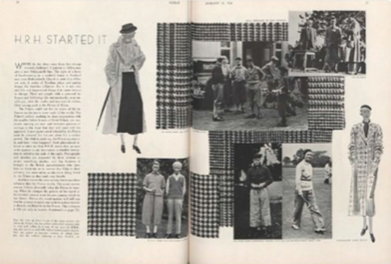
Houndstooth made its first appearance in Vogue in januari 1934, under the title “H.R.H. started it”
Christian Dior Revives the Motif — The New Look
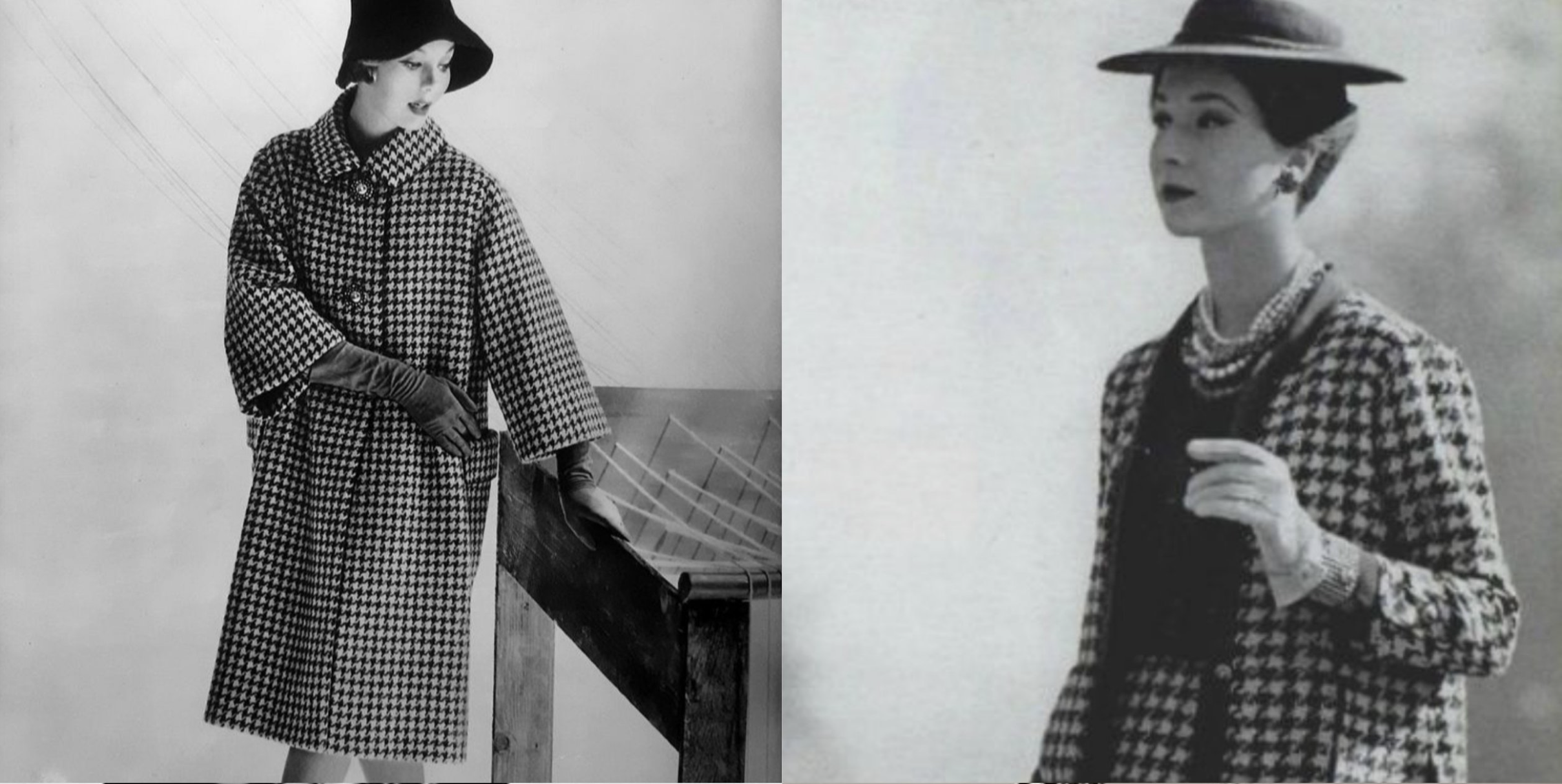
In 1948, Christian Dior reintroduced the ancient houndstooth motif to high fashion through his now-legendary “New Look.” The bold contrast of the pattern complemented the sculptural silhouettes that defined the post-war era. What began on the backs of shepherds now walked the Paris runway, recast as a code of elegance, power, and modern femininity.

Houndstooth reemerged in 1948 with Dior’s New Look collection.
Larger Than Life — Modern Interpretations
Designers of the late 20th and early 21st century pushed houndstooth further still. Alexander McQueen magnified the motif to surreal, theatrical scale for his 2009 “Horn of Plenty” collection, transforming a traditional pattern into a piece of visual narrative. From Chanel to Ferragamo, the motif continued to evolve — abstracted, enlarged, coloured, and reimagined, proving its endless capacity for reinvention.

In 2009, Alexander McQueen reimagined houndstooth with surreal, sculptural silhouettes — proving the pattern’s power to evolve.
Why Houndstooth Endures — A Pattern of Power, Poise & Personality
Houndstooth endures because it offers something rare: harmony between contrast. Its geometry feels modern, regardless of era; its structure invites reinterpretation, from wool to silk to knitwear. Whether worn boldly or quietly, it carries an attitude — confident but not loud; classic yet undeniably contemporary.
It is versatile, distinctive, and deeply human — a pattern shaped by necessity, embraced as fashion, and continually reborn through craft and imagination.
From couture refinement to avant-garde exaggeration, houndstooth proved it could be subtle, sculptural, or spectacular — evolving with every generation.
Houndstooth in Modern Knitwear — Studio Myr’s Interpretation
At Studio Myr, the ancient motif finds new life through refined yarns, sculptural forms, and responsible production. Our pied-de-poule knitwear is crafted locally in the Netherlands, shaped directly on the machine, and finished by hand — honoring tradition while shaping for the present.

Scarf Moss of our Pied-de-Poule Collection
By translating houndstooth into knitwear, we introduce softness, warmth, and movement to a traditionally crisp, woven structure. The pattern gains new rhythm and dimension — a gentle interplay between shadow and surface, form and flow.

Pencil Skirt Fair of our Pied de Poule Collection
A Story Still Being Woven
From Bronze Age cloaks to British heritage, from couture runways to contemporary knitwear — houndstooth proves that true design survives its era. We honour its history not by replicating the past, but by continuing the story with care, precision and creativity.