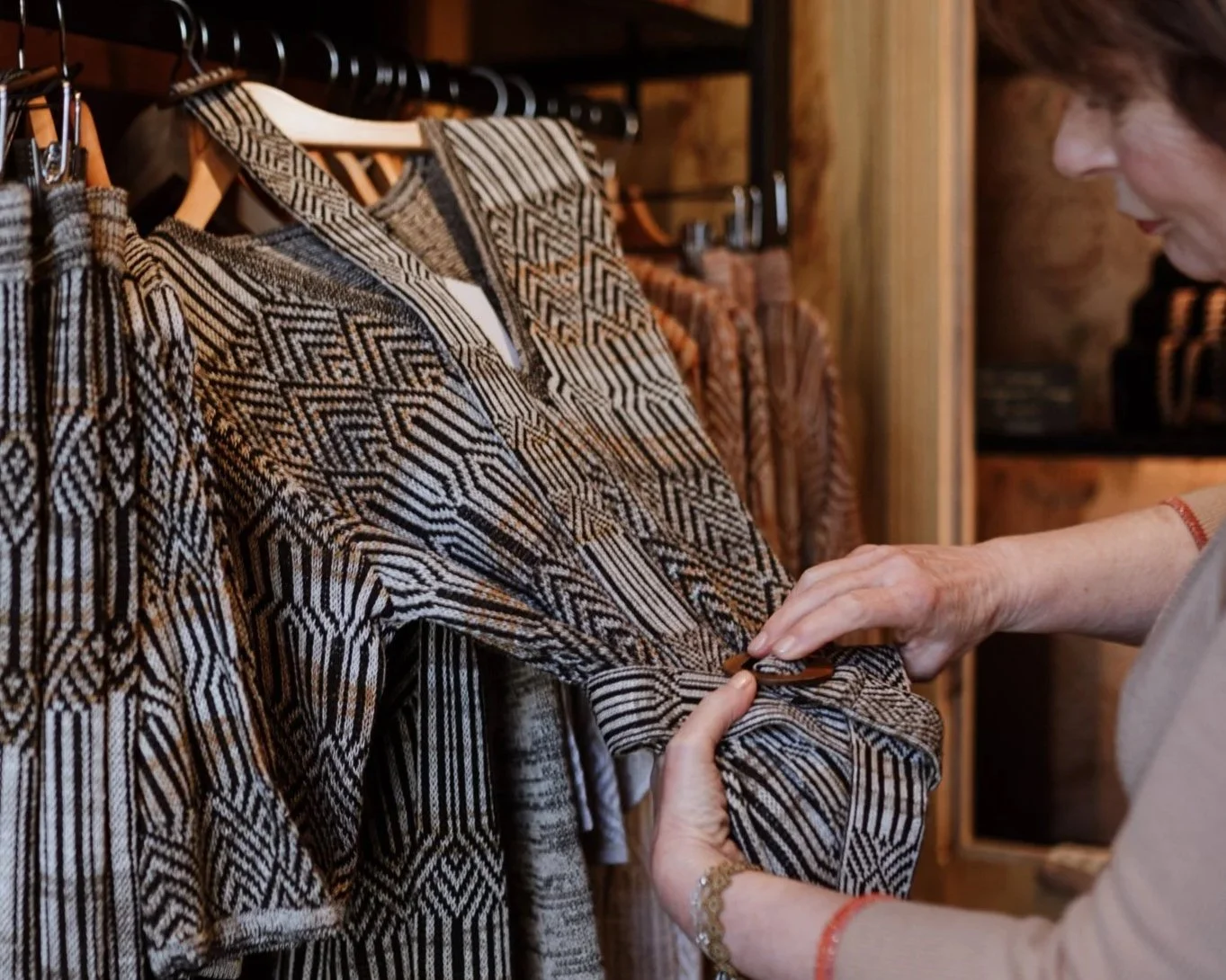
Threads of Time: The Enduring Legacy of Flax and Linen

The body moves within space, not against it — guided by air, by rhythm, and by the quiet structure of the garment.
Linen is one of the oldest textiles known to humankind — a material shaped not only by nature, but by time itself.
For thousands of years, flax has been cultivated, processed and transformed into linen cloth. Across continents and civilisations, it has served as garment, ritual object, and daily companion — valued for its strength, its lightness, and its quiet beauty.
What distinguishes linen is not only its origin, but its continuity.
Unlike many materials that have evolved beyond recognition, linen has remained remarkably close to its beginnings.
In this blog, I explore the story of the long and intricate journey of flax — from its humble beginnings in the fields to its transformation into linen fabric of quiet refinement. Along the way, I explore its history, its craftsmanship, and its enduring relevance, while reflecting on my own connection to flax and linen within my work as a designer.
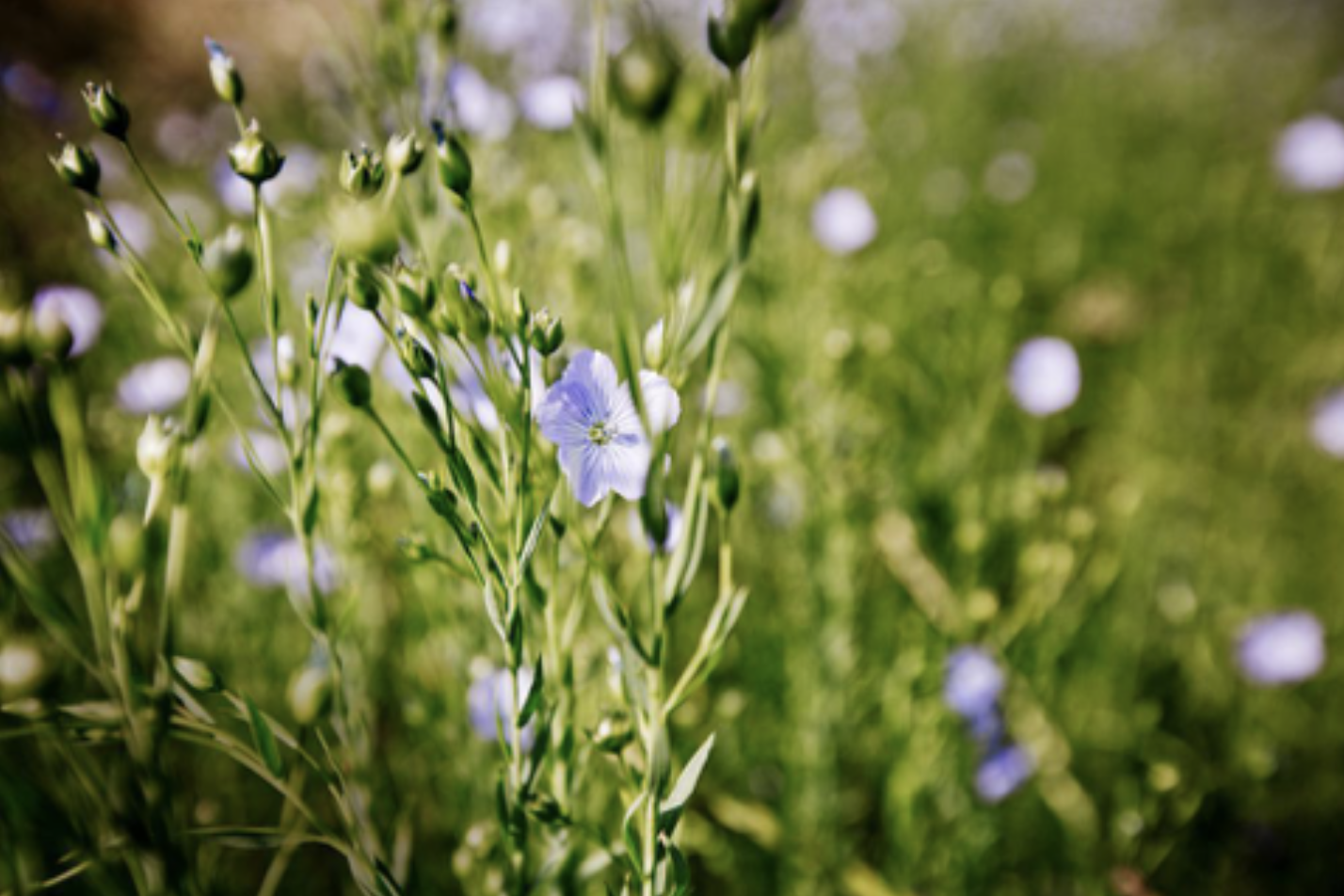
Blooming flax plants
Flax, Linum usitatissimum, is one of the oldest cultivated plants in the world. Its history stretches back more than 30,000 years. It is the origin of linen — a textile woven into the story of human civilisation itself. Its qualities — strength, breathability, durability — have ensured its place across millennia. From ancient Egypt to contemporary design, flax speaks equally of tradition and continuity.
While the use of flax fibre dates back over 30,000 years, the development of woven linen textiles appears later, emerging around 10,000 years ago.
Linen is among the earliest textiles ever developed, with evidence dating back nearly 10,000 years. While today it is often associated with refined clothing, summer garments and elegant interiors, historically its role was far more fundamental. For centuries, linen was part of everyday life — most notably as a material worn closest to the skin. Only with the mechanisation of cotton production in the late eighteenth century did cotton become more widely accessible, gradually replacing linen in many daily applications.
The Language of Linen
Even the word linen carries history within it.
The term is of West Germanic origin and is cognate with the Latin name for the flax plant, linum, and the earlier Greek linón. This linguistic history gave rise to a number of other terms in English. Most notably, it lies behind the word line, derived from the use of a linen or flax thread to determine a straight line. It is also etymologically related to lining, because linen was often used to create an inner layer for clothing, and to lingerie, from the French, which originally denoted underwear made of linen.
Language, in this case, mirrors material culture. Linen was not simply a fabric among others. It was so central to daily life that it became woven into vocabulary itself.
When Fiber First Revealed Itself
There is something deeply compelling about natural materials such as wool and linen.
Discovered by human hands millennia ago, they have never lost their value. Not in essence, not in relevance. What is perhaps even more striking is that the way we gather, process and transform these materials has remained, at its core, unchanged.
We still harvest. We still separate, spin, shape and assemble.
The tools may have evolved, the scale may have shifted, yet the fundamental gestures remain the same. This suggests that from the very beginning, these materials were understood with a rare clarity.
Everything superfluous was gradually stripped away, leaving only what was essential. What remains is not a method refined by excess, but a process distilled to its purest form. Perhaps that is also why they continue to resonate so deeply.
They ask little interpretation of us. They meet us directly — in touch, in weight, in temperature. There is a quiet recognition in them, as if the dialogue between material and hand has never truly been interrupted. It is this precision, this absence of unnecessary intervention, that continues to define their enduring value.
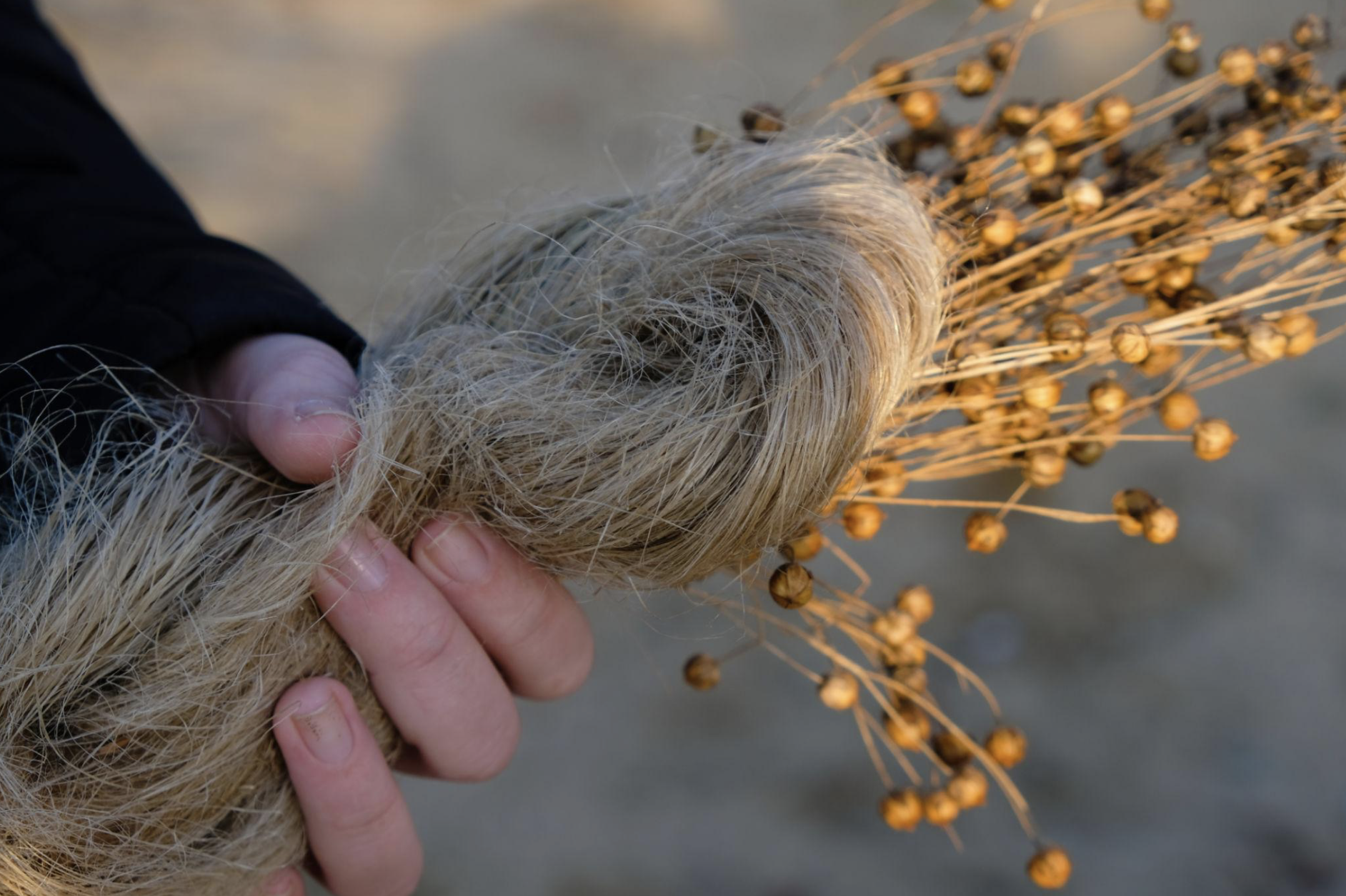
A handful of fiber - the beginning of everything that followed
A Thread That Runs Through Time
Linen cloth recovered from Qumran Cave near the Dead Sea, dating from the 3rd century BCE to the 1st century CE, offers a tangible and deeply moving connection to one of the oldest textile traditions in human history.
The 77 documented fragments consist of plain, white-bleached linen, occasionally decorated with blue stripes or twisted cord. Their purpose was not decorative, but essential: they were used primarily to wrap, protect, and seal the Dead Sea Scrolls within storage jars. Even in their restraint, these fragments speak eloquently of linen’s long association with care, preservation, ritual and value.
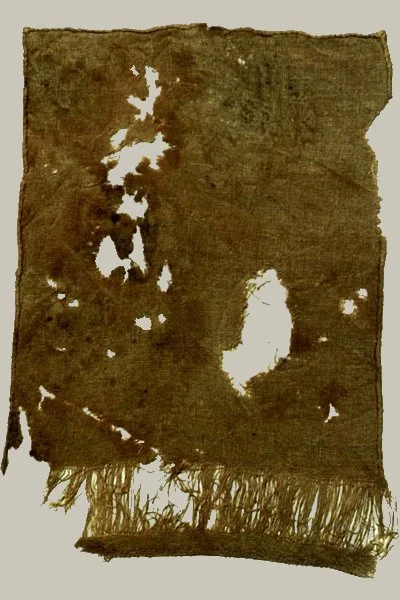
Linen fragment, Qumran Cave — 3rd century BCE to 1st century CE
The Earliest Discoveries — Prehistoric Flax and the First Textiles
Linen textiles appear to be among the oldest in the world. Their history goes back many thousands of years.
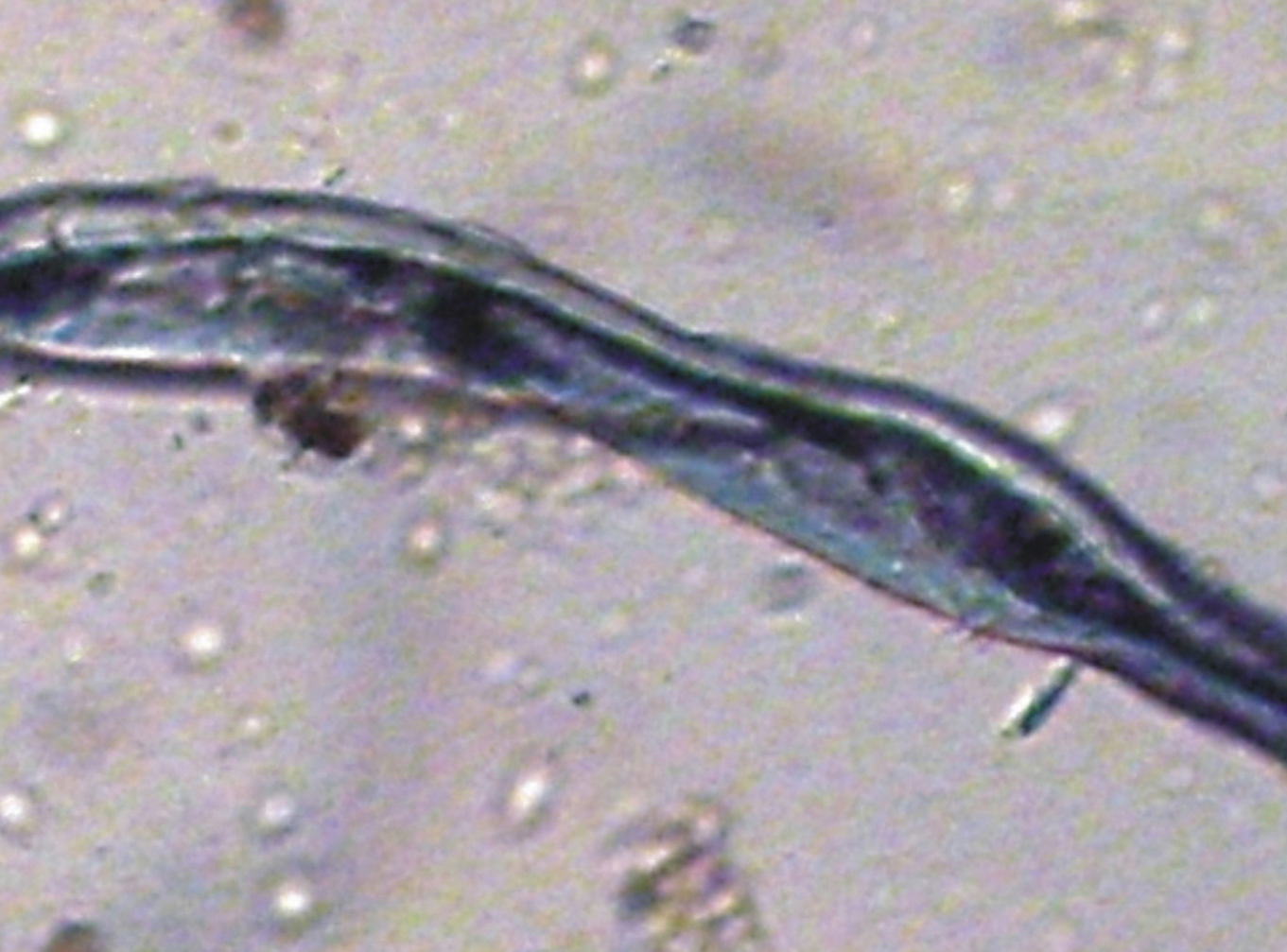

Dyed flax fibers found in a cave in the Caucasus, in present-day Georgia, suggest that the use of woven linen fabrics from wild flax may date back more than 30,000 years. Archaeologists working in the Dzudzuana Cave in the Eurasian country of Georgia discovered what are now regarded as the world’s oldest known textiles: flax fibers dating back 30,000 years or more.
These fibers had not merely survived. They had been worked. They were twisted, and this twisting is a crucial detail, because it shows that the flax had already been spun. At that time flax still grew wild, and it proved to be valuable not only as a source of edible grain, but also as a source of fiber.
The significance of this find lies not only in age, but in refinement. The researchers reported in Science magazine that they found evidence that the fibers were knotted and dyed — black, gray, turquoise and even pink. Such colours suggest an early artistic sensibility, consistent with other prehistoric artifacts that reveal a surprising degree of aesthetic expression.
Professor Bar-Yosef, one of the archaeologists involved, observed that the fibers found in the cave were probably braided together in a macramé-like way. “You can make headgear, you can make baskets, you can make ropes and strings, and so on,” he said. No such complete objects were recovered — which is hardly surprising after 30,000 years — but the evidence strongly suggests that flax fiber was already being used in many forms.
The discovery also suggests that string and fiber technologies were far less humble than they might seem. They may have played a vital role in helping our ancestors survive the last Ice Age.
From Necessity to Distinction — Flax Across Early Civilisations
Flax is one of the oldest cultivated plants known to humanity. Evidence of its use dates back to the Stone Age, and the first records of flax cultivation show that it was already being used for its fibers as early as 10,000 years ago in ancient Europe.
Its transformation into linen became a crucial part of many early civilizations, including the Sumerians, Egyptians, Greeks and Romans.
Babylonia — Clothing Becomes Fashion
The Babylonians, who inhabited the southern part of Mesopotamia, were known as textile manufacturers and traders. Their textile goods were precious enough to serve as gifts to neighbouring royal families. They excelled in the production of many kinds of textile items, and especially took pride in creating more sophisticated forms of dress, including their own collections of shawls and dresses.
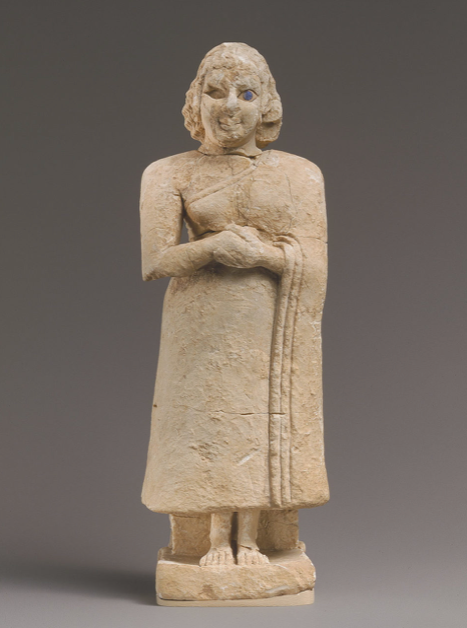
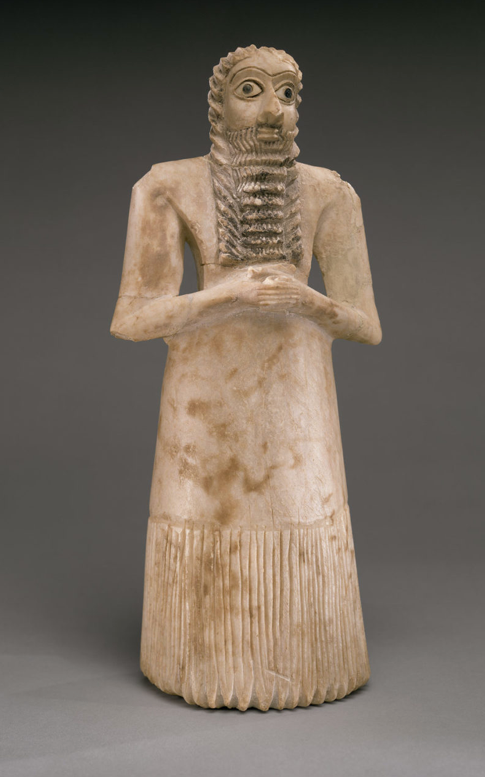
In Babylonian society, clothing clearly reflected class distinctions. The elite wore robes and tunics made of luxurious linen, while the lower classes wore garments fashioned from wool. Men’s basic dress consisted of a hat, a simple tunic and sandals, while additional layers signified affluence. Women wore a similar basic outfit, but embellished it more richly and with a wider variety of accessories.
As in earlier periods, the length of one’s clothing marked one’s social rank. Those of greater means wore longer tunics and robes. The lower classes of Babylonia generally wore shorter tunics or kaunakes, and typically did not wear headdresses or carry staffs unless these were required by their occupations. Priests maintained a distinctive identity through long robes, often enhanced with a sacred goatskin shawl or wrap.
The Babylonians wore impressive textiles in the form of high-quality linen, but such linen was restricted to affluent families, priests and government officials. Linen was considered a luxury, used for royal family members and even for the statues of gods.
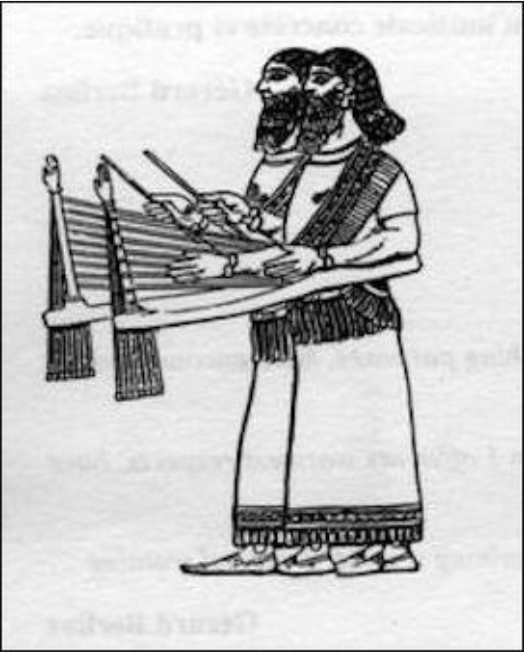
Babylonian weavers
The Babylonians are often associated with early developments in flax weaving and trade. Yet although they played this foundational role, it was the Egyptians who came to define linen in the ancient world.
Ancient Egypt — The Birth of Linen Prestige
In ancient Egypt, flax became a symbol of wealth, purity and religious significance. The Egyptians were among the first to cultivate flax on a large scale, and they transformed it into fine linen fabric of extraordinary quality.
The Tarkhan Dress
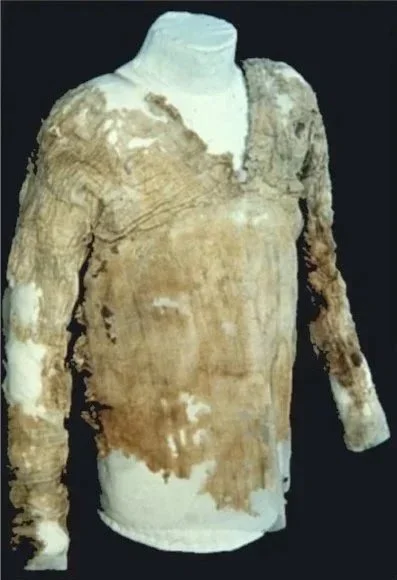
Dating to between 3482 and 3102 BCE, the Tarkhan dress is the oldest known woven garment ever discovered. Made from finely spun linen and shaped with a surprising degree of precision, it reveals an early understanding of tailoring — pleating, fitting and construction already present at the very beginning of textile history.
Found in a tomb at Tarkhan, south of Cairo, the garment had been folded and placed among burial textiles, preserved by the dry desert climate. Its survival is exceptional: not only as an object, but as evidence of a material already refined, already understood.
The linen itself is telling. Even in its fragile state, the fabric reveals a lightness and regularity of weave that speaks of skilled cultivation, spinning and weaving. This was not experimentation, but mastery — linen already fully embedded in daily life, ritual and dress.
What remains is not only a garment, but a trace of the body it once followed — a form shaped in cloth, carrying within it the earliest expression of clothing as both function and refinement.
Linen garments were worn by pharaohs, priests and the wealthy. The mummification process famously involved wrapping bodies in layers of linen, giving the material a spiritual, ceremonial and eternal dimension.
Flax was grown along the Nile River and processed using advanced techniques of retting, scutching and spinning.
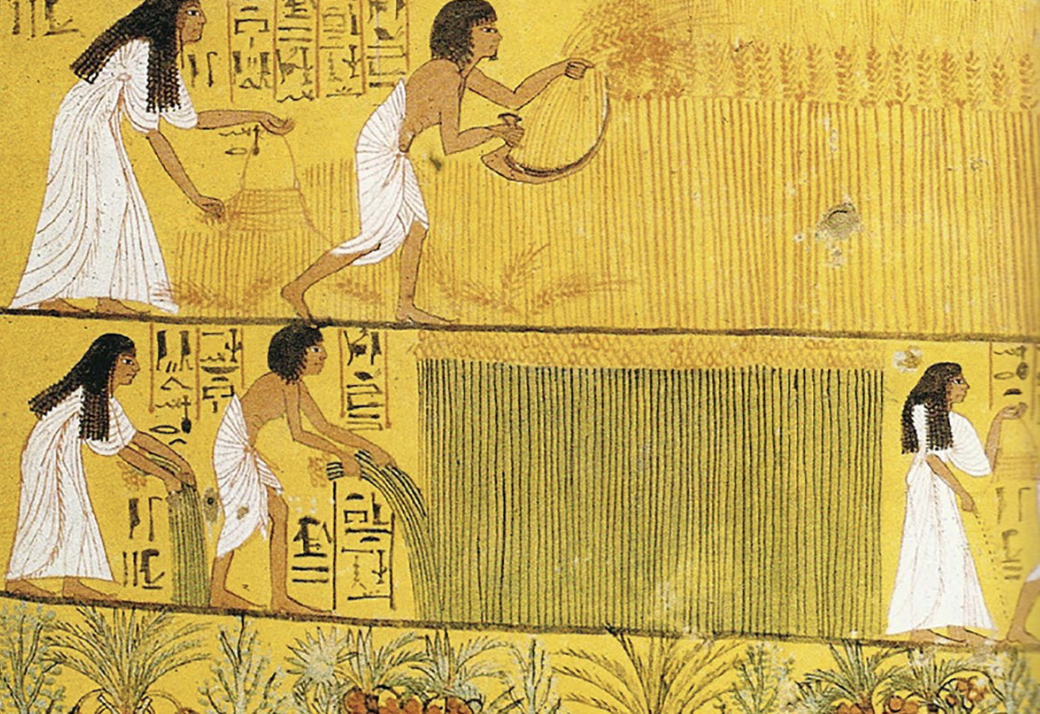
Line drawing of an Egyptian tomb painting, showing textile production
Linen was deeply revered not only for its beauty, but also for its strength and durability. The preserved wrappings of mummies that have survived for thousands of years remain among the most compelling proofs of linen’s longevity.
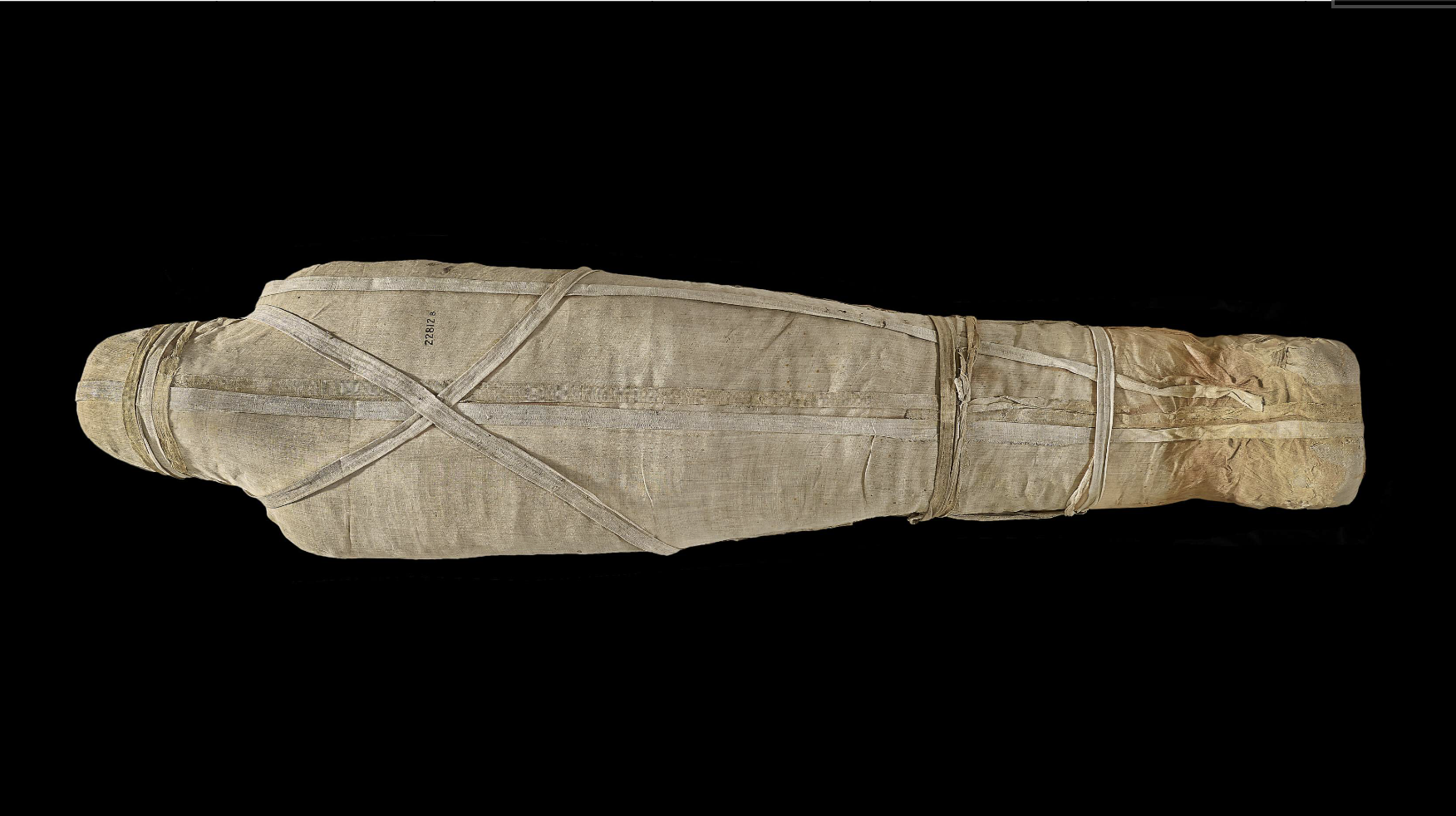
Mummy of adult woman Nestawedjat, with wrappings and outer shroud secured in place by several textile bands. 700BC-680BC
Ancient Greece and Rome — Refinement and Scale

Maximum prices edict showing prices for three grades of linen - Greece, 4th-century
The Greeks and Romans further refined the linen-making process. Flax was used for garments, military attire and household textiles.
Greek statues often depict athletes wearing linen tunics, where the fabric symbolised both purity and strength. Roman soldiers wore linen undergarments, while Roman women prized linen for its comfort and breathability.
The Romans also developed techniques for producing linen on a larger scale, and their weaving and spinning methods would become benchmarks for future generations.
Linen Close to the Skin — The Middle Ages, Renaissance and Everyday Life

Medieval women hackling, spinning and weaving flax
Throughout the Middle Ages, flax continued to be cultivated across Europe. Monasteries became important centres of flax production, where monks carefully cultivated the plant and processed its fibers into linen.
By the time of the Renaissance, linen had spread widely across Europe and had become the fabric of choice not only for luxurious garments, but also for the many forms of cloth used in daily life.
In medieval Europe, linen was commonly used for undergarments because of its comfort and breathability. It was the textile worn closest to the body.
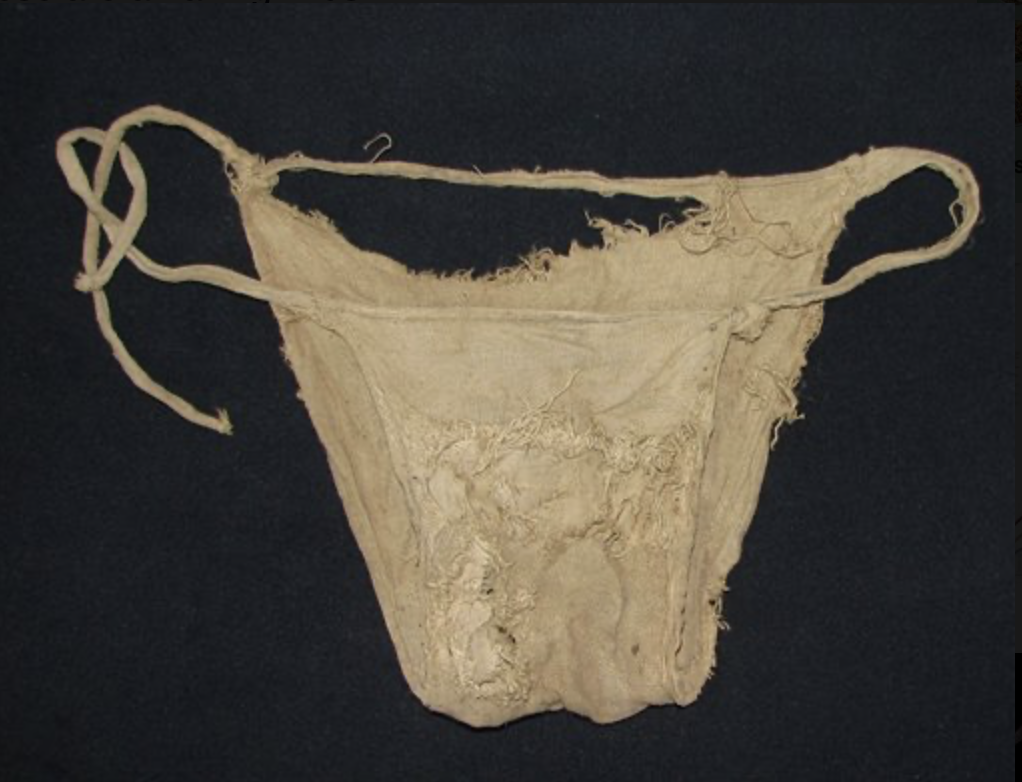
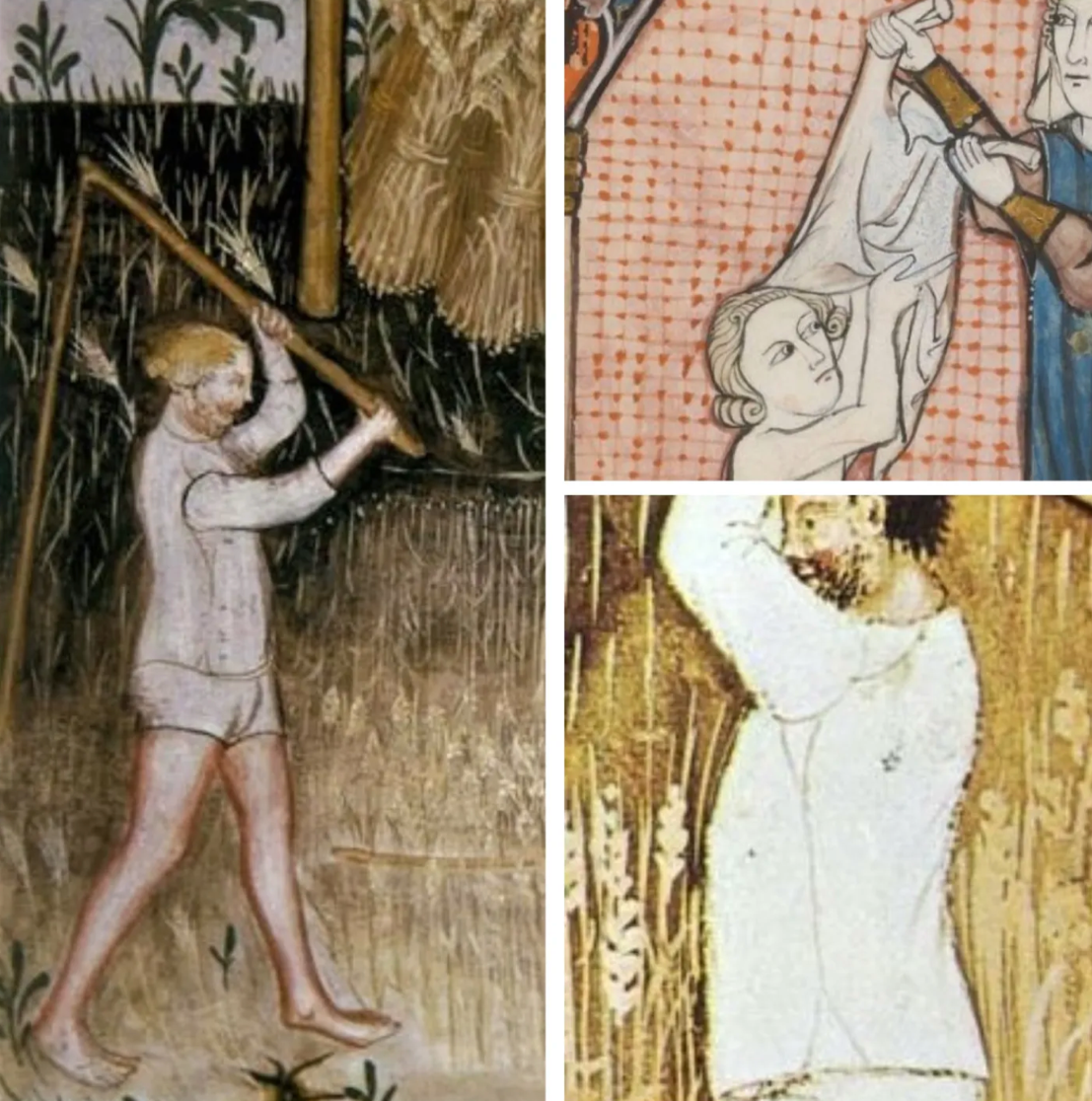
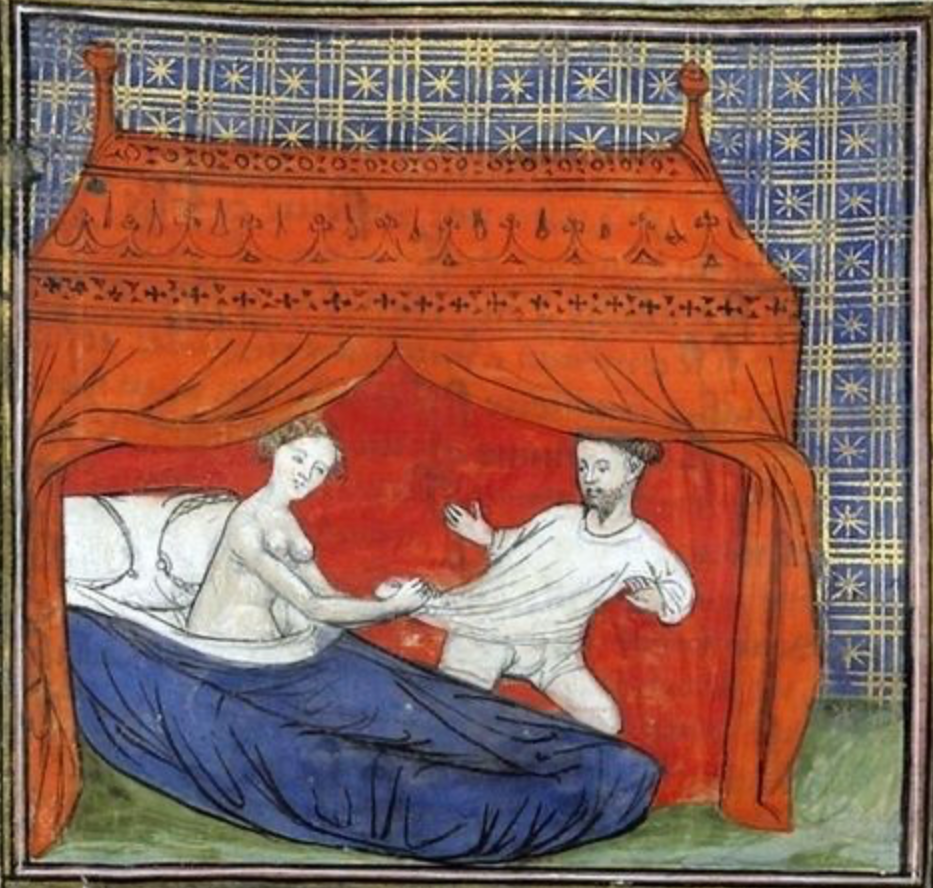
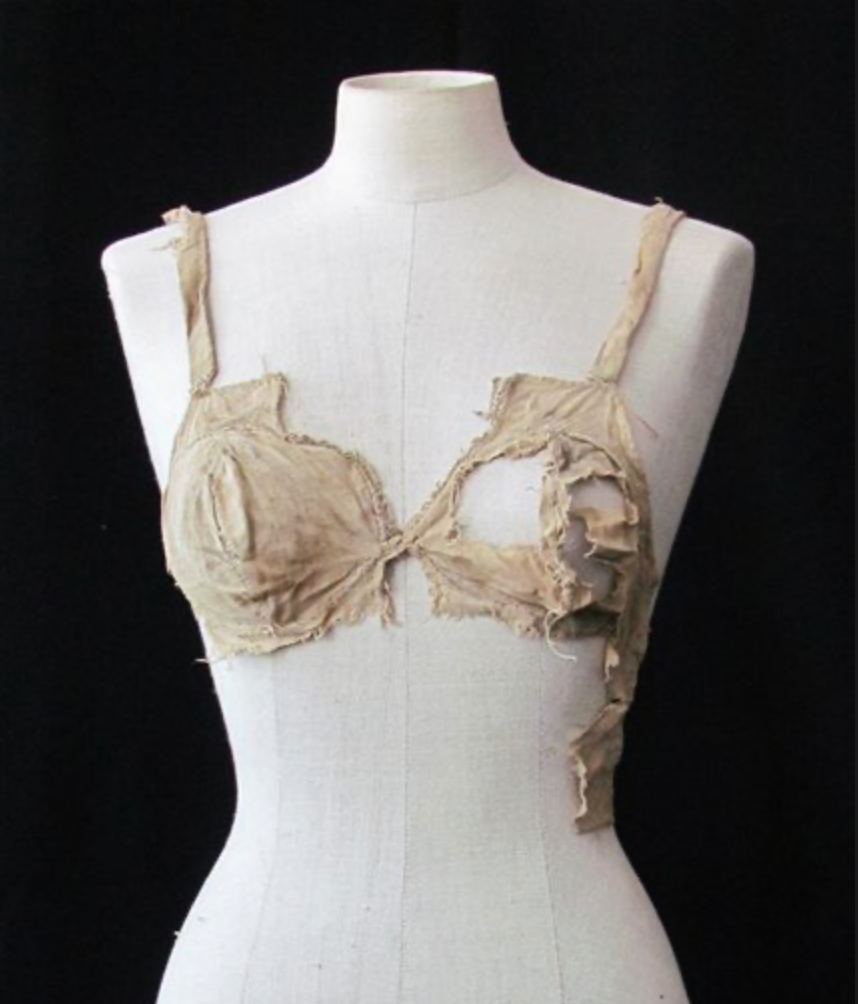
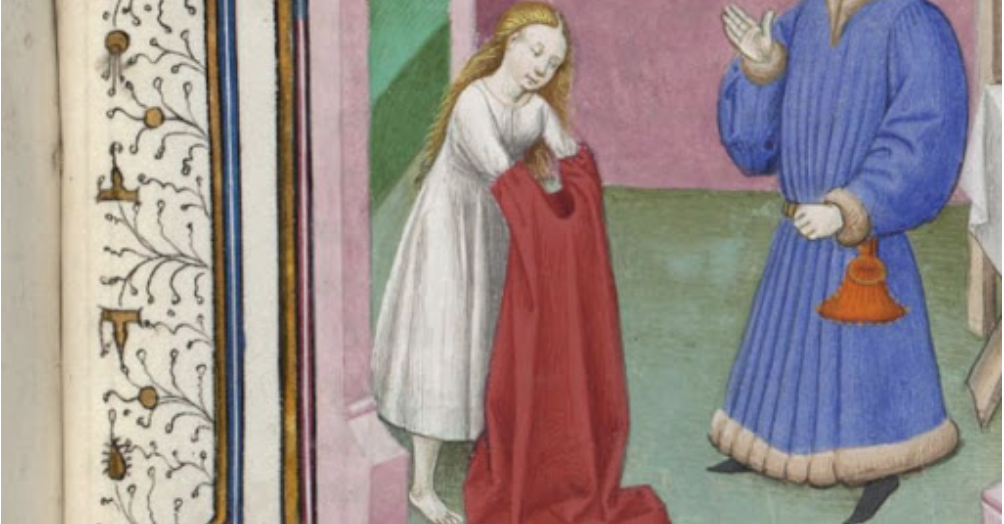
Men wore shirts and braies — medieval underpants resembling modern-day shorts — while women wore a smock or chemise and no pants. For a long time, that was all historians believed they knew about medieval underwear. But archaeological finds in East Tyrol, Austria, have shown that women even wore carefully made bras, adding an unexpected refinement to our understanding of historical dress.
Paintings, woodcuts and book illustrations — both sacred and secular — typically show only men wearing underpants: a small piece of cloth covering the buttocks and pubic area, fastened with narrow straps tied in a bow at the hips. When women are shown wearing pants, it is usually in the context of “a world turned upside down.” Trousers and underpants were considered symbols of male power, and women wearing them were portrayed either as combative wives trying to usurp the authority of their husbands, or as women of low morality.
Linen in beekeeping
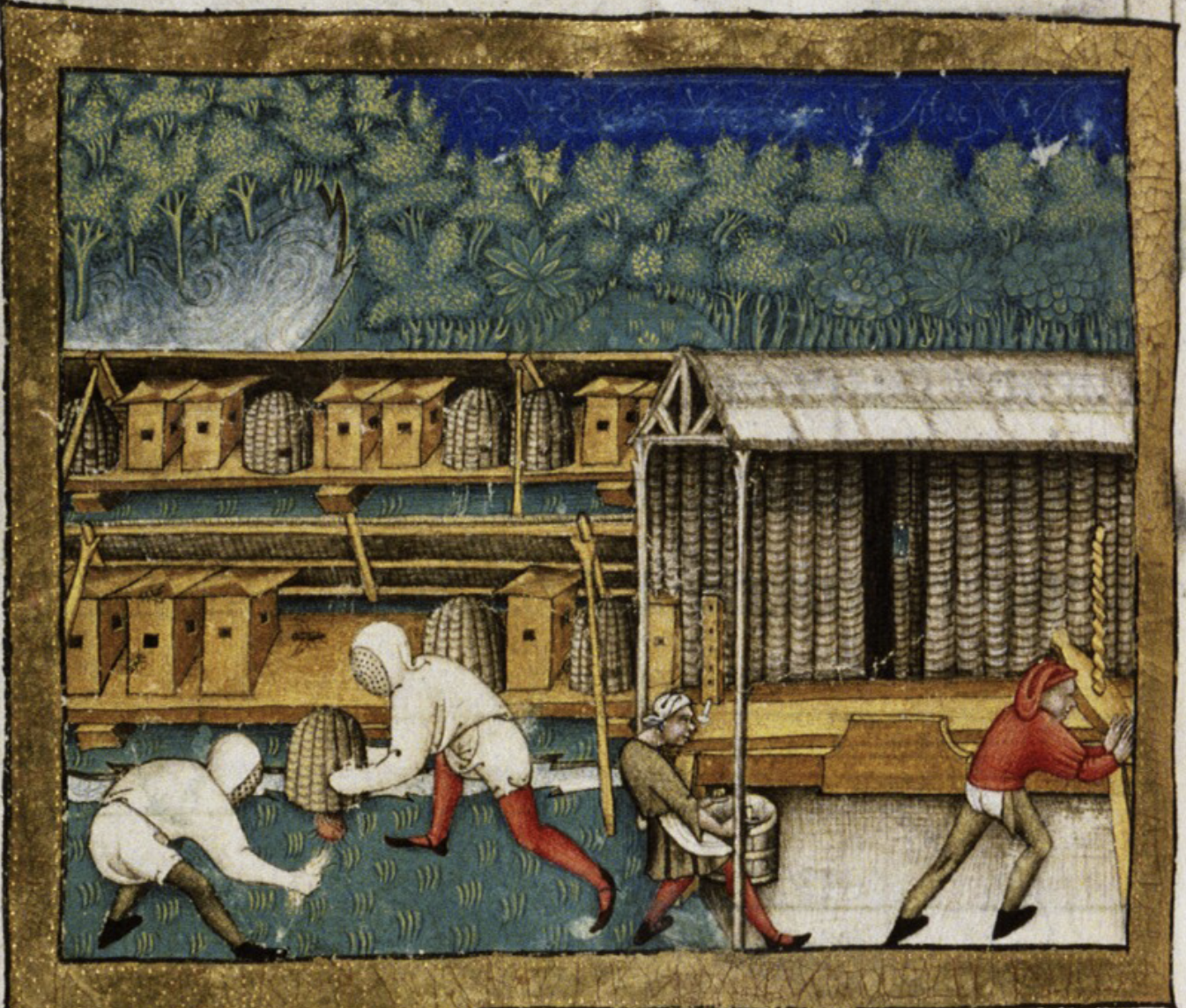
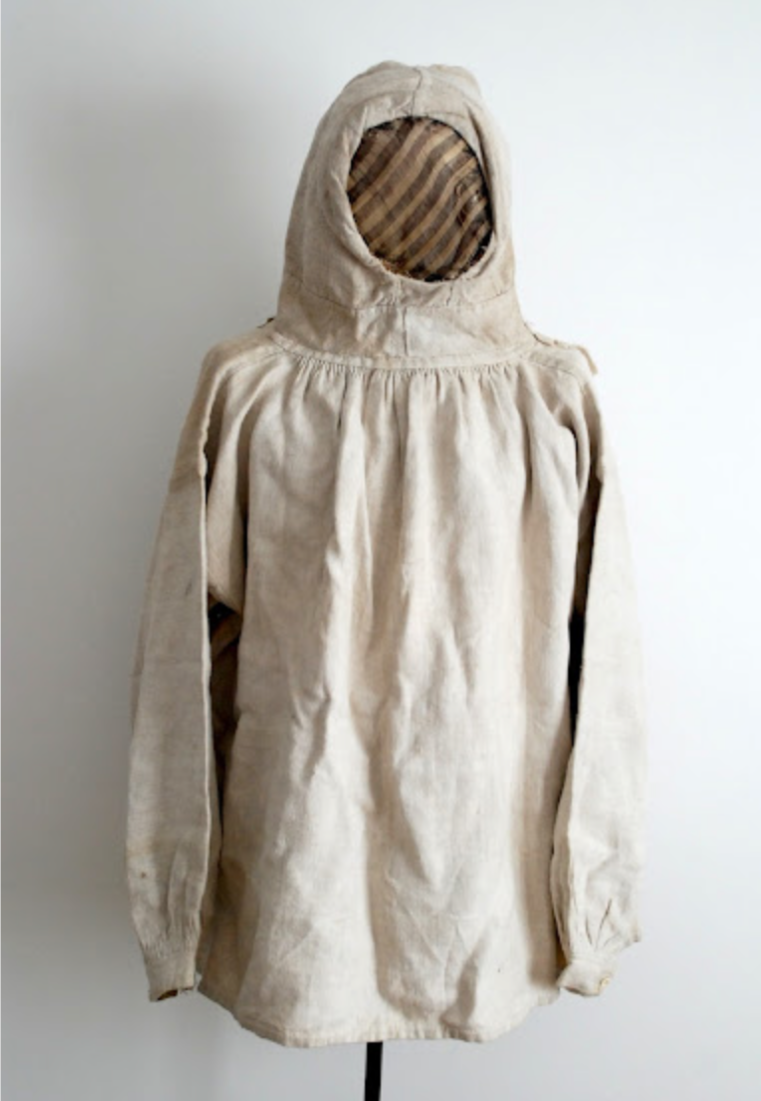
Linen also found its place in more utilitarian contexts, where protection and breathability were equally essential. Medieval beekeepers wore garments made of tightly woven linen to shield themselves from stings, while allowing air to circulate in the heat of their work.
The material’s strength provided a physical barrier, yet its lightness prevented the wearer from overheating — a balance that was crucial in close contact with the hive. In this setting, linen was not a sign of refinement, but of function: a material chosen for its ability to mediate between body and environment, offering protection without isolation.
Linen During the Renaissance — Health, Display and the Emergence of Lace
It was during the Renaissance — in the sixteenth and early seventeenth centuries — that linen first entered the language of fashion in a fully visible way. A period defined by a renewed attention to proportion, to the body, and to the idea of beauty, the Renaissance did not change linen itself. It changed the way it was seen. Where linen had long remained close to the skin — functional, intimate, largely unseen — it now began to emerge.
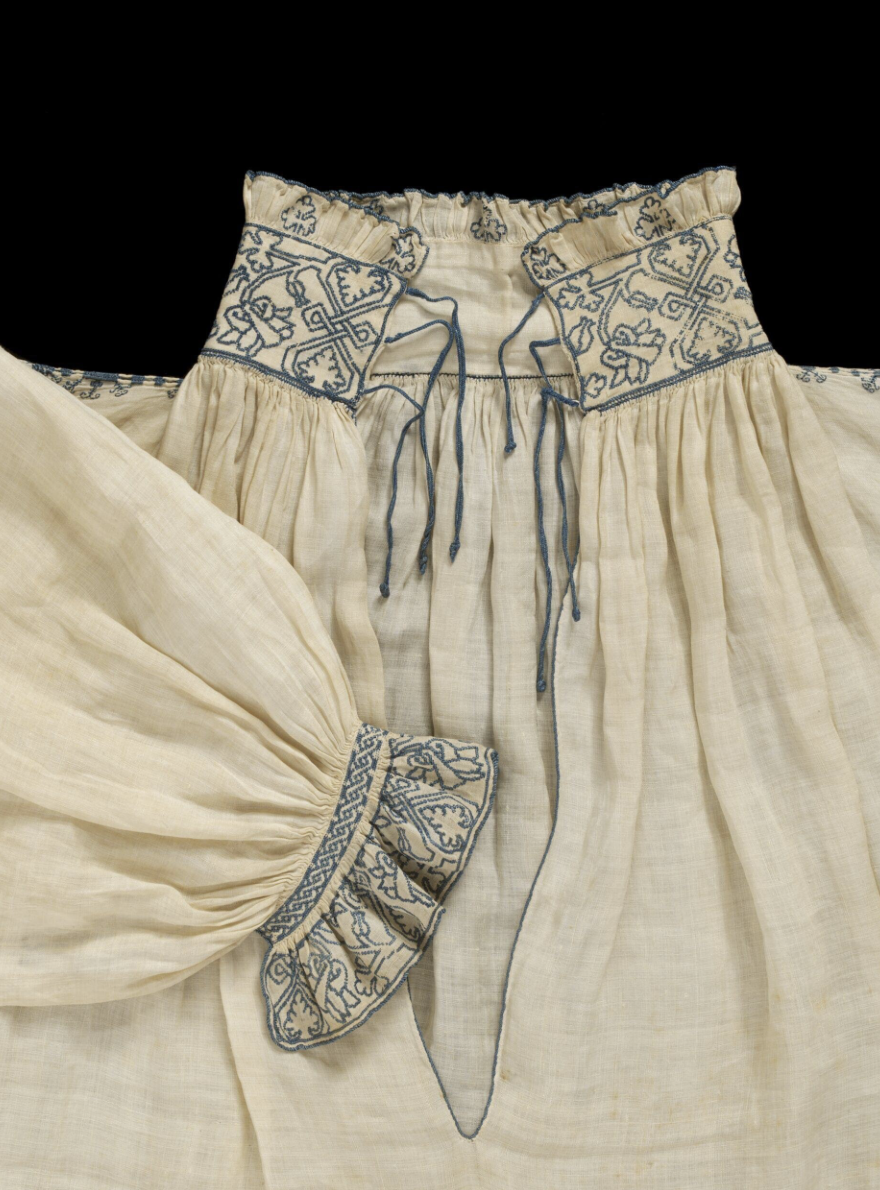
Embroidered linen shirt ca. 1540
Garments worn closest to the body became increasingly significant. Shirts, collars, cuffs and handkerchiefs were no longer merely supportive layers, but began to define the visible structure of dress. Made from finer fibres, carefully spun and repeatedly bleached, linen acquired a clarity that set it apart. Whiteness became essential — not simply as colour, but as expression. To maintain linen in a state of perfect whiteness required time, care, and repetition, signalling discipline, attention and control. In this way, linen became a quiet marker of wealth.
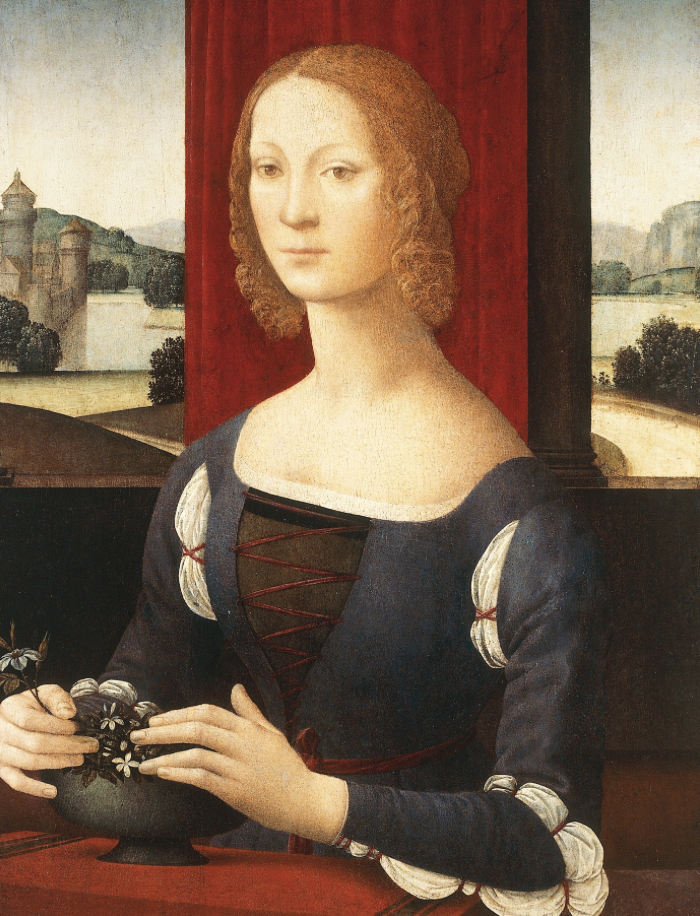
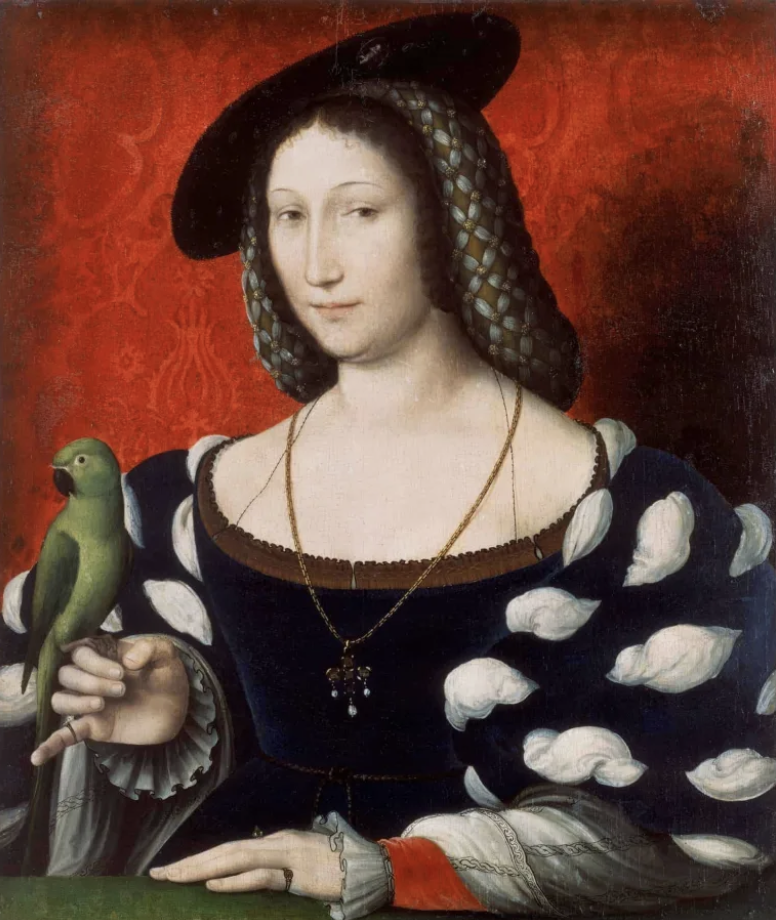
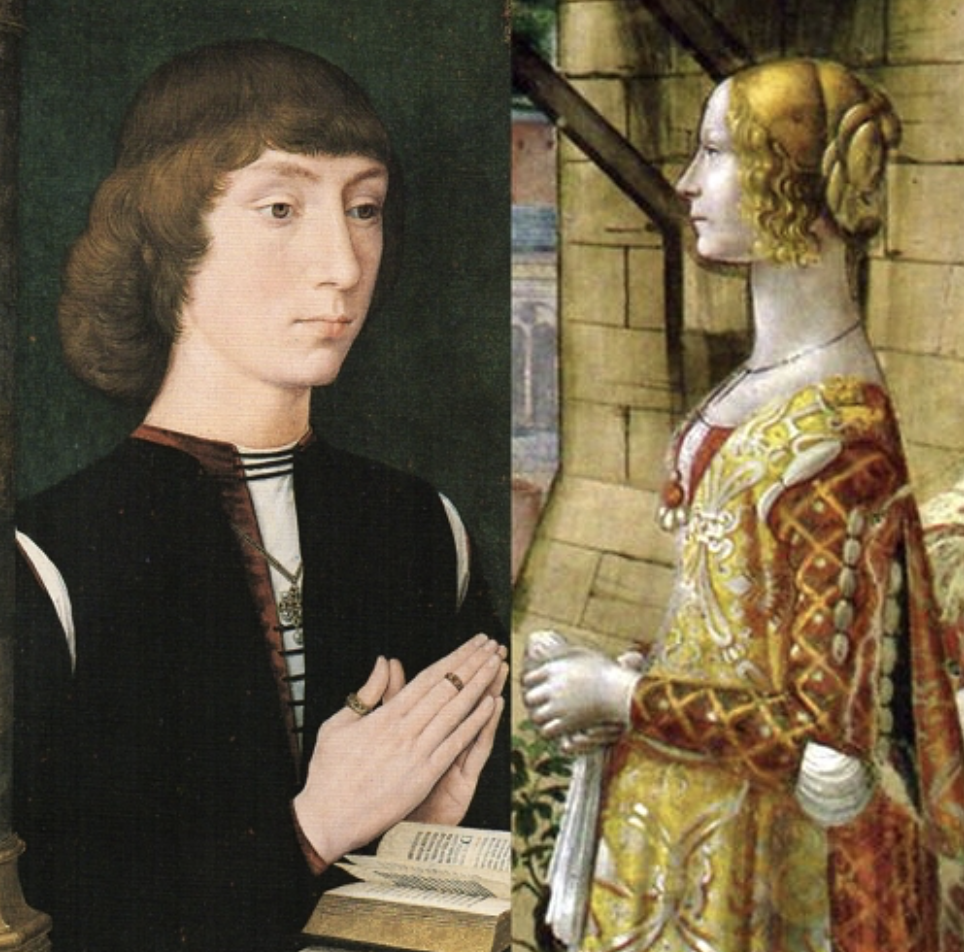
Crevés in the luxurious garments of the nobility
This visibility was further amplified through the practice of crevés — deliberate openings cut into garments. Pourpoints, dresses and hose were slashed to reveal the linen beneath. These openings were placed with intention, allowing glimpses of the fabric closest to the body. Through them, linen moved outward, from structure to surface, from hidden to seen, its fineness and whiteness becoming part of the garment itself.
At the same time, linen retained a deeper meaning. Since the Middle Ages, it had been associated with purification — both physical and spiritual. Used in liturgical garments and ceremonial cloths, it carried a symbolic weight that extended beyond dress. To wear linen was not only to dress the body, but to create a layer of separation — a space between skin and world. It absorbed, regulated and protected, bringing the body into balance.
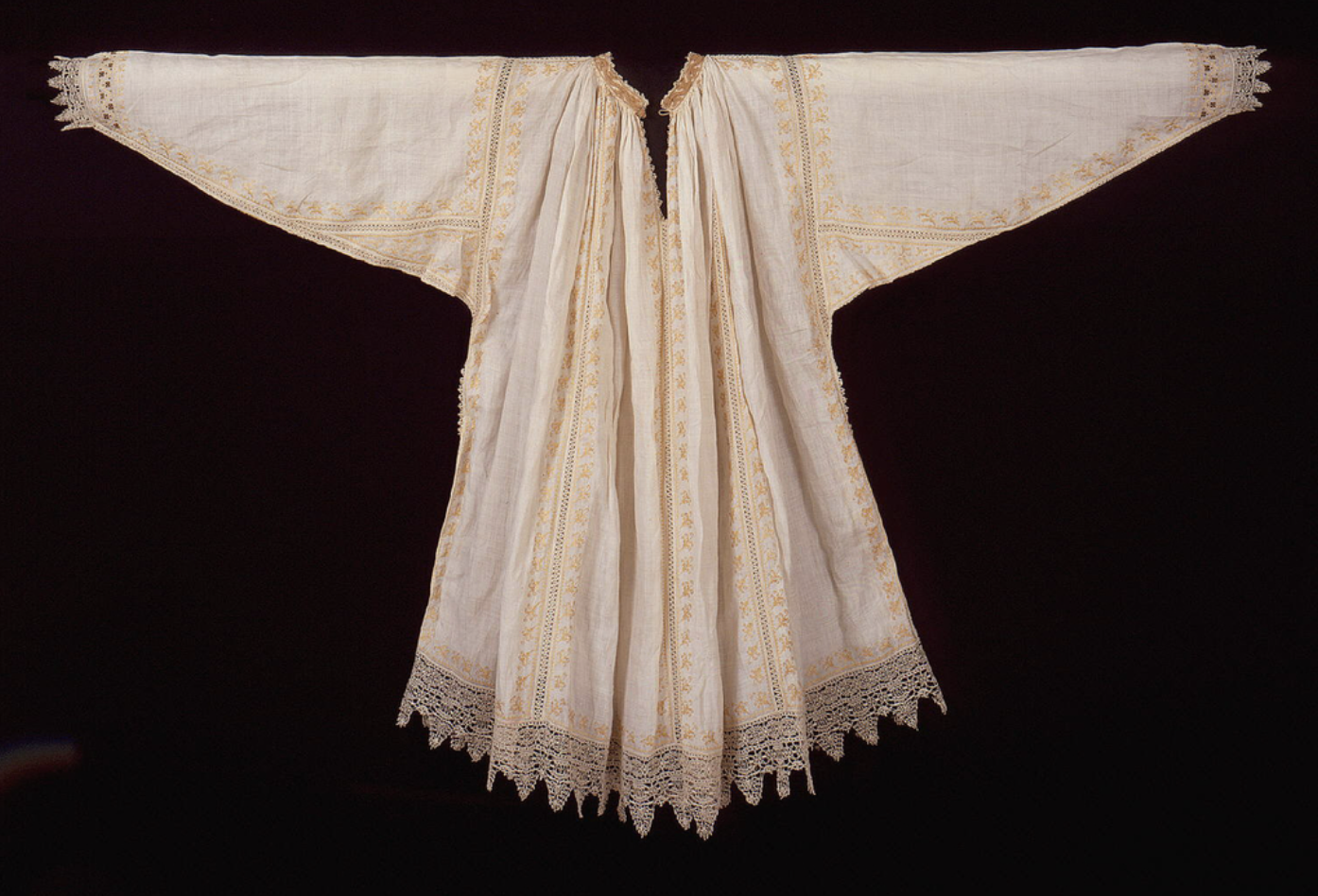
Liturgical linen vestment - Florence ca. 1600
Within this context, lace emerged. Made from linen thread, it introduced a new way of working with the fibre — one that moved beyond the woven surface. Created by hand, through needle or bobbin, it opened the structure, allowing light and air to pass through the material itself. Introduced to the French court by Catherine de Médicis, lace quickly became a sign of refinement. It did not replace linen, but extended it. Used in collars and cuffs, it softened the boundary between garment and skin, introducing intricacy without weight and decoration without excess.
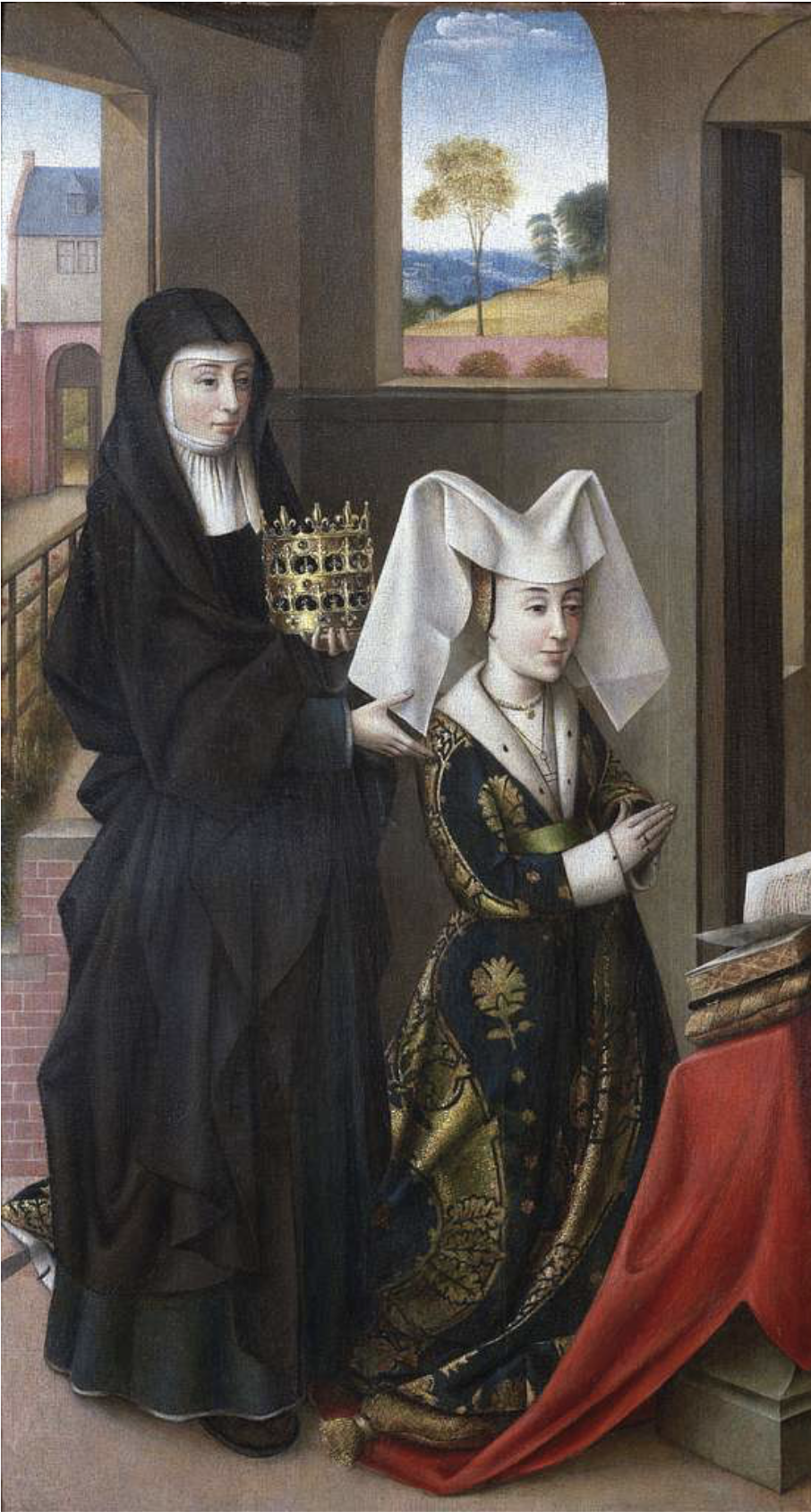
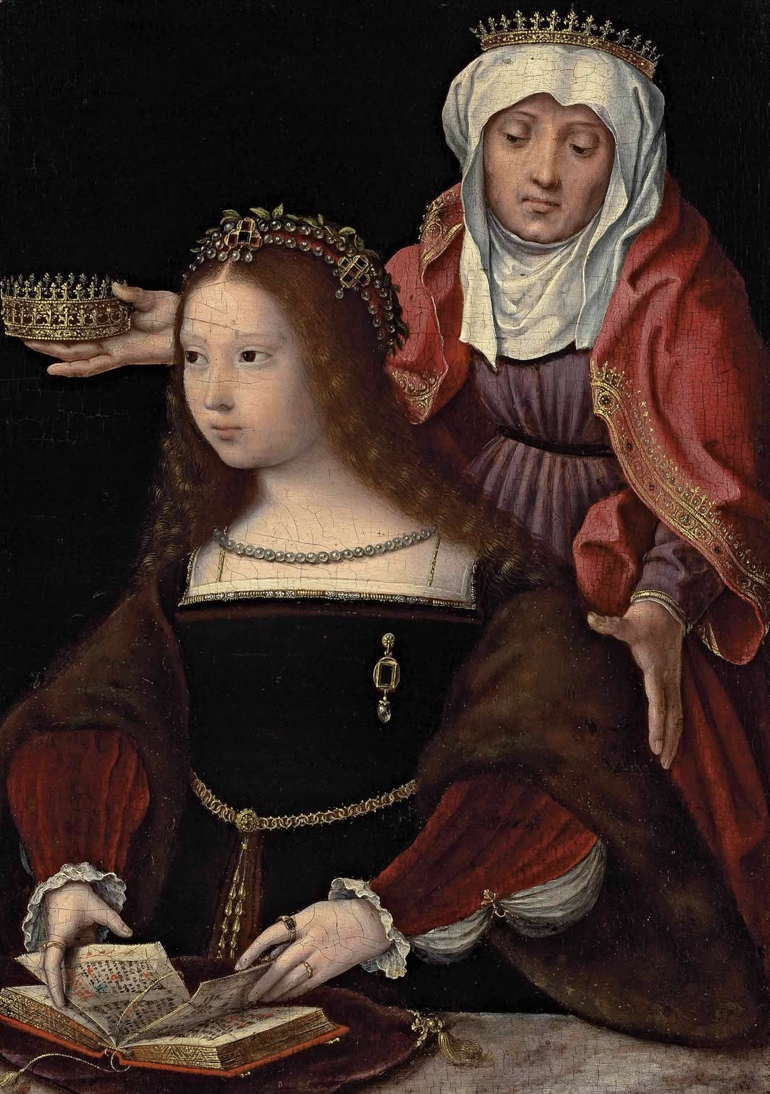
Portraits of the queen of Portugal and Denmark, showing the use of linen in the 16th century
Across Europe, centres of lace-making began to take shape, each refining its own approach. In regions such as Alençon, Chantilly, Valenciennes and Le Puy-en-Velay, techniques were developed with remarkable precision. Even as production expanded in later centuries, these traditions remained rooted in the hand, demonstrating not how much could be added, but how far the material could be refined.
Through all these developments, linen did not become something else. It remained what it had always been — a fibre drawn from the plant, shaped through process, and brought into form through attention. What changed was its position. It moved closer to visibility, closer to the body, closer to expression. If the Renaissance gave linen a new role, it did so not by transforming the material, but by revealing its potential.
This emergence of linen as a visible and expressive material would continue into the following century, where refinement became more structured and deliberate. Within the setting of the court, linen moved further into view, taking on a defined role within the language of dress.
Linen in the 17th Century — Court, Refinement and Display
In the seventeenth century, linen entered a phase of heightened refinement, shaped by the culture of the court and the growing importance of appearance as a language of status and order. Under the reign of Louis XIV, dress became increasingly structured and deliberate, and linen, once largely concealed, began to take on a visible role within the composition of clothing.
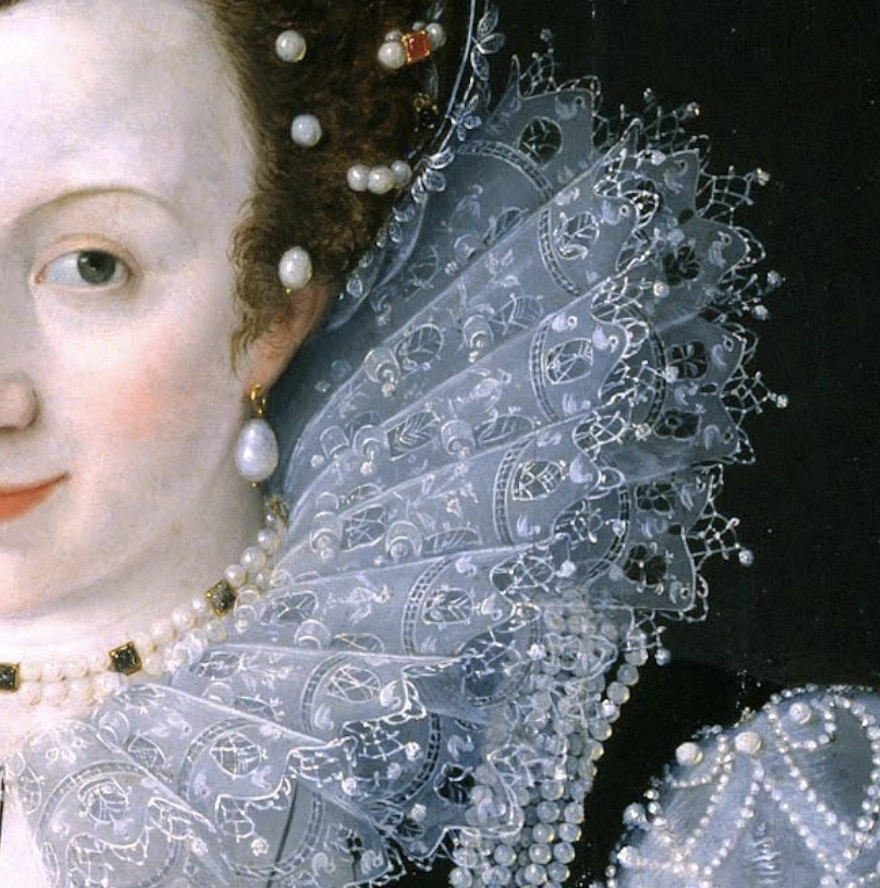

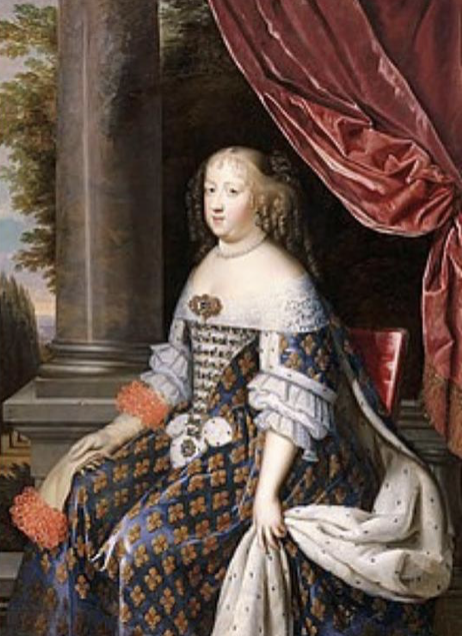

Garments worn closest to the body, such as shirts, collars and cuffs, were no longer merely functional layers but became defining elements of the silhouette. This shift was supported by technical developments in weaving, as looms became more precise and threads finer, allowing linen to be produced in increasingly delicate and controlled qualities. Fabrics such as linon, exceptionally light and supple, reflected this refinement and enabled a new level of finish within dress.
At the same time, ornament acquired greater significance. Lace, made from linen thread, became central to this development, extending the material beyond the woven surface and introducing intricacy while maintaining lightness. Used in collars and cuffs, it created a subtle interplay between structure and openness, reinforcing the composed elegance of courtly attire. Centres of production in regions such as Alençon, Le Puy-en-Velay and Normandy refined these techniques with remarkable precision, maintaining a strong connection to manual skill even as demand increased.
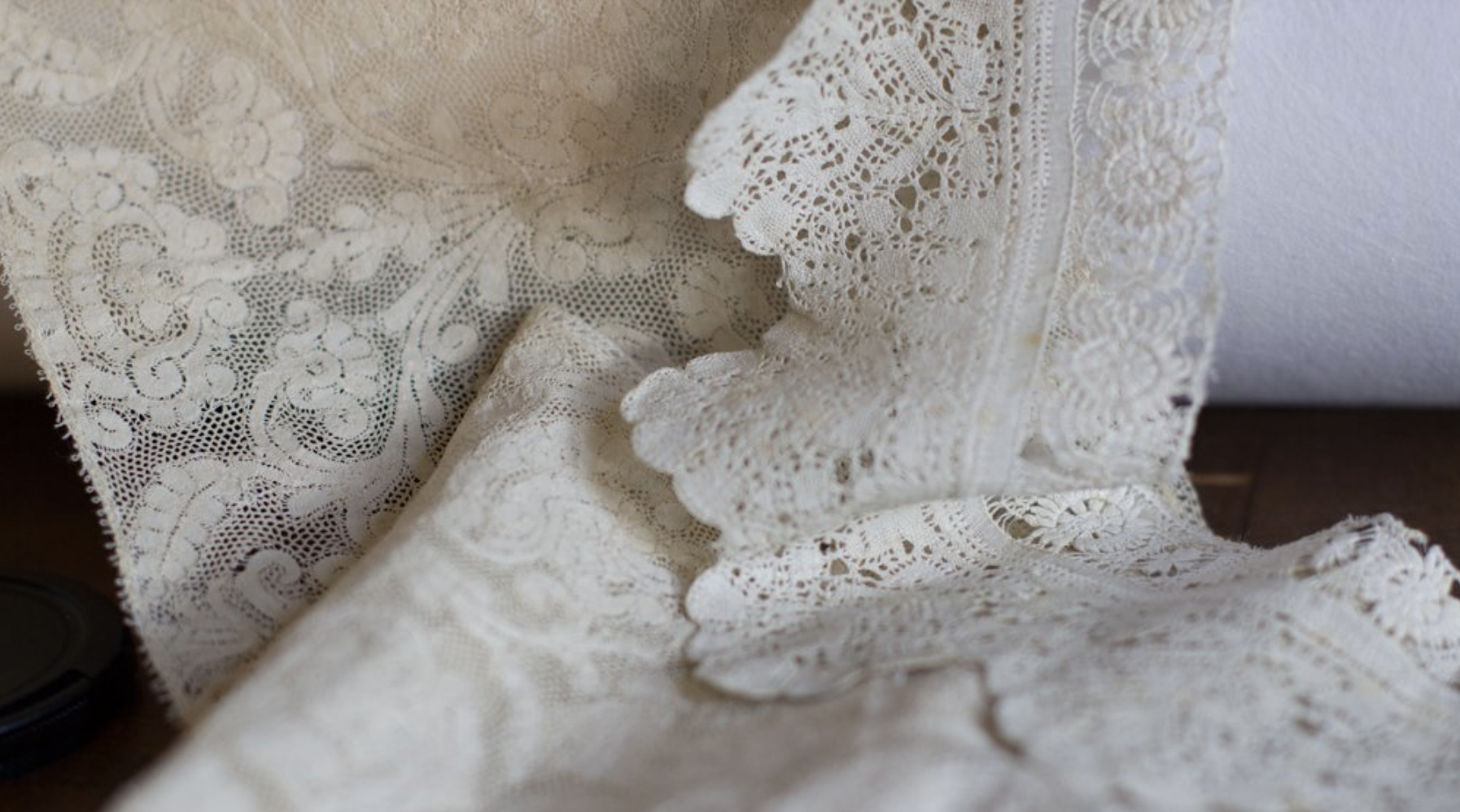
Within this context, whiteness became a defining characteristic. Linen garments worn close to the body were changed frequently, and their maintained clarity signalled discipline, care and control. In a society where appearance reflected position, white linen functioned as a quiet but unmistakable indicator of refinement. The linen shirt, once hidden, became an essential and visible element of dress, framed by outer garments designed to reveal it and further articulated through lace collars and embroidered cuffs.
For women, linen remained equally important, though expressed with variation in form. Shirts were worn looser, often allowing the neckline and shoulders to emerge, while lace softened the transition between garment and skin. Dresses layered over these elements, maintaining a sense of structure and proportion. Throughout the seventeenth century, linen did not change in essence, but its role shifted, moving from the hidden to the visible and from function to expression within the evolving language of dress.
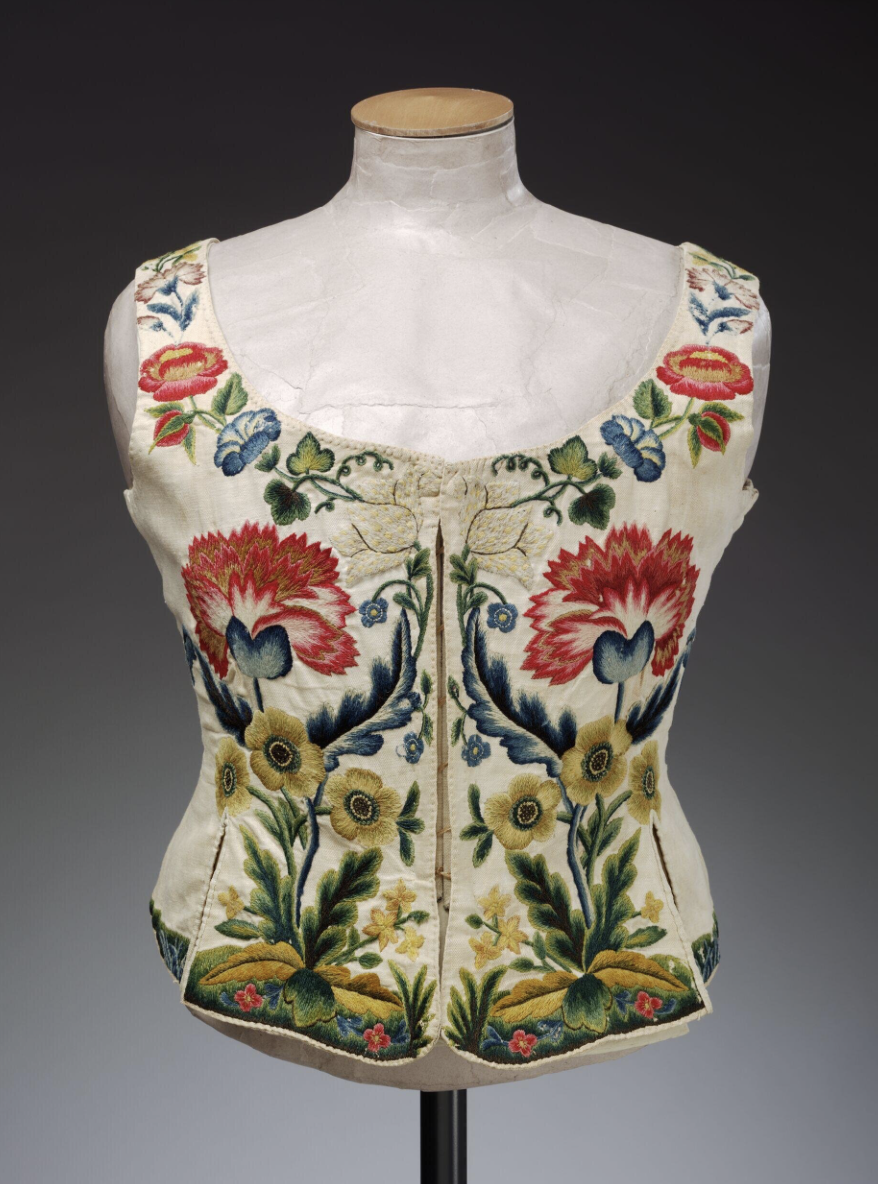
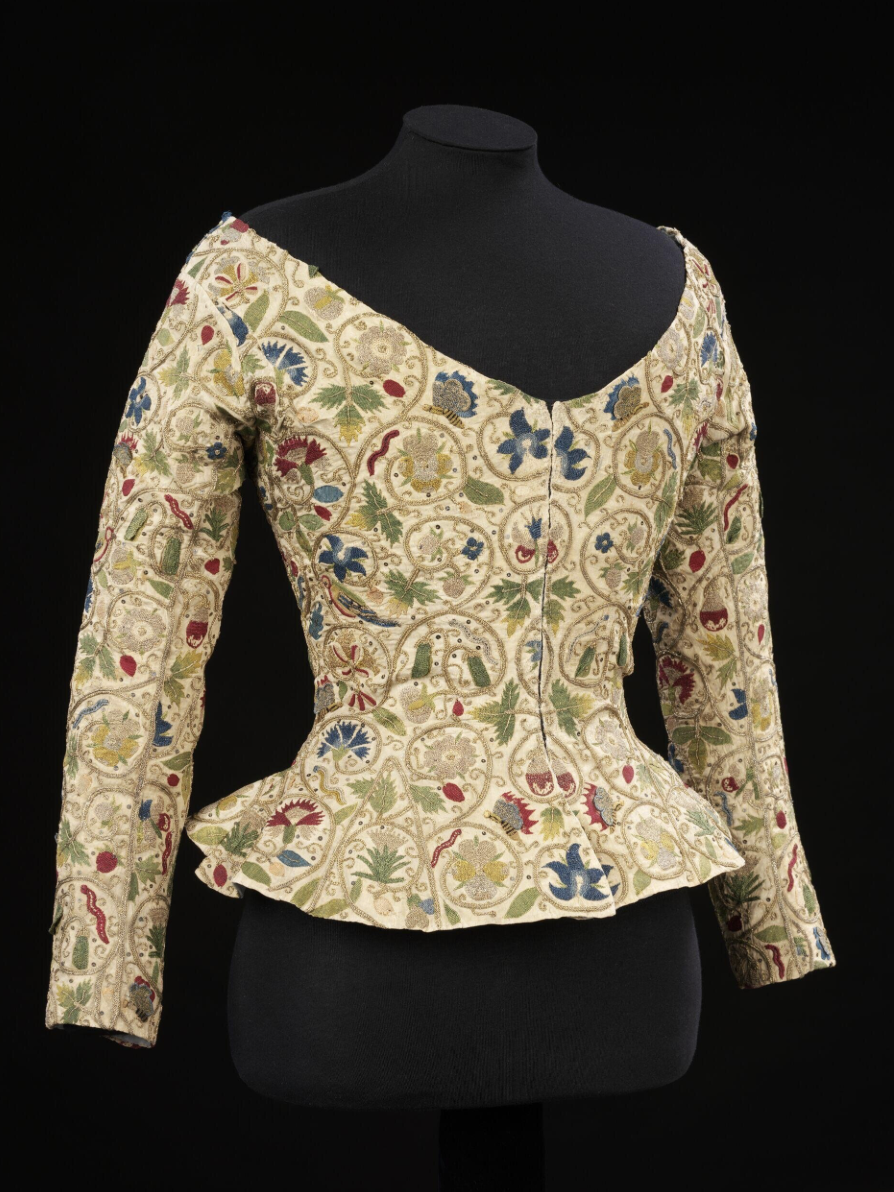
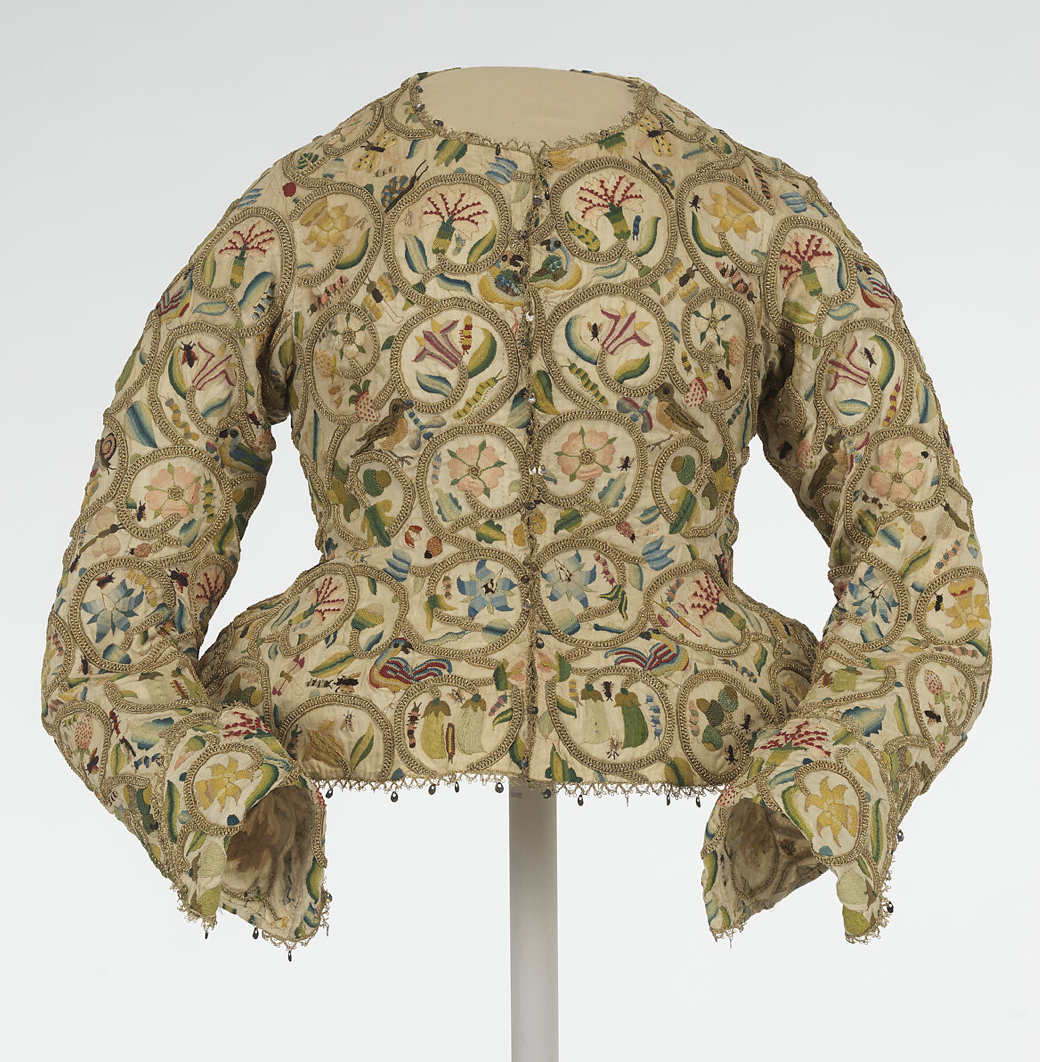
Examples of embroidered linen waistcoats - 17th century
The precision and formality that defined linen in the seventeenth century gradually gave way to a different sensibility. As techniques evolved, the material began to respond less to structure and more to movement, marking a subtle shift towards lightness and ease.
Linen in the 18th Century — Lightness, Freedom and the Body
In the eighteenth century, linen retained its central position while its expression became lighter, more fluid and more closely aligned with the body. Advances in spinning, weaving and finishing techniques allowed the fabric to be worked to an even finer degree, resulting in materials that responded more directly to movement and air.
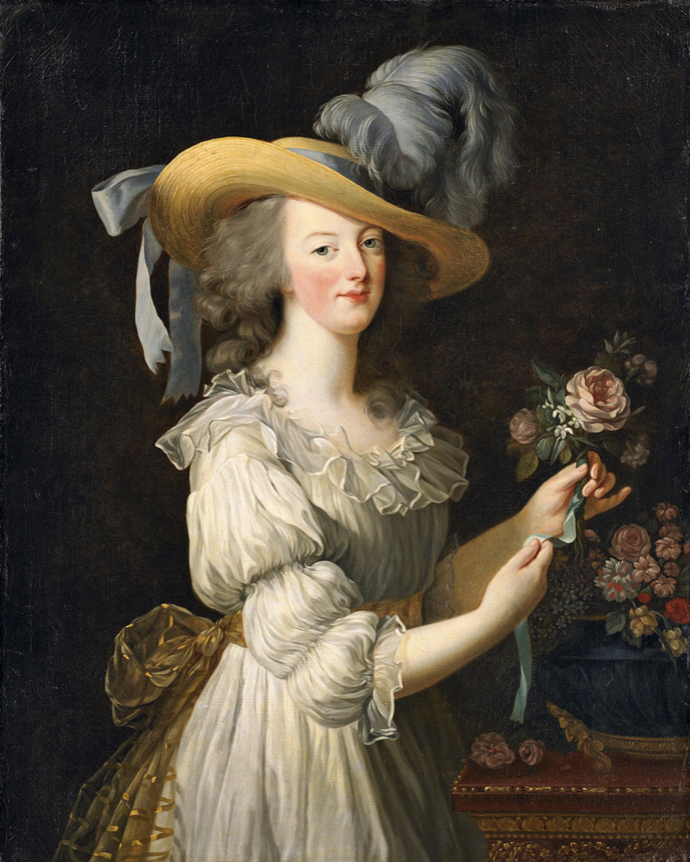
18th-century linen dress expressing lightness, fluidity and movement
Linen lawns, woven to an almost translucent fineness, introduced a new material presence defined by lightness rather than structure. Alongside them appeared toilettes, delicate kerchiefs whose softness and transparency allowed for more nuanced transitions between garment and skin. These developments marked a subtle but significant shift, as linen began to follow the body rather than define it.
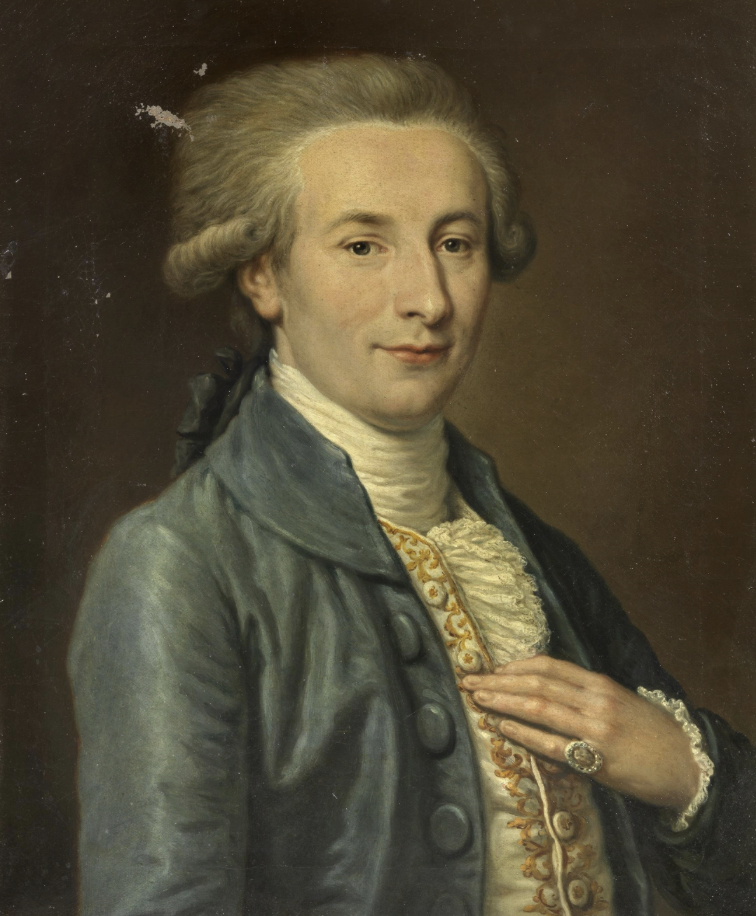
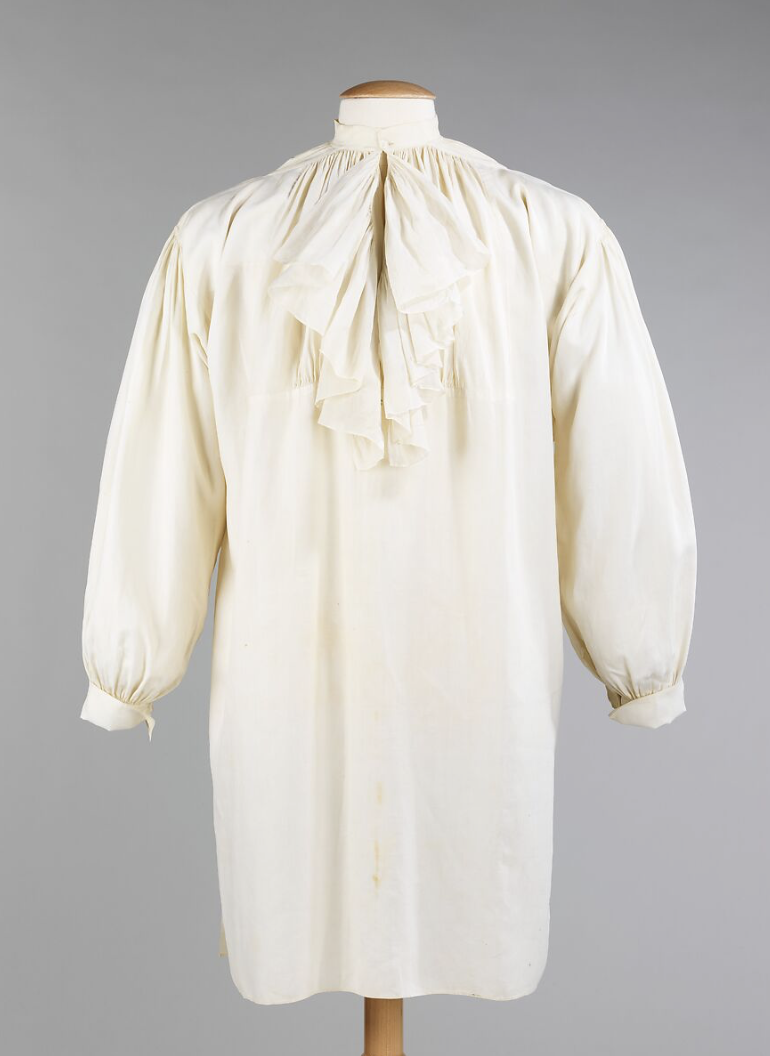
The linen shirt in the 18th century — light, refined and close to the body
Within men’s dress, the linen shirt remained a central element, though its expression evolved towards greater refinement and movement. Collars framed the face with increasing delicacy, sleeves extended outward, and fine fabrics were pleated into jabots or gathered into ties, while lace and embroidery continued to articulate detail. Even as the French Revolution introduced restraint and reduced excess, the white linen shirt retained its significance as a point of clarity within changing forms of dress.
For women, linen adapted to a changing understanding of silhouette and presence. Garments became lighter and less rigid, and the relationship between fabric and body softened. Linen shirts were reduced in scale, particularly at the bust, while fine kerchiefs were used to shape and moderate the neckline, creating a balance between concealment and exposure. The material no longer imposed structure, but moved with the body, allowing a greater sense of ease.
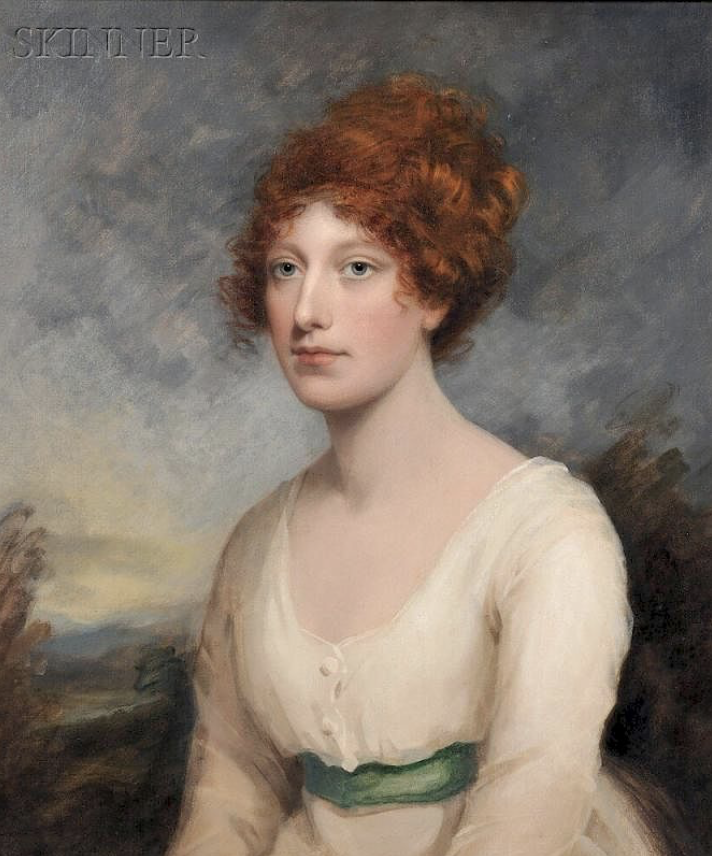
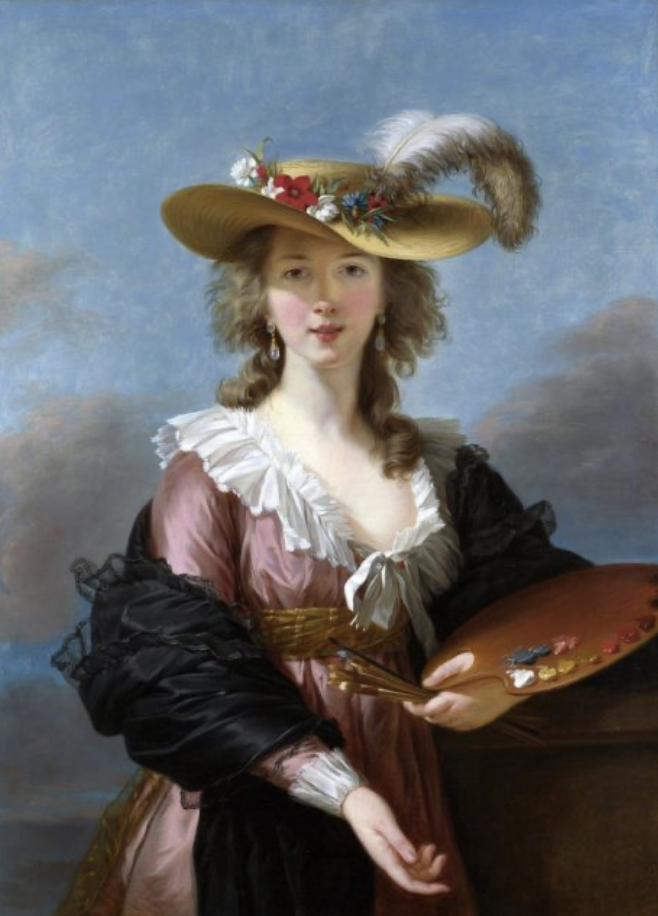
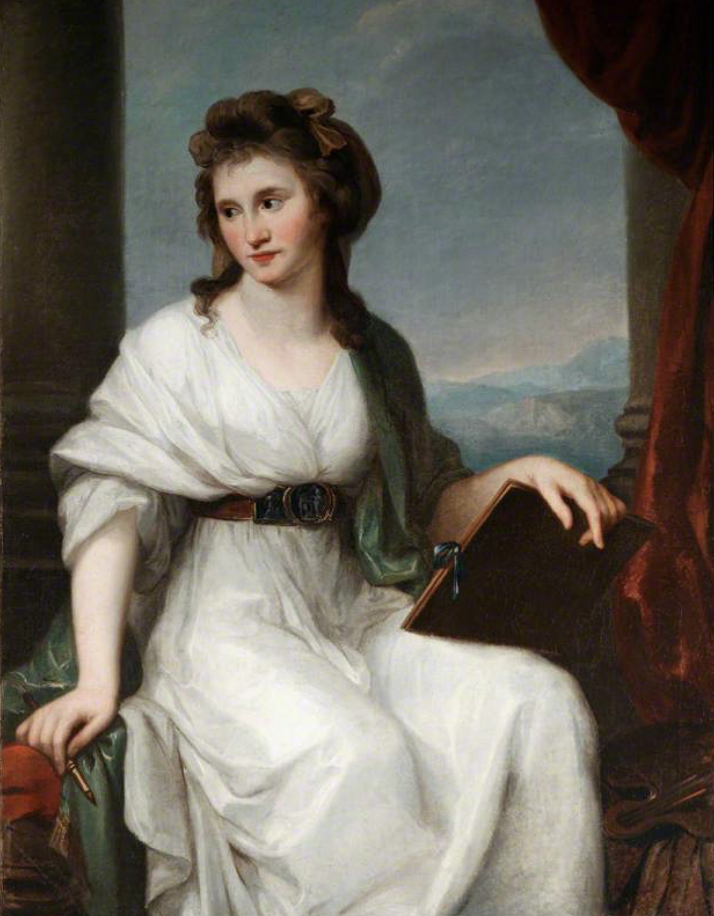
Linen in the 18th century — lightness, softness and a closer relationship to the body
At the same time, broader ideas surrounding the body began to evolve. Early reflections on hygiene and physical freedom challenged the rigidity of court dress, encouraging forms that allowed for movement and comfort. Within this context, the gaulle, introduced by Marie-Antoinette, embodied this shift. Made from fine linen lawn and gathered simply at the waist, it presented a softer and more natural silhouette, bringing linen closer to the body and allowing it to express a new sense of lightness.
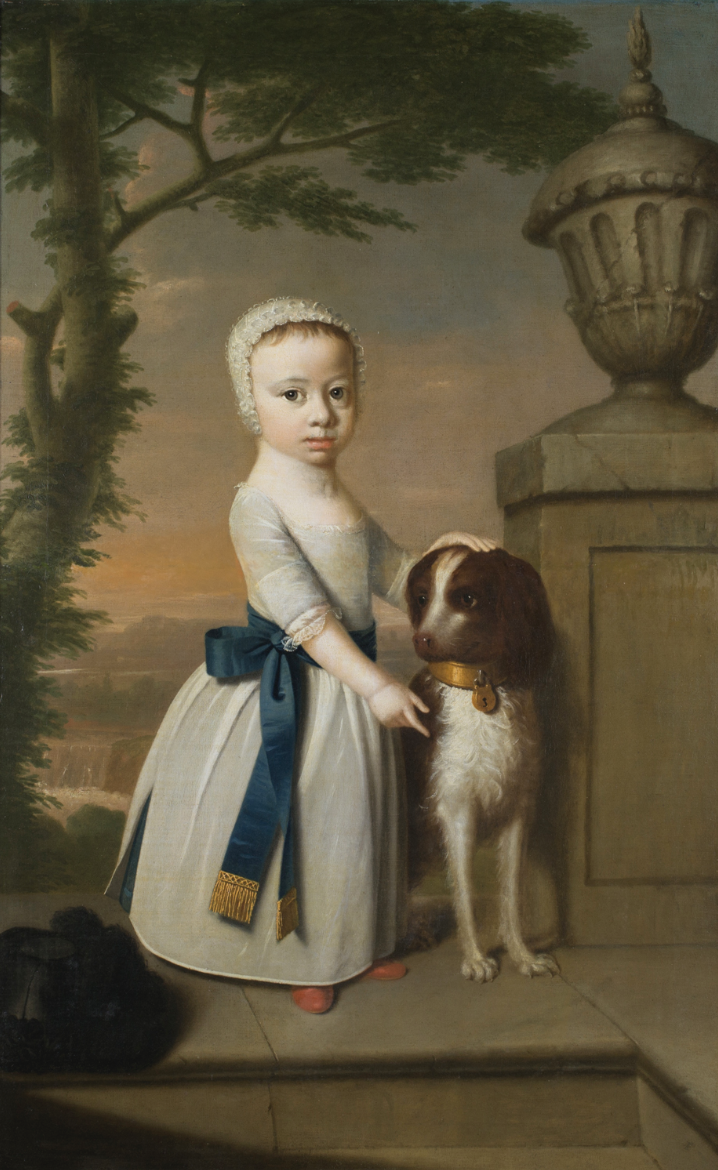
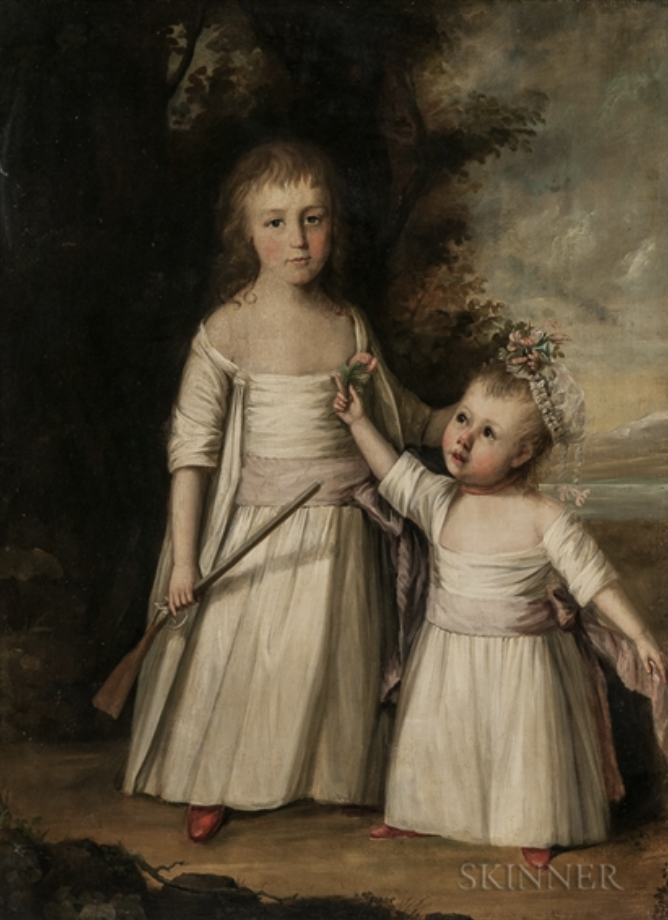
White linen in children’s dress — simplicity, purity and lightness in the 18th century
This transformation extended to children’s clothing, where both boys and girls were dressed in white linen garments, reflecting an emerging recognition of childhood as a distinct phase of life. The whiteness of linen, long associated with purity, acquired renewed meaning within this context.
By the end of the eighteenth century, linen existed across a wide range of expressions, from refined garments of display to lighter forms shaped by movement and daily use. Its material qualities remained unchanged, but its relationship to the body had shifted, moving away from structure towards presence, and preparing the ground for the developments that would follow in the modern era.
In the period that followed — shaped by revolution, by industrialisation, and by a changing social order — linen would once again shift its position.
From distinction towards wider accessibility.
From symbol towards integration.
But even as it moved into a more democratic context, it carried with it the memory of refinement, of precision, and of a time in which material, body, and expression had come into a rare and delicate alignment.
Linen in the 19th Century — Industry, Decline and Distinction
In the early nineteenth century, linen still remained part of daily life, with homespun production continuing across rural regions. Yet this continuity gradually gave way to a broader transformation. As textile production became increasingly industrialised, linen began to lose its position within everyday use.
The rise of cotton played a decisive role in this shift. Following the invention of the cotton gin in 1793, cotton could be processed more efficiently and at lower cost, allowing it to expand rapidly as a material for mass production. Mechanisation in spinning and weaving further accelerated this development, enabling cotton to be produced at a scale that linen could not match. While cotton mills were already operating by the late eighteenth century, the mechanisation of flax processing did not take hold until the 1830s and 1840s, by which time cotton had firmly established itself as the dominant fabric for everyday wear.
As a result, linen gradually receded from its former position. By the mid-nineteenth century, small farms no longer cultivated and processed flax as part of domestic production, and commercially produced textiles became widely available. Linen did not disappear, but its role became more defined. It remained present in specific applications where its qualities were unmatched — in bedding, in canvas, in structured fabrics such as buckram, and in garments worn close to the body.
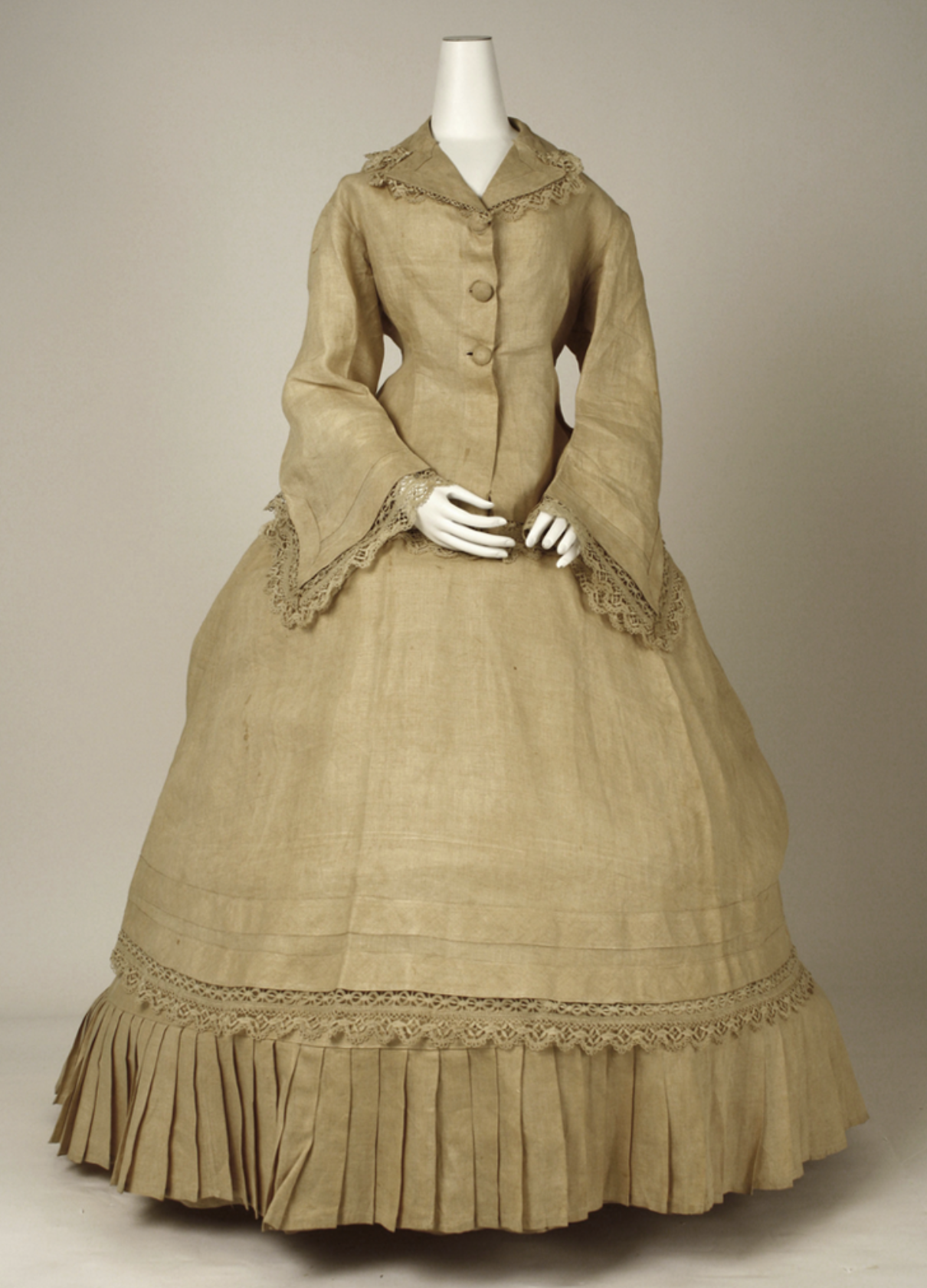
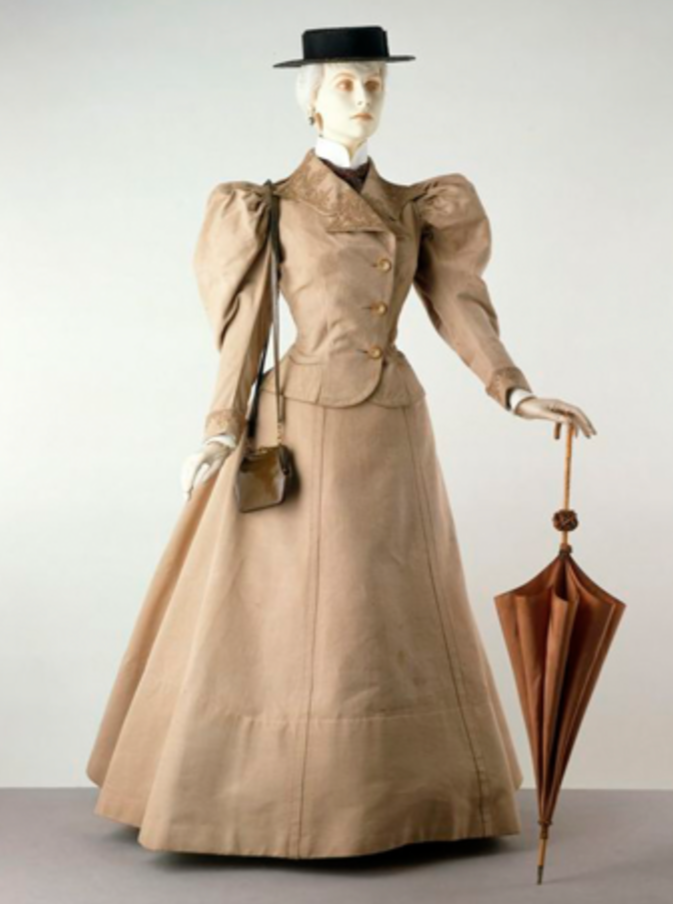
Linen in the early 19th century — a shift towards lightness and natural movement
At the same time, linen began to consolidate its association with refinement. Production became more specialised, focusing on high-quality fabrics for tablecloths, drapery and household use, exemplified by the reputation of Irish linen. Its strength and ability to hold structure also made it particularly suited to garments requiring clarity and precision, such as starched uniforms, crisp cuffs and carefully tailored summer clothing.
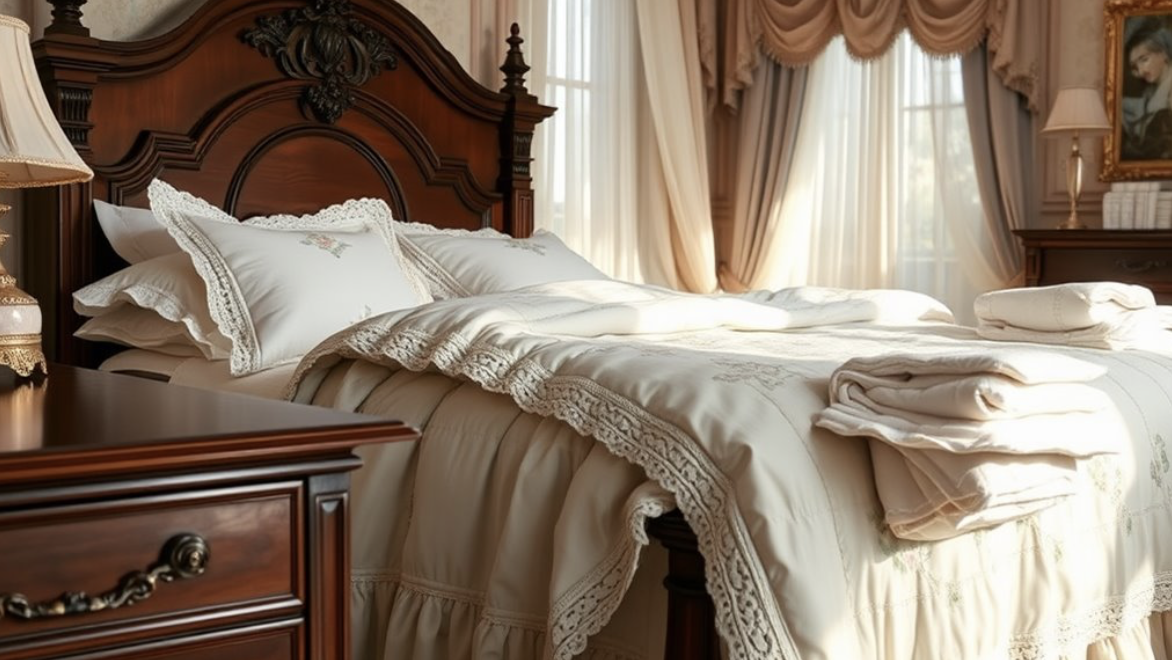
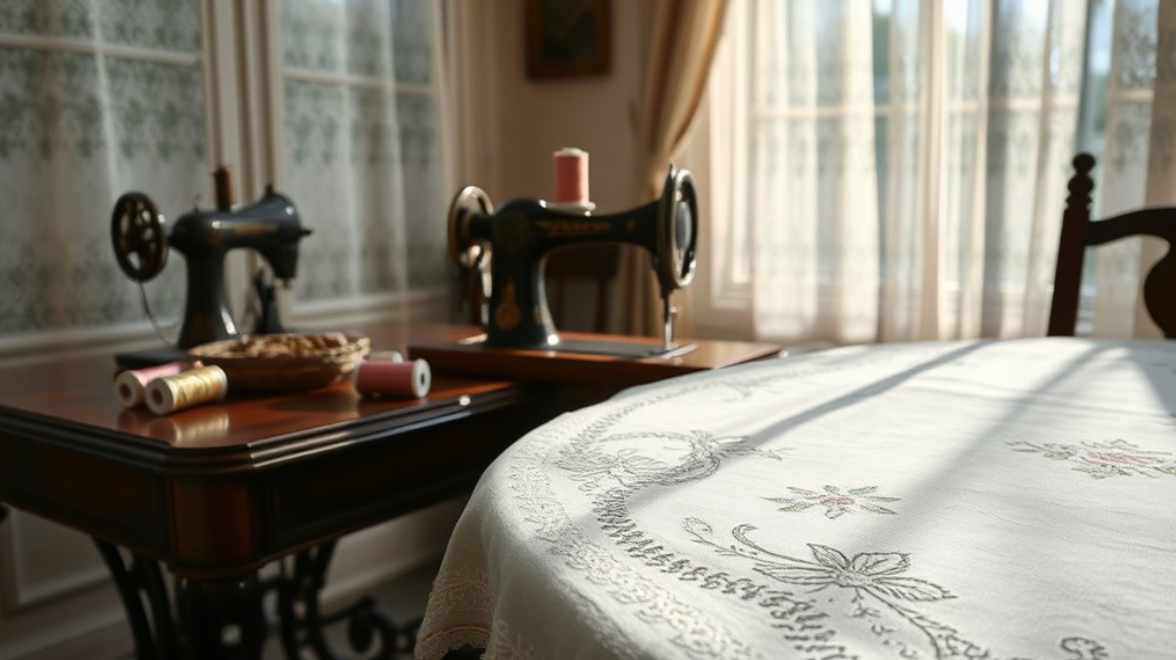
Linen in domestic life — texture, care and craftsmanship in the 19th century
In warmer climates, linen retained a natural relevance. Light-coloured linen suits became a hallmark of men’s dress during the warmer months, valued for their breathability and composure. Women, too, wore linen for summer garments, from dresses to riding habits, particularly in regions shaped by heat and light, such as the southern United States, the Caribbean and the Mediterranean.
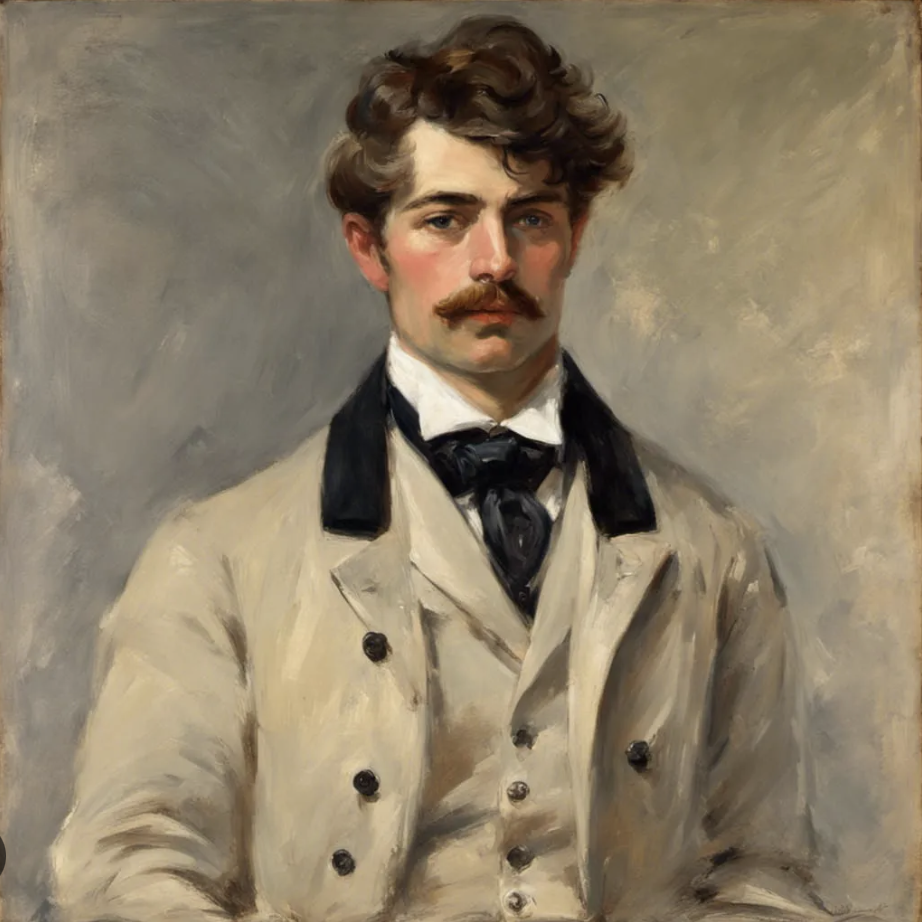
Refined use of linen in 19th-century men’s dress
In this period, linen no longer occupied the centre of everyday production, yet it did not lose its identity. Instead, it shifted position once more, moving away from ubiquity towards distinction. Its presence became more selective, more intentional, and more closely aligned with those qualities that had defined it from the beginning — clarity, durability and a quiet, enduring elegance.
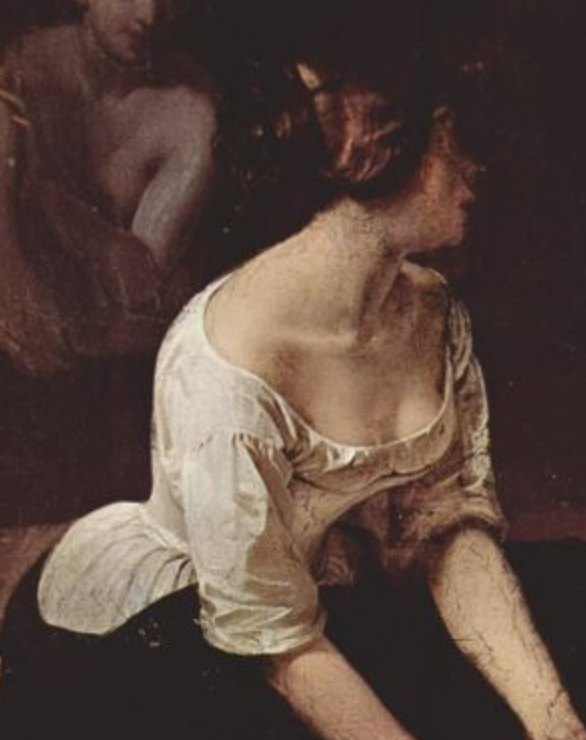
A woman in a linen chemise or shift (underwear)
from the Bath of the Nymphs by Francesco Hayez, 1831
This increasing closeness between material and body would not remain unchanged. With the arrival of mechanisation and a shifting social order, linen would once again take on a different position, moving from refinement towards wider accessibility.
FROM HAND TO MECHANISM
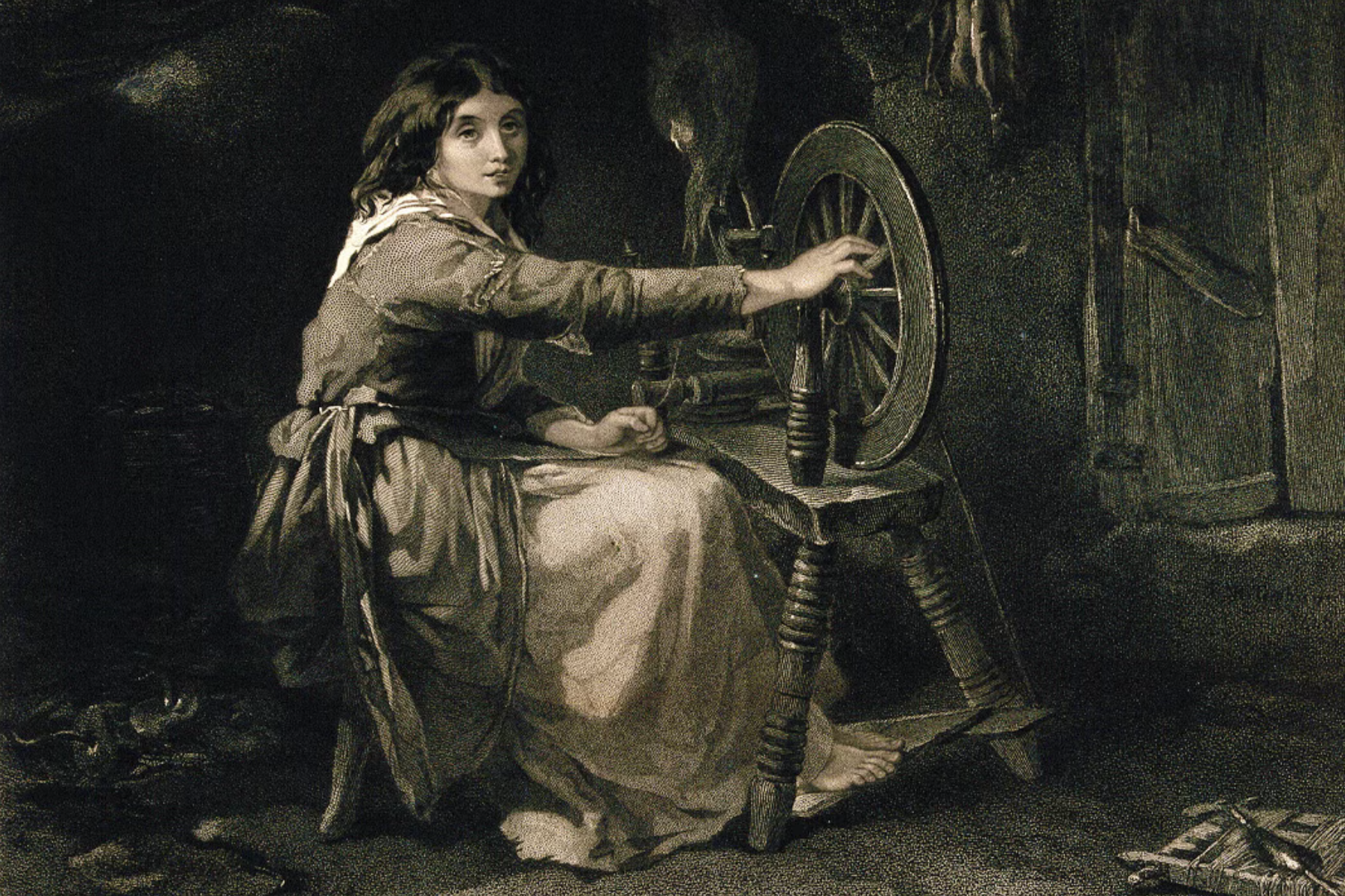
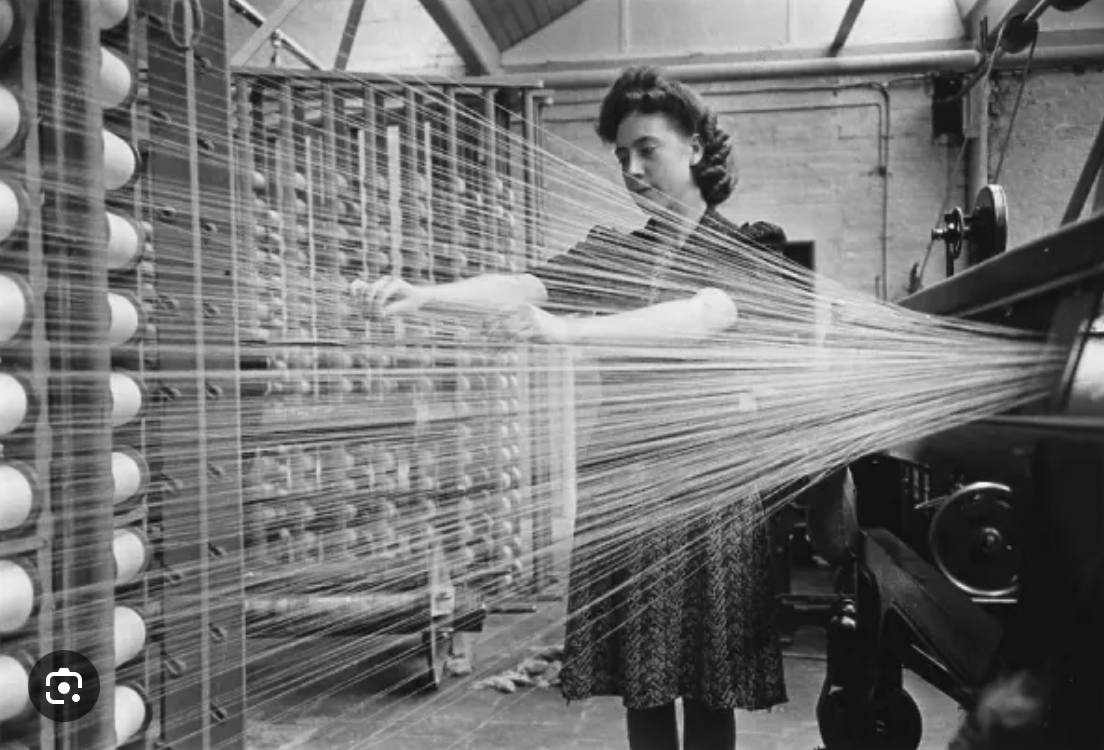
From hand to mechanism — the shift from intimate craft to industrial production
For centuries, linen was shaped entirely by hand. Each stage — from the harvesting of flax to the spinning of yarn and the weaving of cloth — required time, precision and an intimate understanding of the material. Knowledge was not written down, but passed on through observation, repetition and touch. The rhythm of production was human. Measured. Attentive.
With the arrival of mechanisation during the Industrial Revolution, this relationship began to shift. Processes that had once been slow and deliberate were accelerated. Spinning frames replaced spindles. Mechanical looms replaced handweaving.
Production increased dramatically — linen could now be made at scale, reaching a far wider population than ever before. But something else changed as well. Distance entered the process. Where hands once guided every fibre, machines began to intervene.
Where the material had been felt at every stage, it was now managed, controlled, optimised. The process became faster. More efficient. Less tactile.
Yet, despite these transformations, the essence of linen did not change. The fibre itself remained the same. It still required the same fundamental steps — separation, alignment, spinning, weaving. It still responded to tension, humidity and handling in the same way it always had. What changed was not the material, but our proximity to it.
Today, the most advanced spinning systems operate with remarkable precision. Computer-controlled machines regulate tension and uniformity beyond what the human hand alone could achieve. And yet, even here, the process still echoes its origins. Fibres are drawn together. Twisted into yarn. Prepared for structure. The gestures are the same — only translated into another language.
This duality defines linen today. It exists between hand and machine. Between intimacy and scale. Between tradition and modernity. And perhaps this is precisely why it remains so compelling. Because even when removed from the hand, it continues to carry the memory of it.
Bast Fibers — The Material Intelligence of Flax
To understand linen fully is to understand the structure of flax itself.
Linen is made from the cellulose fibres found in the inner bark of the plant — the bast fibres. Flax belongs to a wider group that includes hemp, jute and ramie, materials long valued for their strength and resilience.
These fibres possess a quiet intelligence.
They dry quickly.
They allow air to pass.
They become stronger when wet.
For centuries, this made them indispensable — not only for garments, but for ropes, sails, and other essential tools of daily life.
Yet transforming these fibres into cloth is neither immediate nor simple.
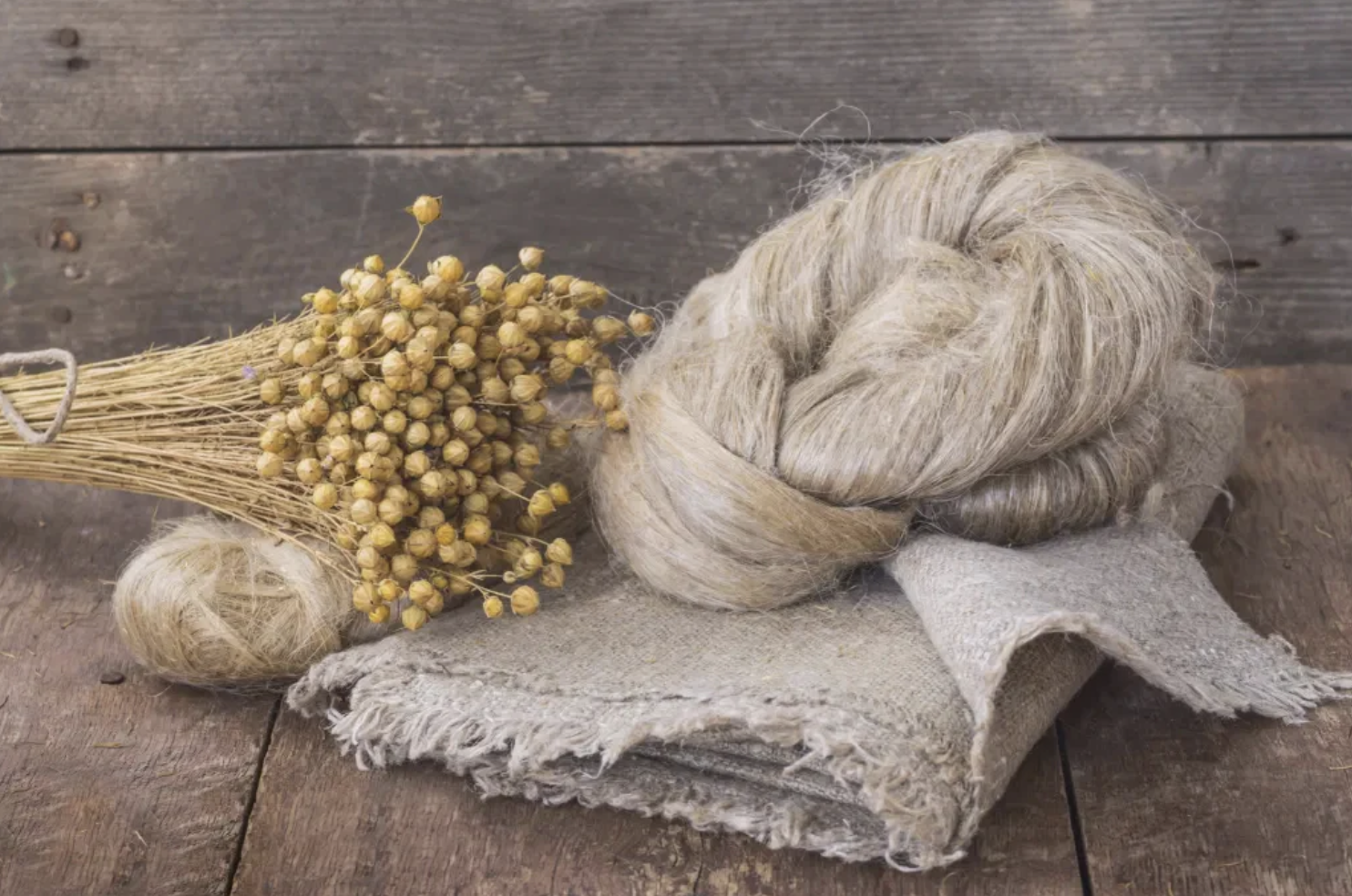
From flax to linen — stages of transformation
Unlike wool, which can be cleaned and spun with relative ease, flax must first be released from its own structure. It must be separated from the woody core that surrounds it, step by step, through a sequence of processes that require both patience and precision.
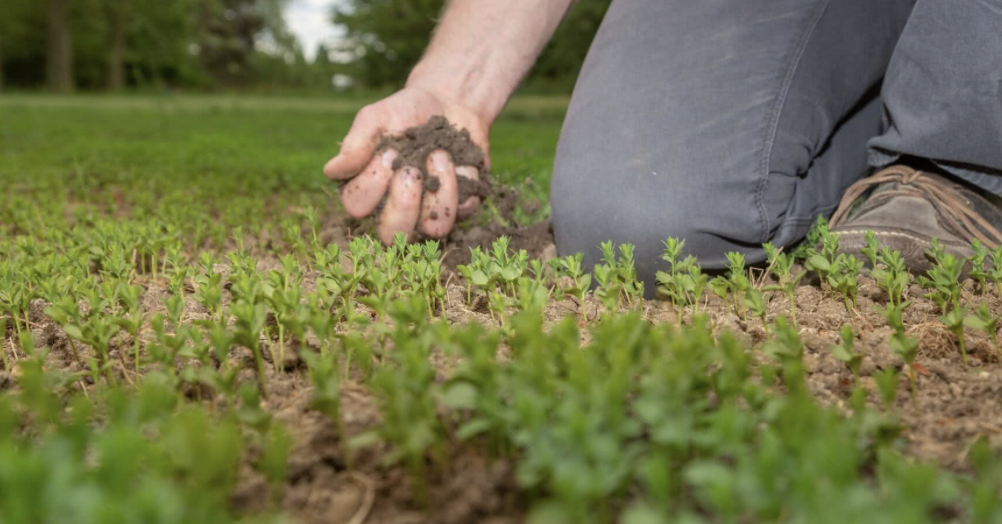
Sowing — the beginning of the linen cycle
Flax is typically planted in the spring, thriving in temperate climates with well-drained soil. The seeds are sown closely together, ensuring that the plants grow tall and slender. The fibers from these plants are the key to linen production, and flax requires about 100 days to reach full maturity. The plants are harvested when the lower leaves start turning yellow, and the seed pods remain green.
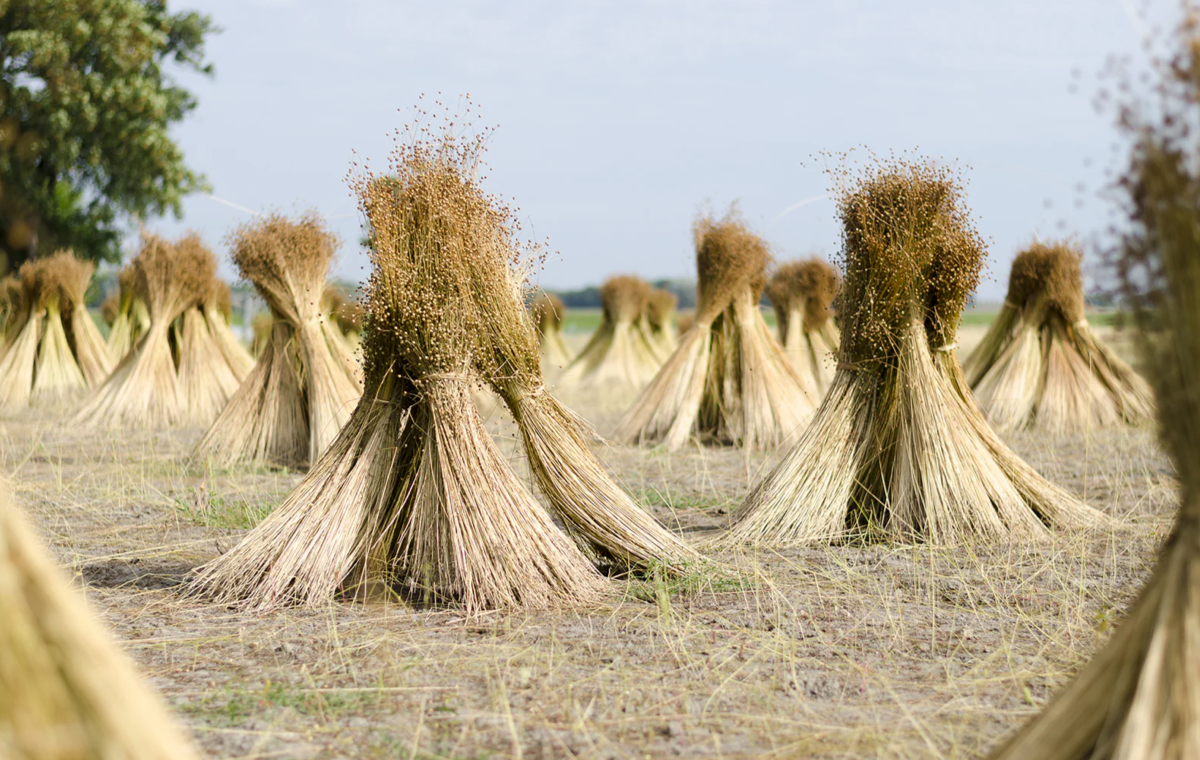
Flax after harvesting — drying in bundles
Unlike many crops that are cut, flax is pulled from the ground when mature. This preserves the length of the fibers, which is crucial for creating fine linen. After being harvested, the flax is bundled and laid out to dry in the sun for several weeks, allowing the plant to shed excess moisture and become ready for the next phase of processing.
The next step is retting, a natural process that breaks down the pectin (the sticky substance) that binds the flax fibers to the woody stalk. Water retting involves soaking the flax stalks in water for a period of 7–14 days, while dew retting involves spreading the flax in the field and allowing microbial activity to decompose the pectin over a few weeks. Both methods allow the fibers to be separated from the woody core, making them softer and more pliable for the next stage.
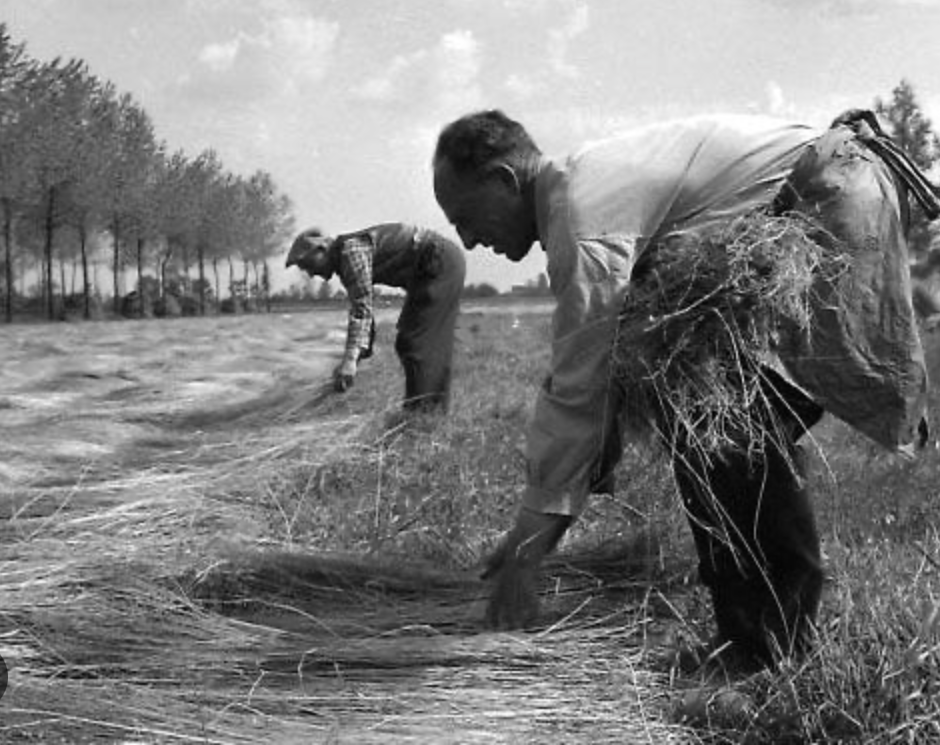
Flax laid out in the field for retting
Then comes breaking, where the dried stalks are crushed to release the inner fibres.
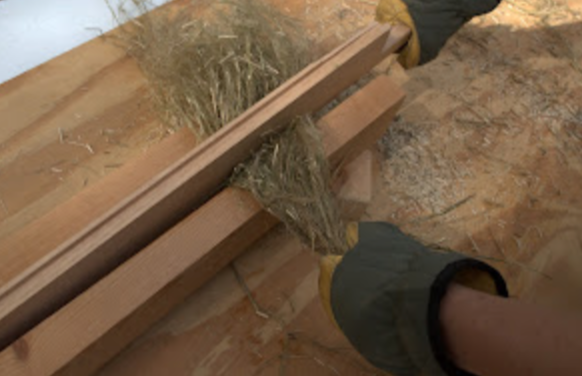
Breaking the flax — the woody core is crushed to release the inner fibres
After retting, the flax stalks are passed through a machine or tool called a flax brake, which breaks the woody core (shives) into smaller pieces. The goal is to separate the soft bast fibers from the hard, woody parts of the plant. These fibers are then cleaned further to ensure that only the finest material remains for the next stage.
Scutching follows, removing the remaining woody fragments.
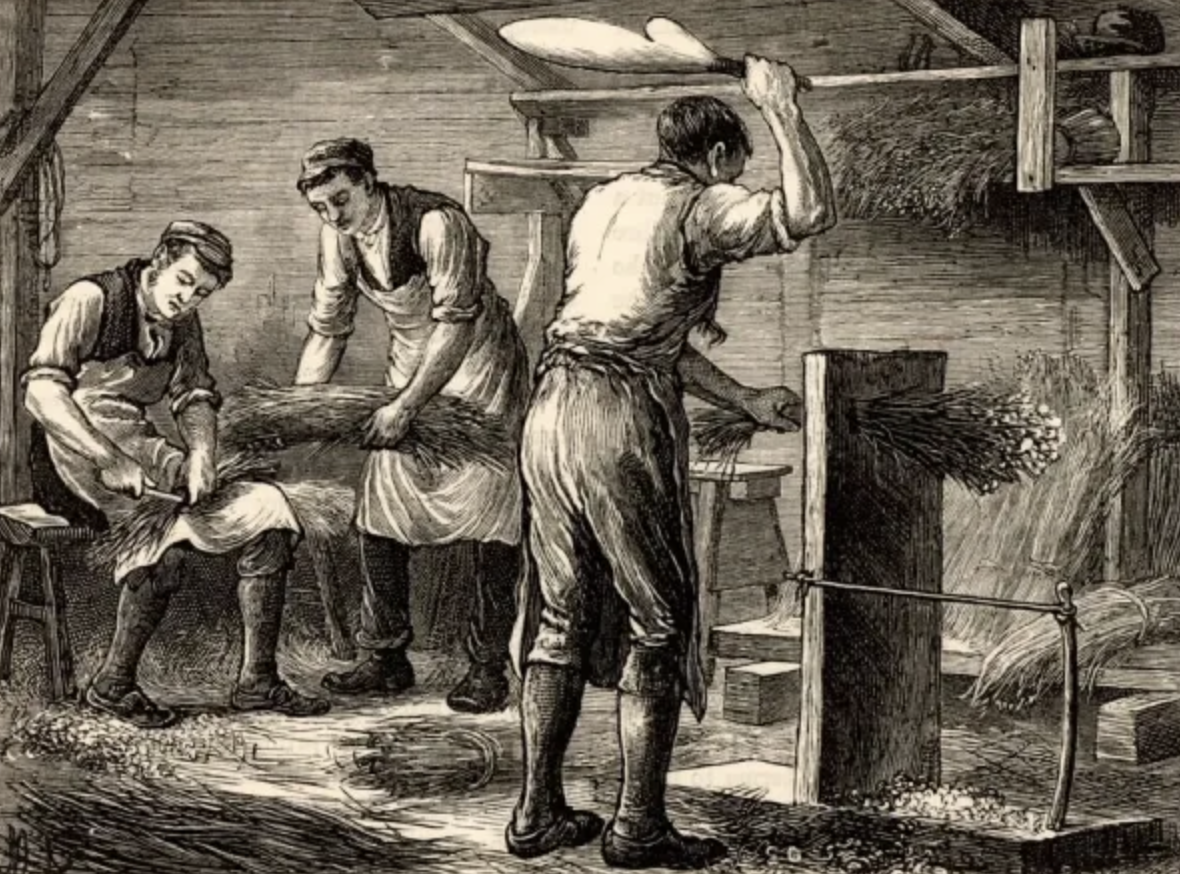
Scutching — cleaning the fibres by removing remaining woody fragments
Scutching is the next step, where the flax is scraped using a scutching knife or other mechanical tools to remove any remaining woody matter, roots and blossom ends. This process ensures that the fibers are pure and ready for the next refinement
Hackling refines further, combing the fibres into alignment, separating long strands from shorter ones.
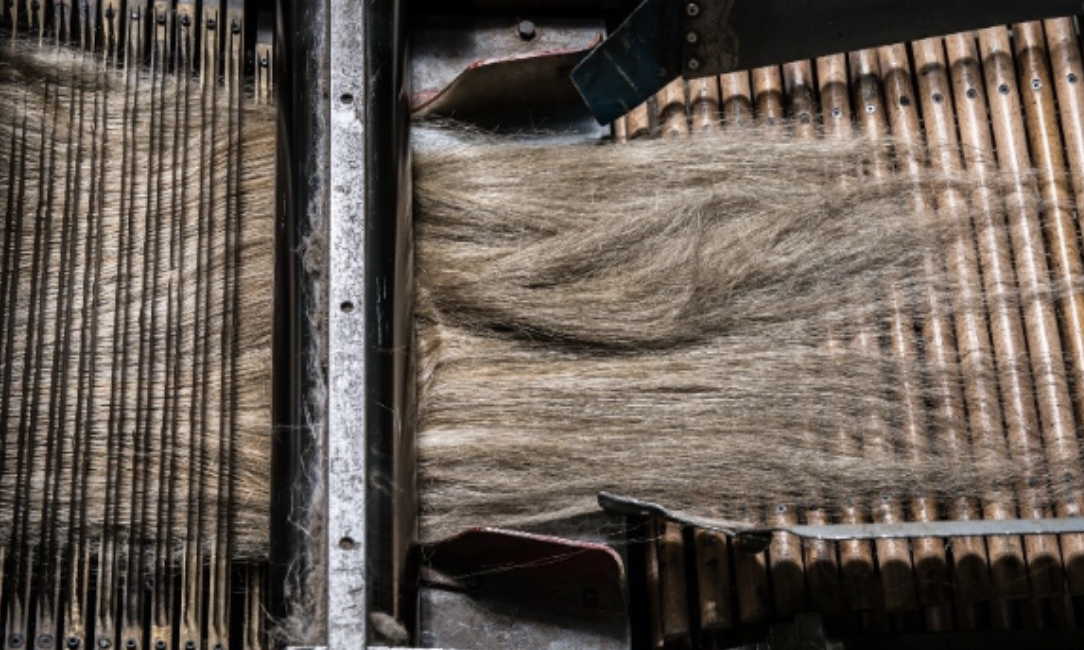
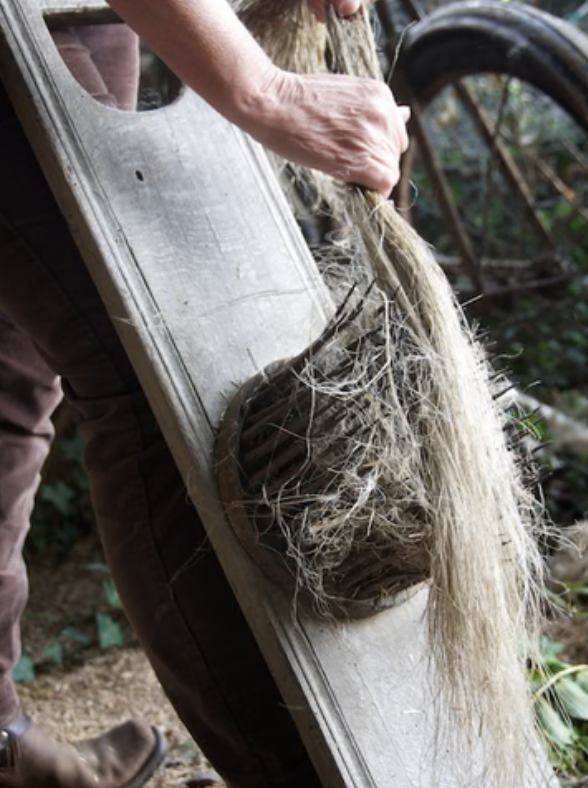
Hackling — refining the fibres through combing, bringing them into alignment
The flax fibers are then passed through a series of metal combs in a process called hackling. Hackling separates the finer, longer fibers from the shorter, coarser ones, and aligns them for spinning. Long fibers are bundled into flax strick for spinning; shorter fibers (tow) are used for coarse cloth or packing materials. The result are bundles of long, smooth fibers, which are then ready to be spun into yarn.
Only then can the material be spun. Twisted into yarn. Prepared for structure.
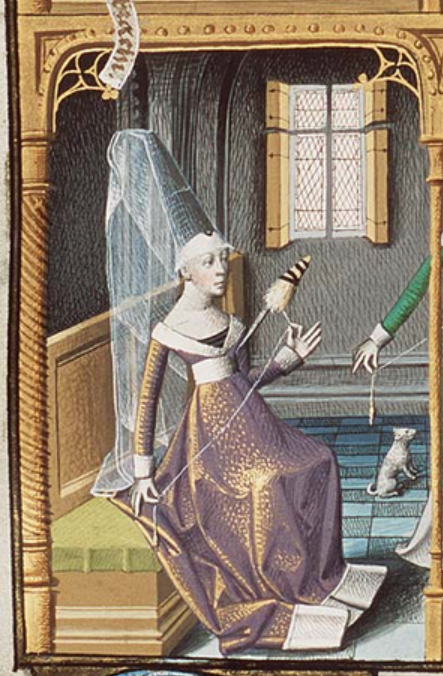
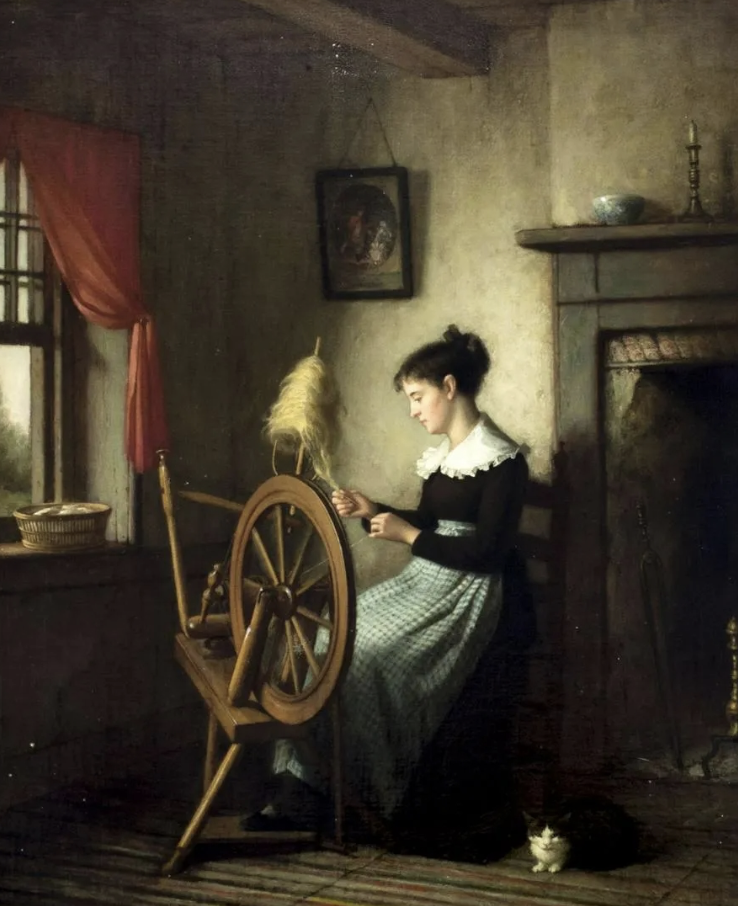
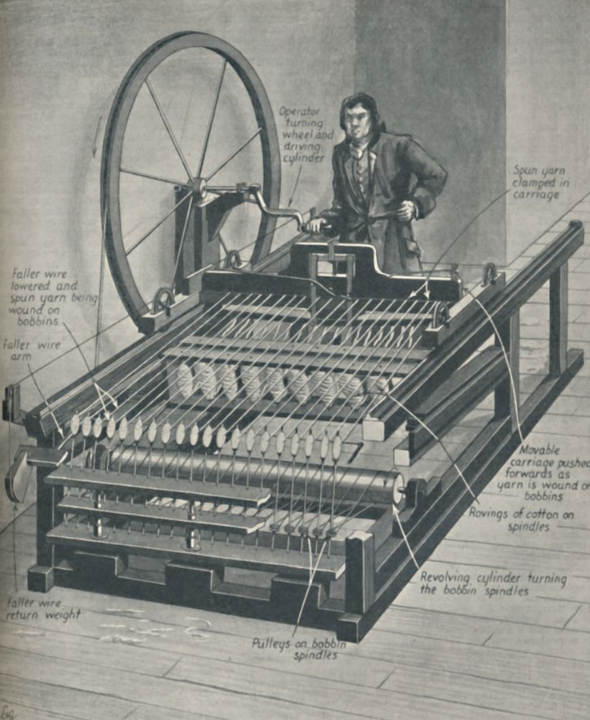
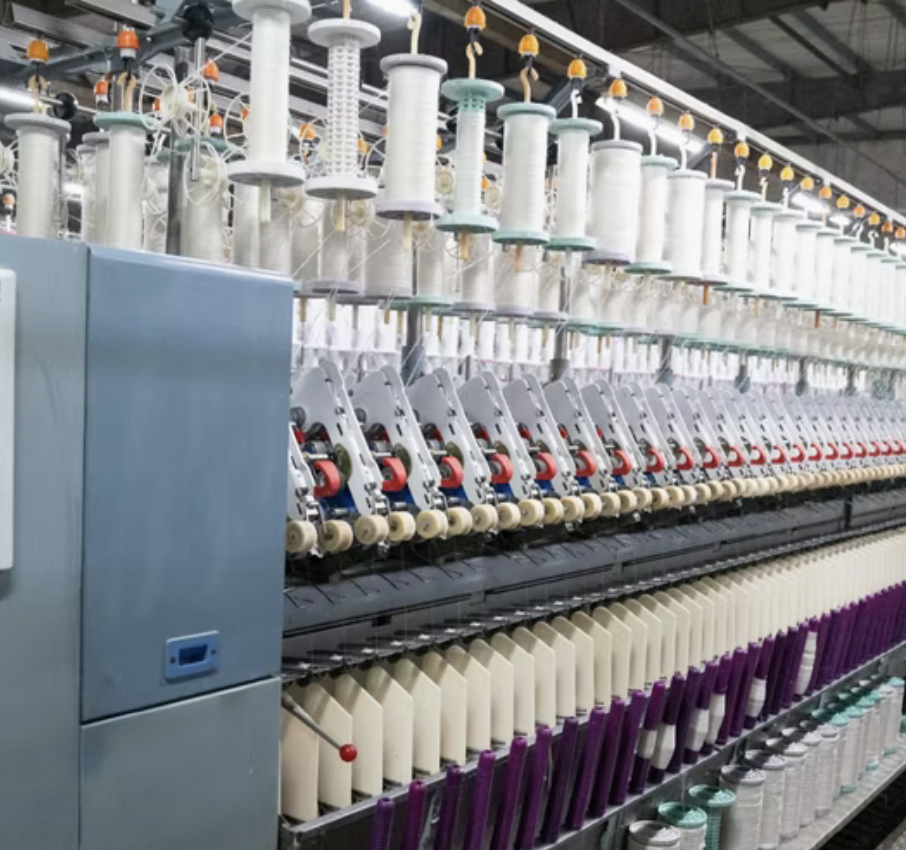
Spinning — transforming flax fibres into yarn, from spindle to industrial production
The refined flax fibers are spun into linen yarn. The spinning process twists the fibers together, creating a strong, durable thread. Linen yarn is prized for its strength and resilience, making it perfect for creating fine linens that can withstand years of use.
From here, the thread enters its final transformation — woven or knitted into fabric, depending on the intended form. Plain weaves, twills, satins — each giving the material a different presence, a different expression.
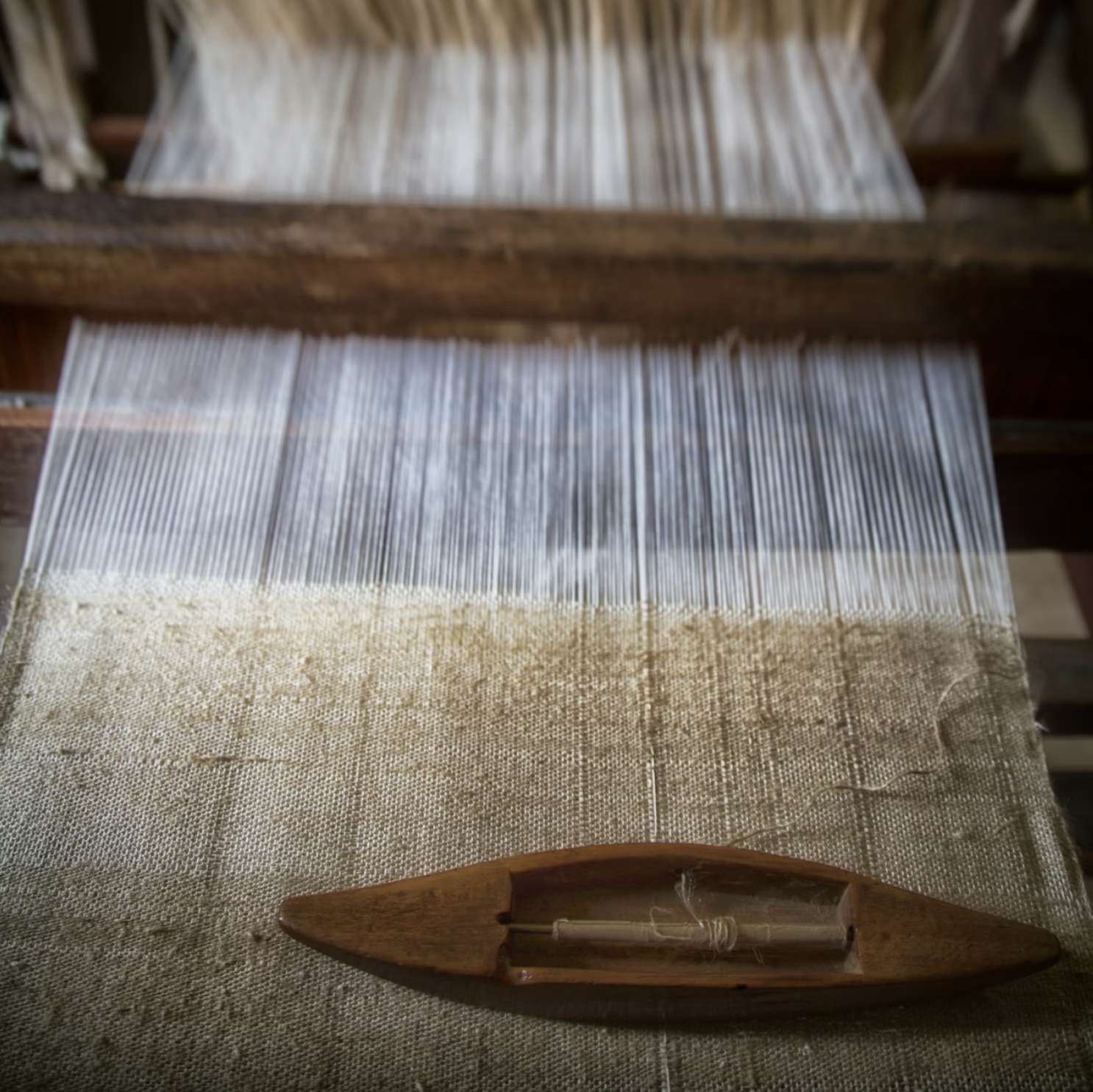
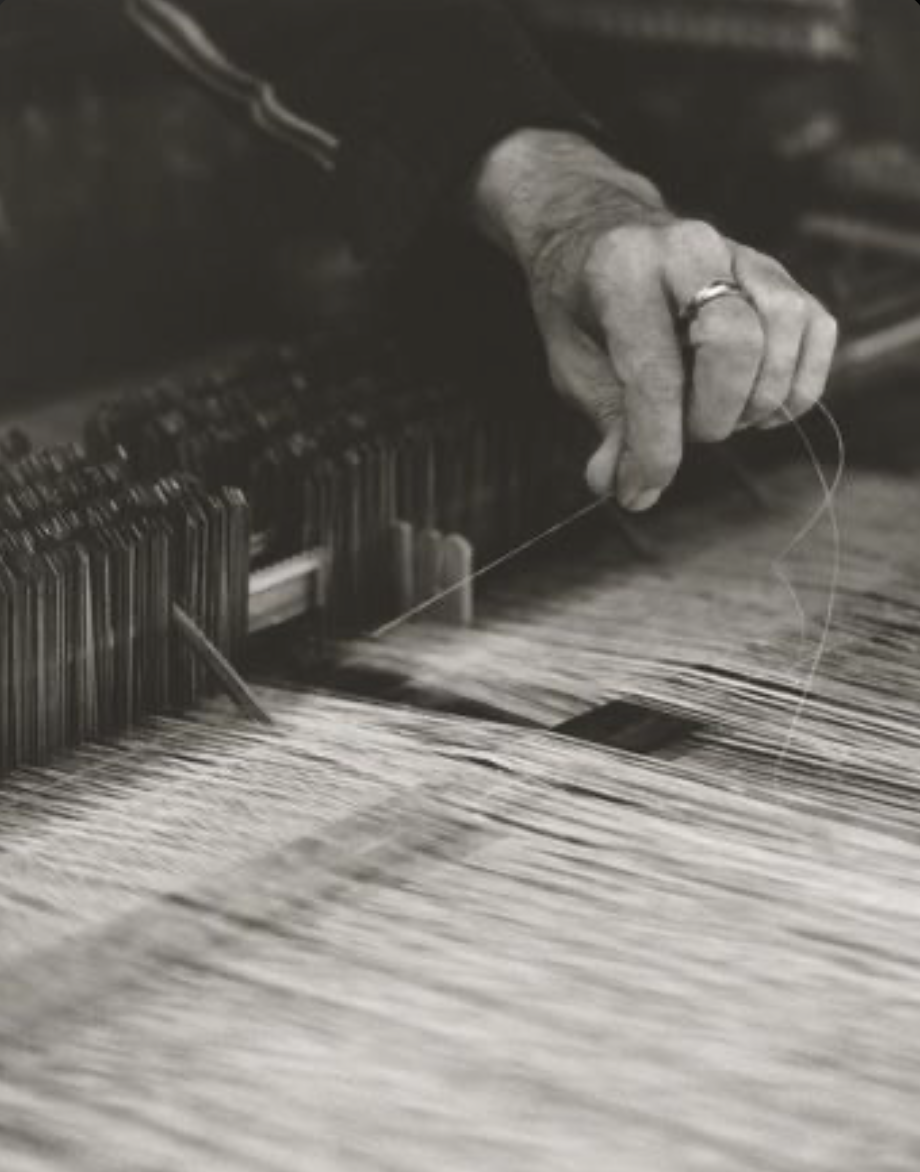
Weaving — from handloom to modern production
Throughout this entire process, nothing is forced. The fibre is not altered beyond recognition.
It is revealed.
Flax is a renewable resource. Nearly every part of the plant is used. Its transformation into linen reflects a way of working that is both precise and restrained — guided not by excess, but by attention.
The Return of Linen — Industry, Modernity and Revival
Linen in the 20th and 21st Century — Decline, Rediscovery and Continuity
The twentieth century marked a period of profound transformation within the textile world, bringing an unprecedented diversification of materials and styles. Within this changing landscape, linen gradually receded from prominence, shaped by broader economic, technological and cultural shifts.
The two World Wars, followed by the economic instability of the interwar period, altered both production and consumption. Cotton, less costly and more easily integrated into industrial systems, became the dominant material for everyday use. More decisive still was the rise of synthetic fibres after 1945. Materials such as nylon, polyester, acrylic and elastane introduced new possibilities of scale, uniformity and ease, aligning with the emergence of a consumer society in which clothing became more accessible, more replaceable and increasingly detached from its material origins.
By the mid-twentieth century, linen occupied a more limited position. It remained present in specific contexts — in household textiles, in structured fabrics, and in garments suited to warmer climates — yet it no longer defined the broader language of fashion. The rise of ready-to-wear in the 1960s, together with a growing preference for ease of maintenance and informality, further distanced everyday dress from natural fibres such as linen, wool and silk.
And yet, linen did not disappear.
It remained where its qualities could not be replaced — in its ability to regulate temperature, to breathe, and to respond to the body in a way synthetic materials could not fully replicate. These inherent properties would become the foundation of its return.
From the 1970s onwards, a renewed interest in natural materials began to emerge. Designers, seeking alternatives to the uniformity of synthetic fabrics, turned again to fibres that carried both material integrity and cultural depth. Linen, with its versatility, became part of this movement. It appeared in the work of designers across Europe and Japan, who explored its capacity for structure, fluidity and surface.
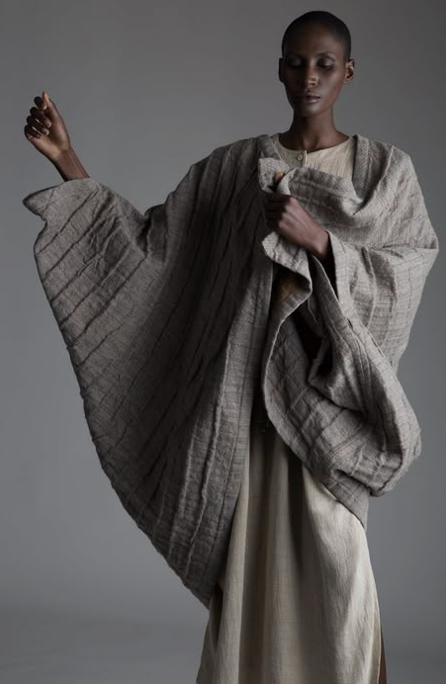
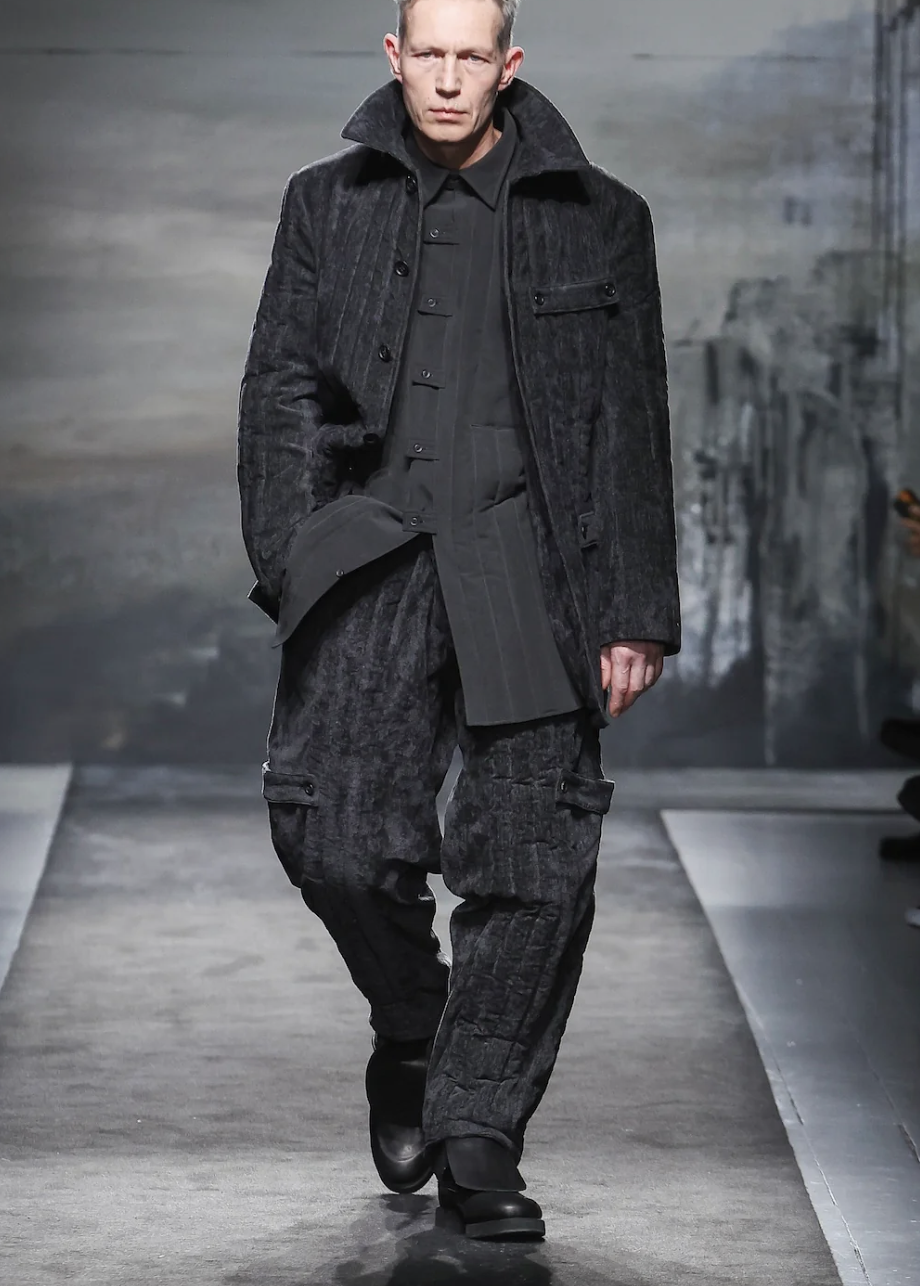
Designs in linen from Japanese designers Issey Miyake and Yohji Yamamoto - 1990s
This renewed attention deepened in the 1980s, when technical innovations allowed linen to be produced in increasingly refined qualities — softer, more resistant and more adaptable to contemporary design. Freed from earlier limitations, it could be dyed, printed, deconstructed or deliberately creased, offering a wide range of expressions while retaining its inherent clarity.
In the 1990s, this exploration took on a more radical dimension. A new generation of designers, particularly in Northern Europe and Japan, sought to move beyond established conventions. Their work, often characterised by minimalism and deconstruction, found a natural affinity with linen. Its texture, its irregularity and its responsiveness to the body aligned with a design language that valued authenticity over perfection and process over surface.
Alongside these aesthetic developments, a broader awareness began to take shape. Questions of sustainability, transparency and responsibility gained increasing relevance, bringing renewed attention to materials that could be produced with restraint and respect for natural resources. In this context, flax revealed itself not as a new solution, but as an existing one — a fibre requiring relatively little water, minimal chemical intervention and producing almost no waste, biodegradable and renewable, measured in its impact.
Linen’s return, then, was not a rediscovery, but a recognition.
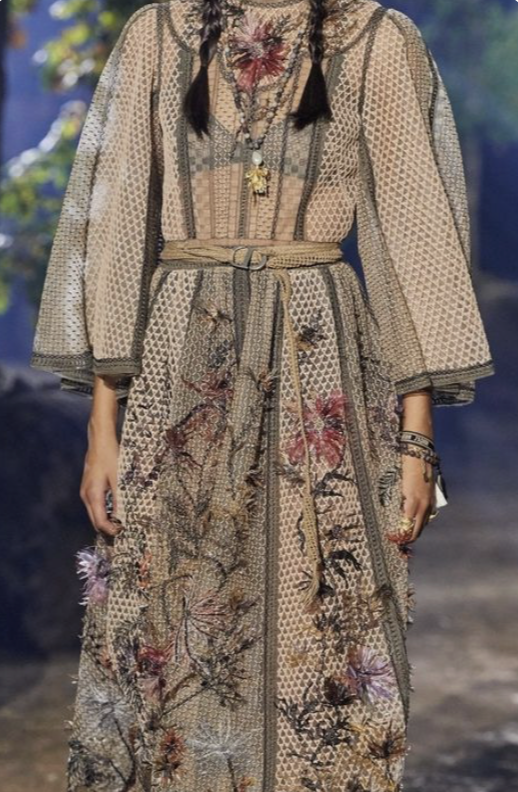
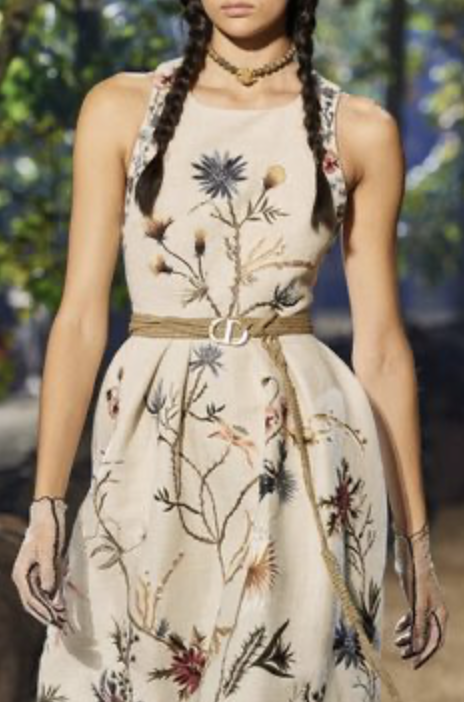
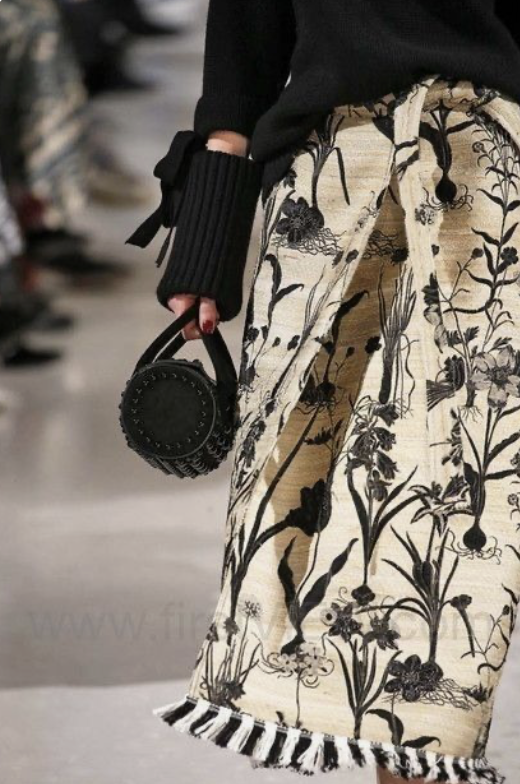
Dior SS2020
It re-emerged not only because of its qualities, but because of what it represents: a way of working that predates urgency, a material that asks for time, and a process that cannot be rushed without consequence. In this sense, linen does not belong only to the past, but to a way of thinking that feels, once again, necessary.
Within this broader context, linen continues to find its place in relation to environment and use. It belongs not to one culture alone, but to climate, to movement and to necessity. In many regions of the world, garments arise not from seasonal cycles, but from heat, light, wind and the demands of daily life. Linen, with its breathability and resilience, naturally aligns with such conditions.
THE AFRICAN NOMADS COLLECTION
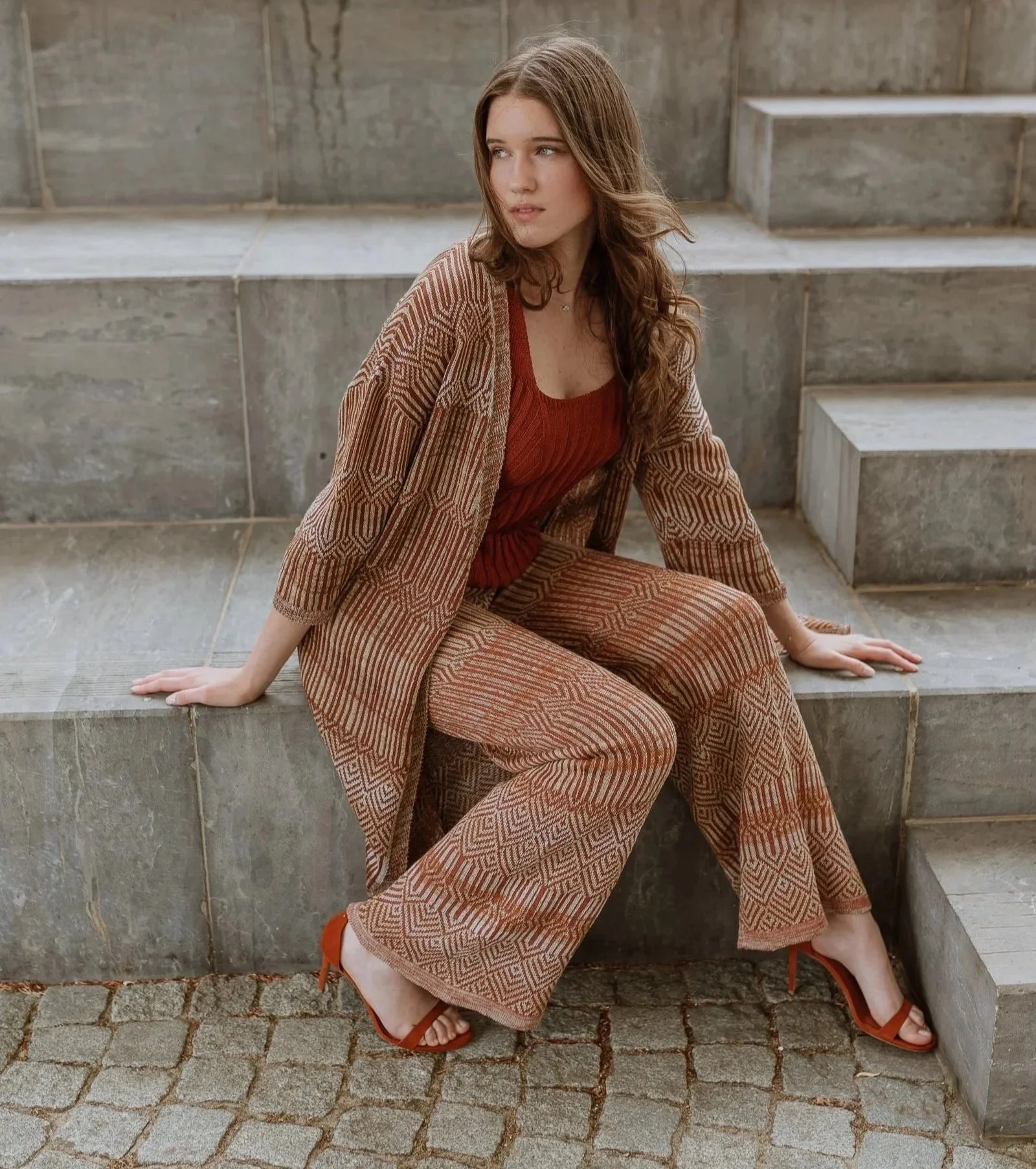
Linen, when brought into garment, begins to follow the body — responding to movement, to air, and to the quiet rhythm of wearing.
This understanding shaped my African Nomads collection, not as a direct reference, but as a reflection — a way of considering how garments might emerge from landscape rather than from trend, and how they might respond to air, to movement and to the body in motion.
Natural tones shaped by sun and earth, constructions that allow space and breath, and forms that move rather than constrain define this approach.
Here, linen becomes part of a language shaped by climate and refined through use, returning flax to its origin as a plant rooted in the land, transformed by the hand and given meaning through the way it is worn — in stillness, and in movement.
Across cultures and continents, the use of natural fibres has long been shaped by climate, movement and necessity. In many indigenous traditions, textiles are not conceived as fixed forms, but as part of a living relationship between body, material and environment.
In nomadic cultures, garments are made to adapt — to heat, to wind, to travel — allowing the body to move freely while offering protection and breathability. Structure emerges not from imposition, but from rhythm: repeated gestures, inherited patterns, and the quiet logic of making by hand.
The graphic language of these textiles — geometric, measured, often symbolic — reflects a way of working in which ornament is never separate from function, and decoration remains inseparable from structure. Patterns are built through repetition and variation, creating surfaces that hold both movement and memory.
In this context, the use of linen and cotton becomes more than a material choice. It returns the garment to a lineage of fibres that respond to climate and to the body — fibres that absorb, release and endure. What appears minimal is, in fact, deeply informed: shaped by generations of making, wearing and refining.
The African Nomads collection engages with these underlying principles, translating them into a contemporary language of knit, where jacquard structures echo the rhythm of hand-crafted motifs, and where form remains open, adaptable and quietly precise.
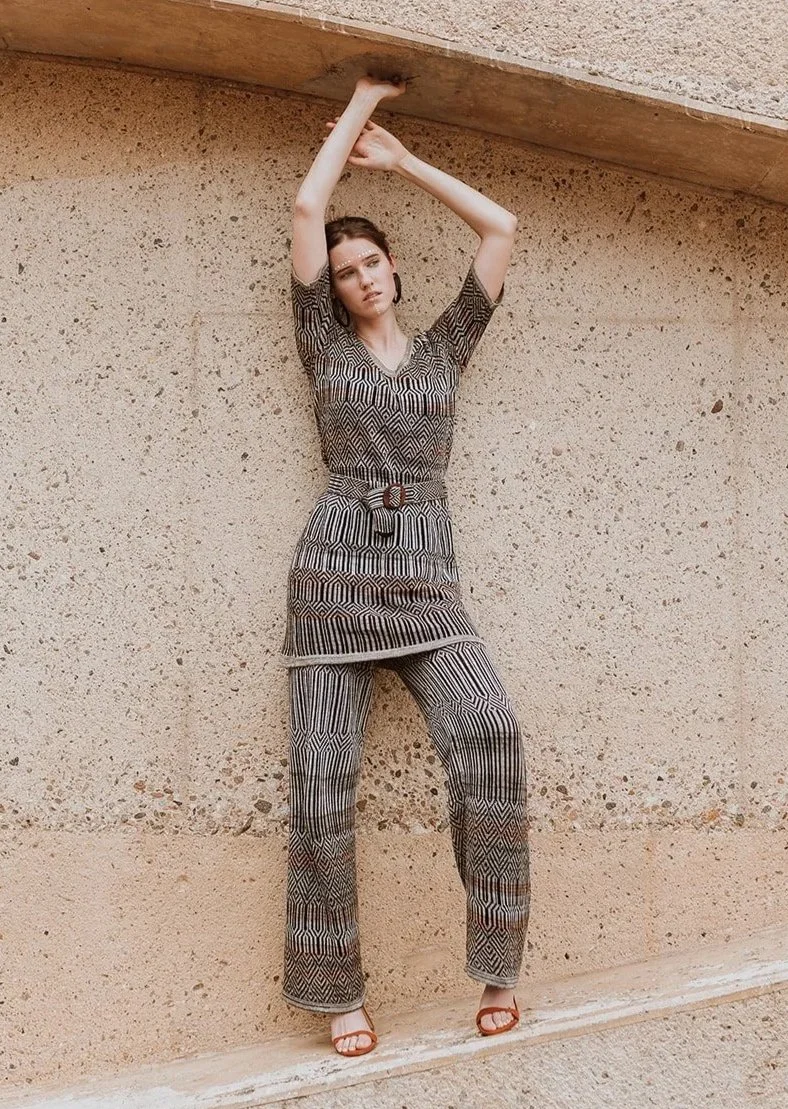

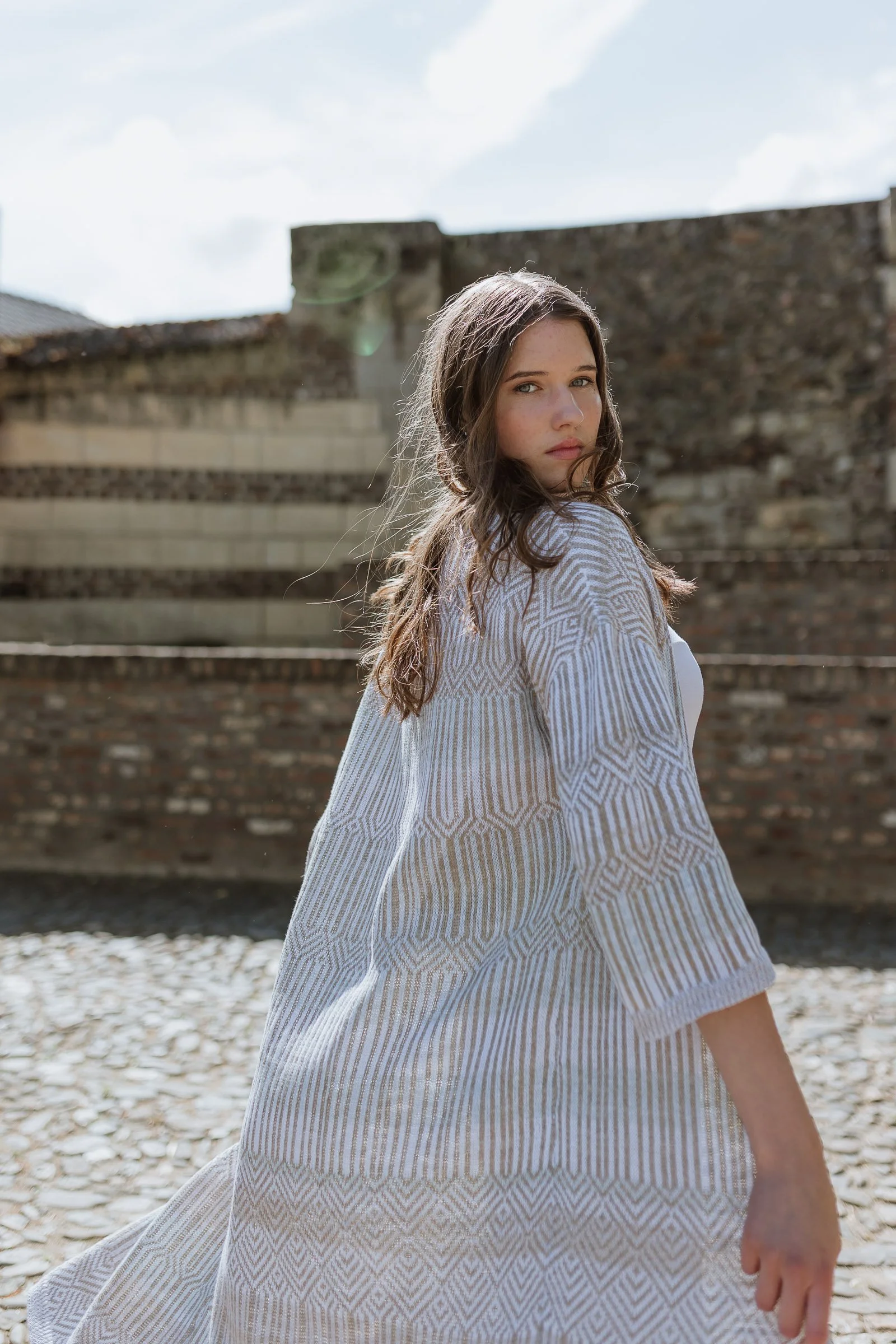
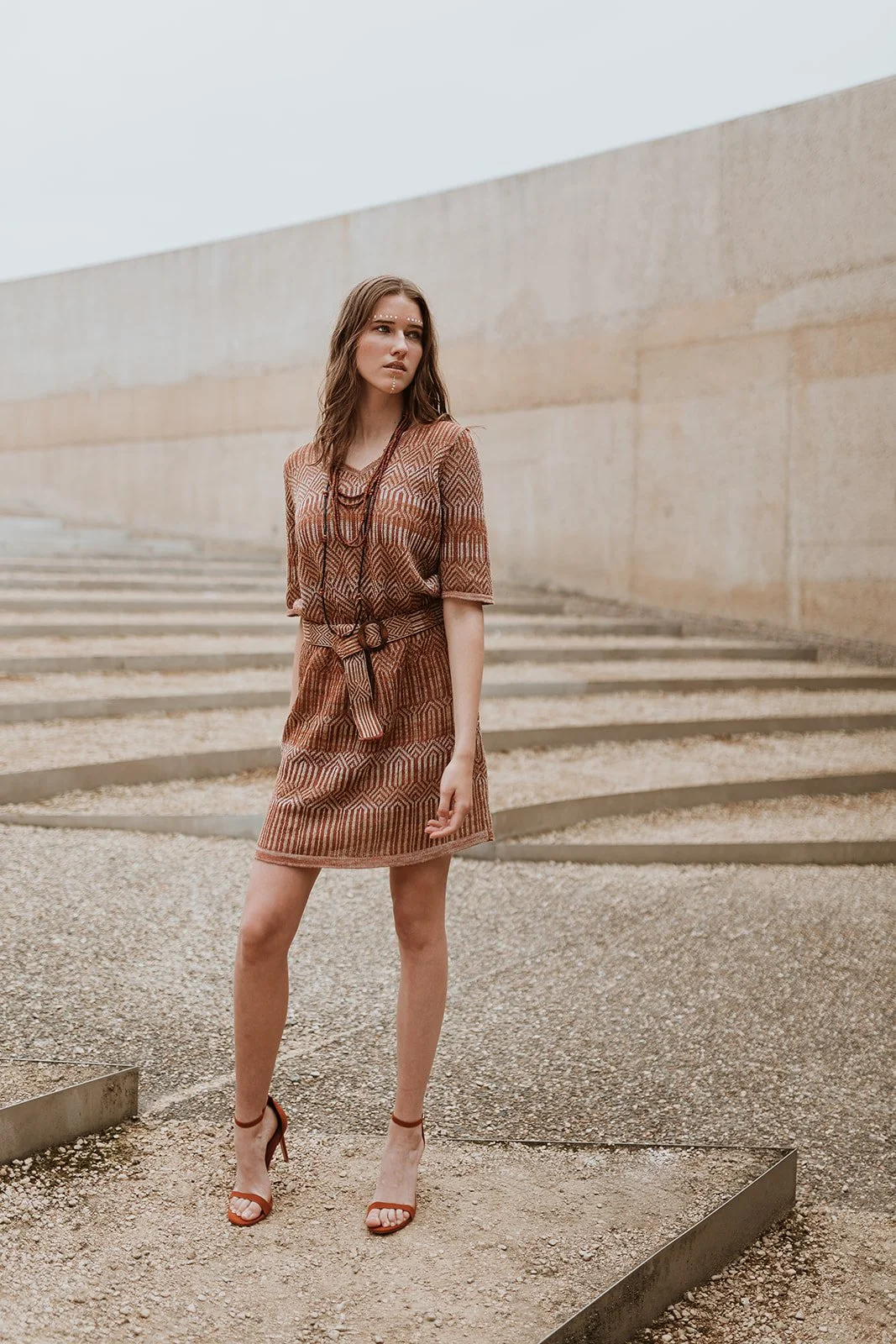
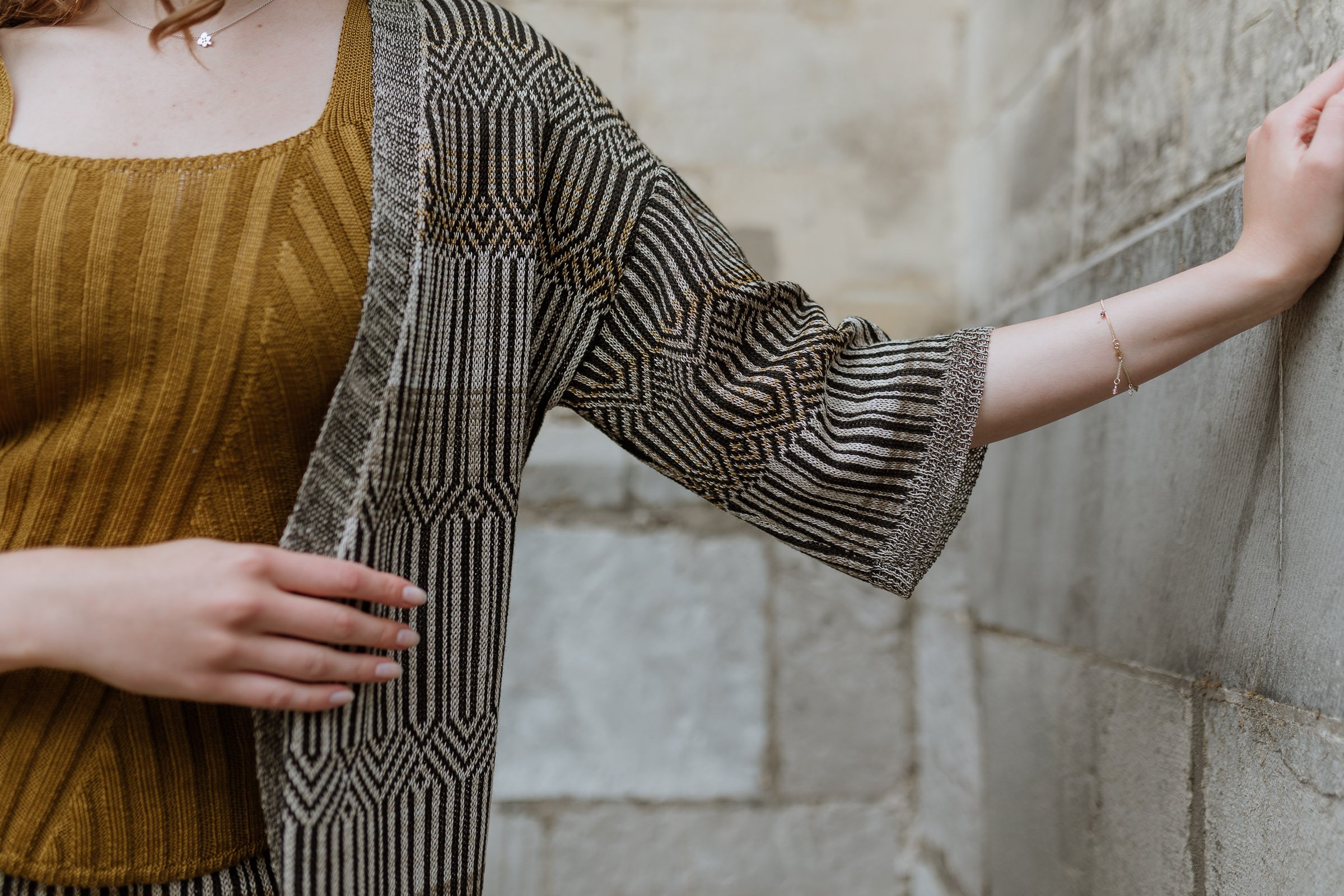
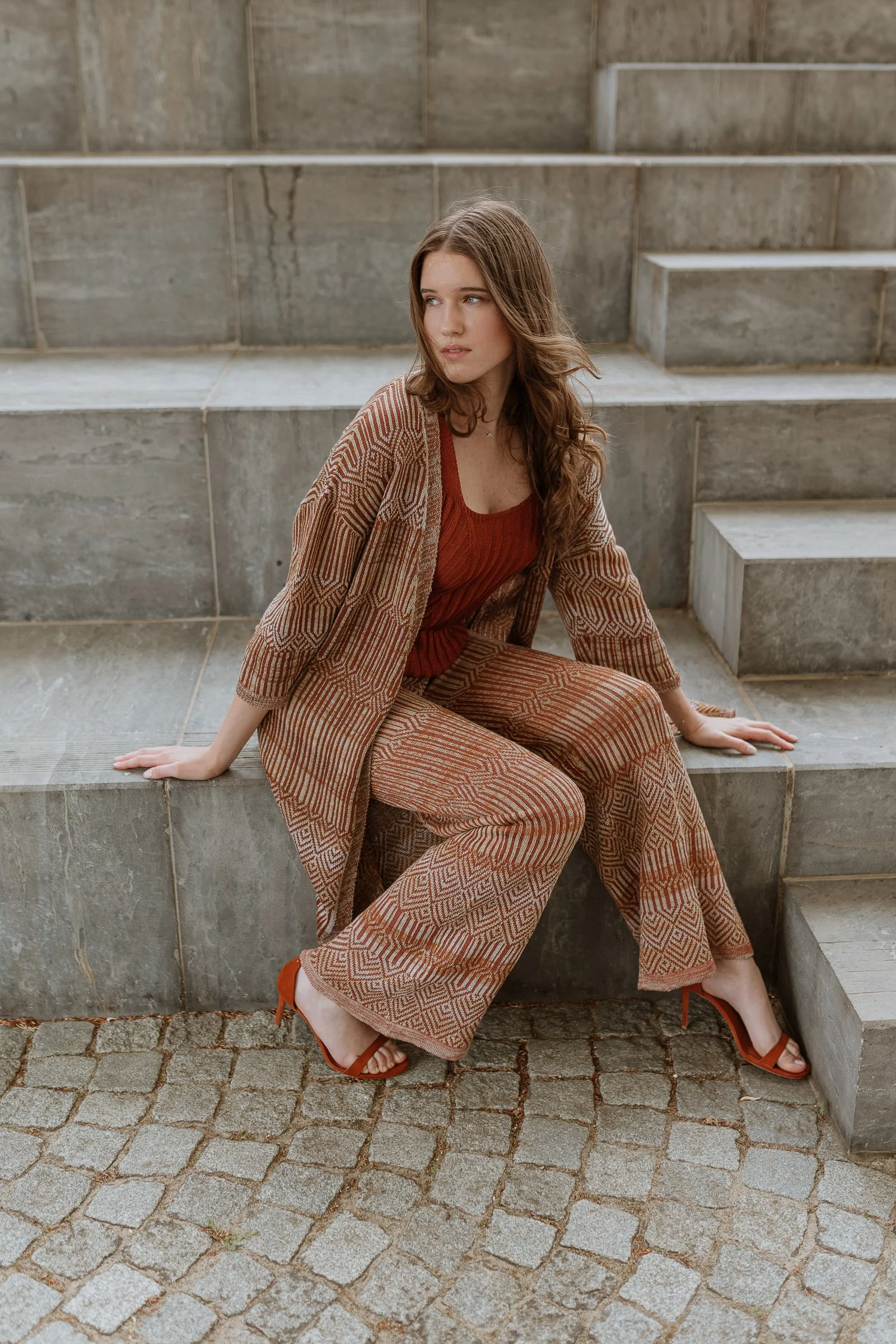
In movement, the material reveals itself — shifting with the body, catching light, registering gesture. Structure remains, but never resists.
In the contemporary wardrobe, linen’s relevance remains grounded in its material qualities. It allows air to circulate, creating a natural cooling effect against the skin, while absorbing and releasing moisture to maintain a quiet balance between body and environment.
It does not conceal movement, but responds to it, and it does not resist time, but registers it. Its creases are not imperfections, but traces — a visible record of wear, motion and presence.
In this way, the garments do not impose themselves on the body, but accompany it — adapting to rhythm, to temperature and to gesture. They exist not as fixed forms, but as shifting surfaces, shaped by the wearer as much as by their making.
Over time, linen softens without losing its strength, becoming more supple while retaining its structure. It moves with ease between the informal and the refined, its natural lustre lending itself to elegance, while its texture allows for restraint.
It does not depend on surface, but on substance.
In this way, linen aligns with a different understanding of luxury — one defined not by perfection, but by integrity; not by uniformity, but by character; and not by excess, but by precision
My personal connection to linen
As a designer, my connection to linen runs quietly, but deeply. Each time I work with it, I am aware not only of the material itself, but of its continuity — of the many hands that have cultivated, processed and understood this fibre across time. From prehistoric fragments to ancient garments, from fields to ateliers, linen carries a presence that is both physical and intangible, shaped in constant relation to the lives it has accompanied.
Working with flax — shaping it into yarn, into fabric and into form — is not only a process of making, but a process of connection. There is a clarity in linen that continues to draw me back, a balance between strength and softness, between structure and air. It asks for attention, but does not demand it.
To work with linen is, in a quiet way, to work within a lineage — one shaped over thousands of years. Not as something to preserve, but as something that continues to unfold through use, through making, and through the hand.
Each piece I create carries something of this history forward, not as reference, but as quiet continuation. Linen is not simply a fabric, but a material that has remained closely bound to human life, adapting to movement, to environment, and to time itself. And each time I work with it, I am reminded that what we create is never entirely new, but part of something that has always been in motion.