
THE ART OF CROCHET - A History Written by Hand
From the delicate lace of the nineteenth century to contemporary fashion — and the inspiration behind Studio Myr's BAROQUE Collection.
A thread through time
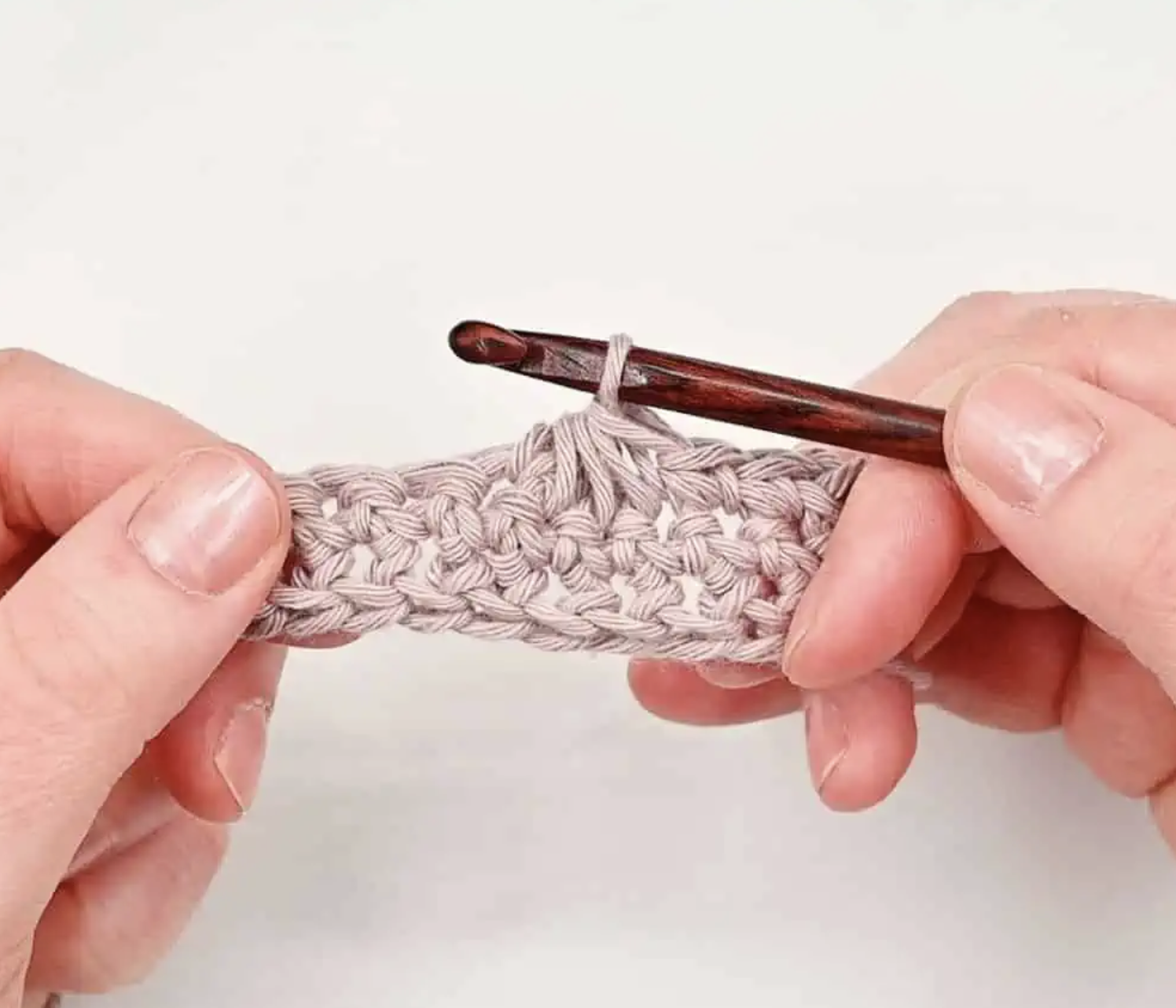
A single thread, a small hook and the movement of two hands. From these remarkably simple elements, intricate patterns, sculptural textures and entire garments can emerge.
Crochet is one of the most versatile forms of textile craftsmanship. Its possibilities range from the finest, almost weightless lace to bold, architectural structures. Yet behind even the most elaborate design lies a succession of individual stitches, each requiring the attention and skill of its maker.
Throughout its history, crochet has moved between different worlds. It has been a means of earning a living, a domestic pastime, a form of artistic expression and a technique employed in fashionable dress. At different moments, it has represented necessity, individuality, refinement and luxury.
Today, in an age when much of our clothing is produced by increasingly sophisticated machinery, the quiet persistence of hand crochet invites us to reconsider the relationship between time, craftsmanship and value.
The origins of crochet
The precise origins of crochet remain uncertain.
Although looped textiles have existed in different cultures for centuries, the technique we recognise today as crochet is comparatively recent in the historical record.
Earlier traditions, including forms of needle looping and tambour embroidery, share certain characteristics with crochet. However, they should not be confused with the modern technique, in which a hooked needle is used to draw loops of yarn through one another to create a fabric.
An important milestone occurred in the Netherlands in 1823. The Dutch women's magazine Penélopé, published between 1821 and 1835, included what are considered the earliest known printed instructions explicitly describing crochet in its modern sense.
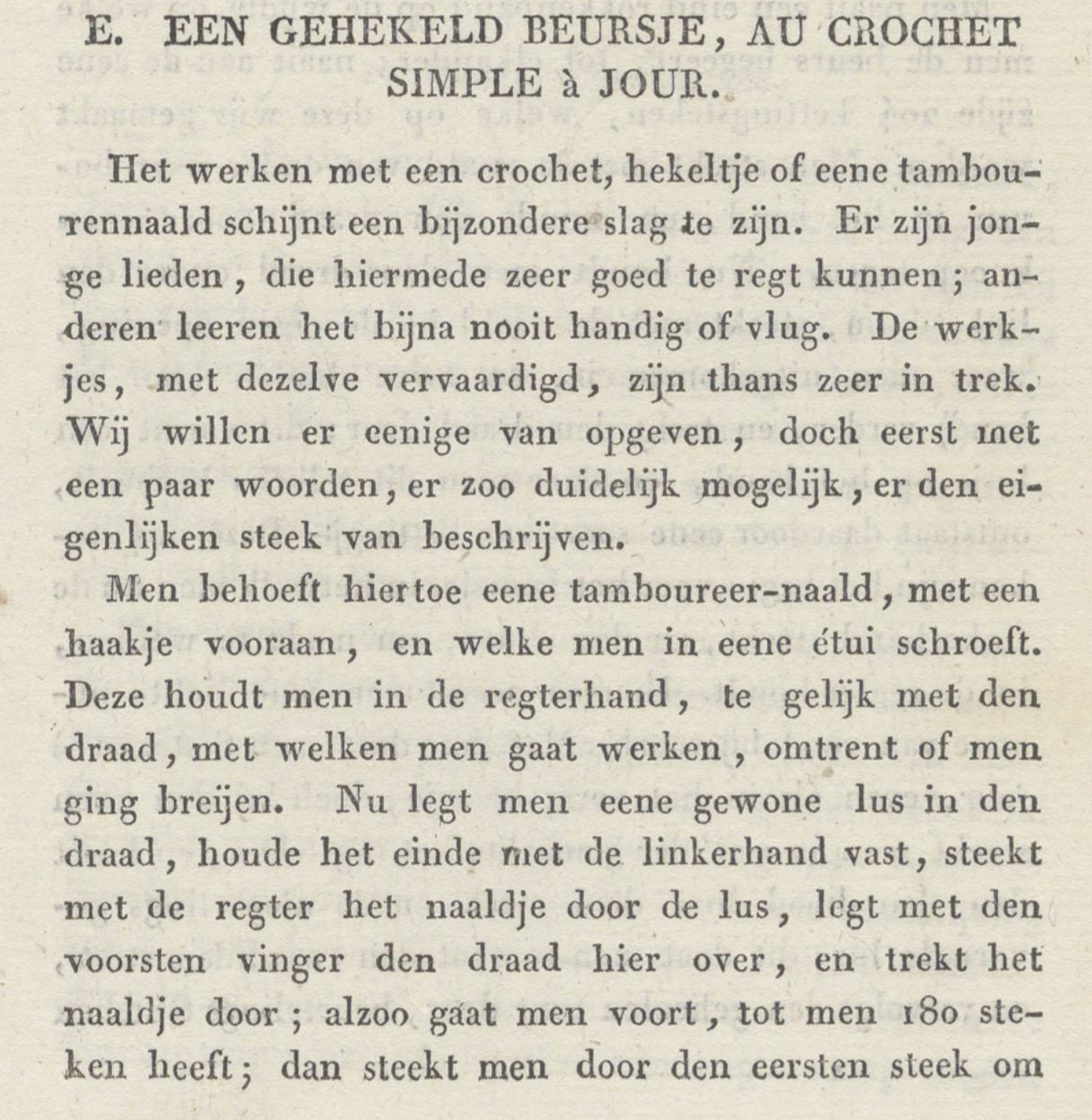
Pénélopé, of maandwerk aan het vrouwelijk geslacht toegewijd | Collecties van de Koninklijke Bibliotheek Den Haag
The magazine, devoted to women's needlework and domestic arts, played a pioneering role in documenting and spreading textile techniques. Its crochet instructions included patterns for small decorative purses, demonstrating that the craft was already sufficiently established to be shared through printed publications.
This early Dutch connection is a fascinating detail in the history of crochet.
During the following decades, crochet became increasingly popular throughout Europe. Illustrated instructions and pattern books made the technique accessible to a growing audience, while the development of more elaborate stitches opened new possibilities for decorative textiles and fashionable clothing.
One of the most influential figures was Mademoiselle Eléonore Riego de la Branchardière, a prolific nineteenth-century needlework designer and author.
In 1846, she published Knitting, Crochet, and Netting, followed in 1847 by the first instalment of The Crochet Book, a series devoted to crochet techniques and patterns.
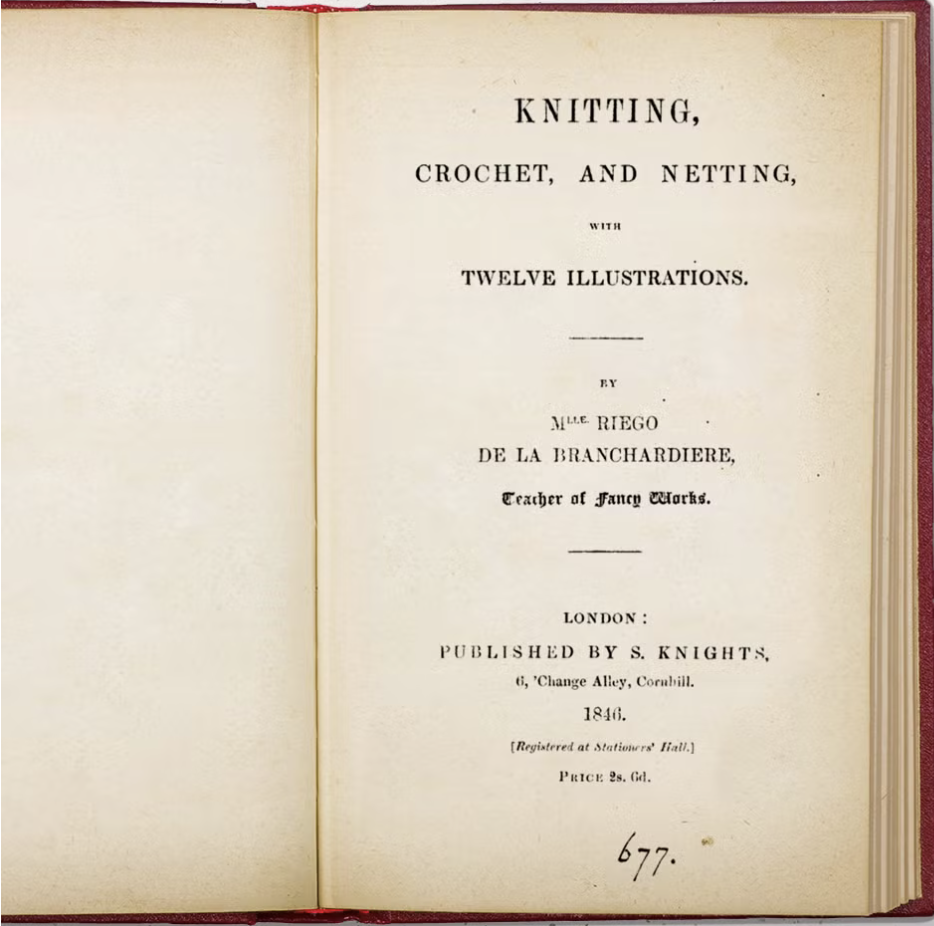
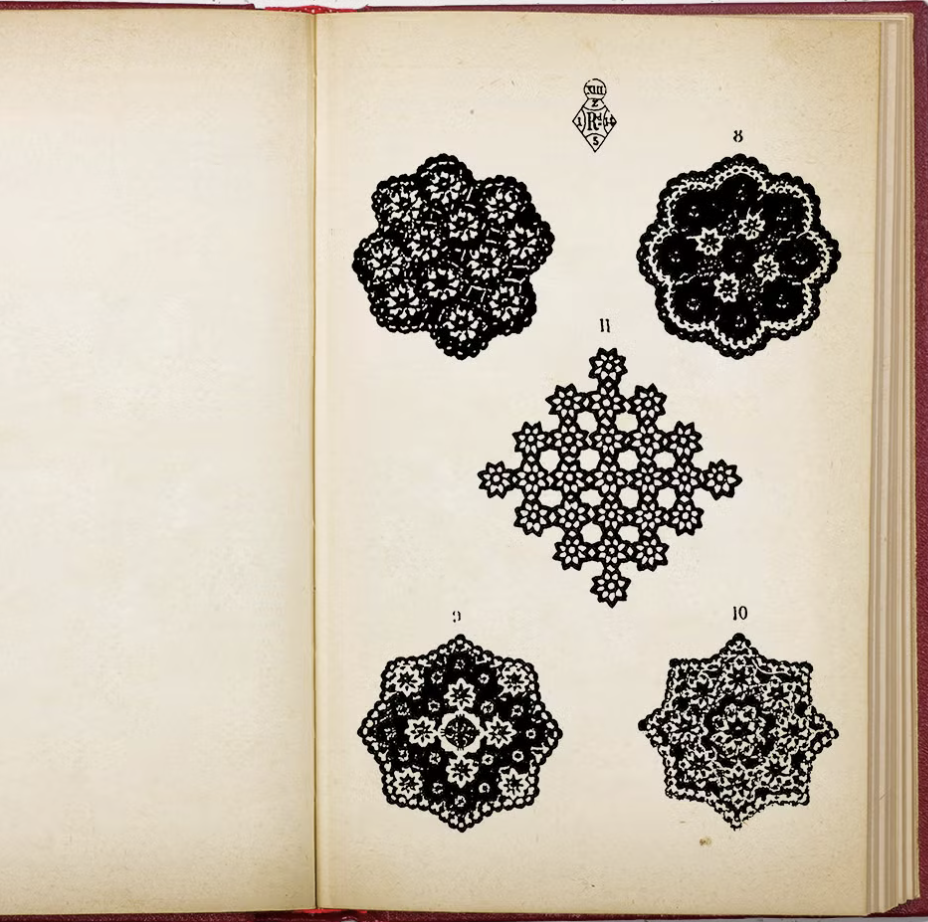
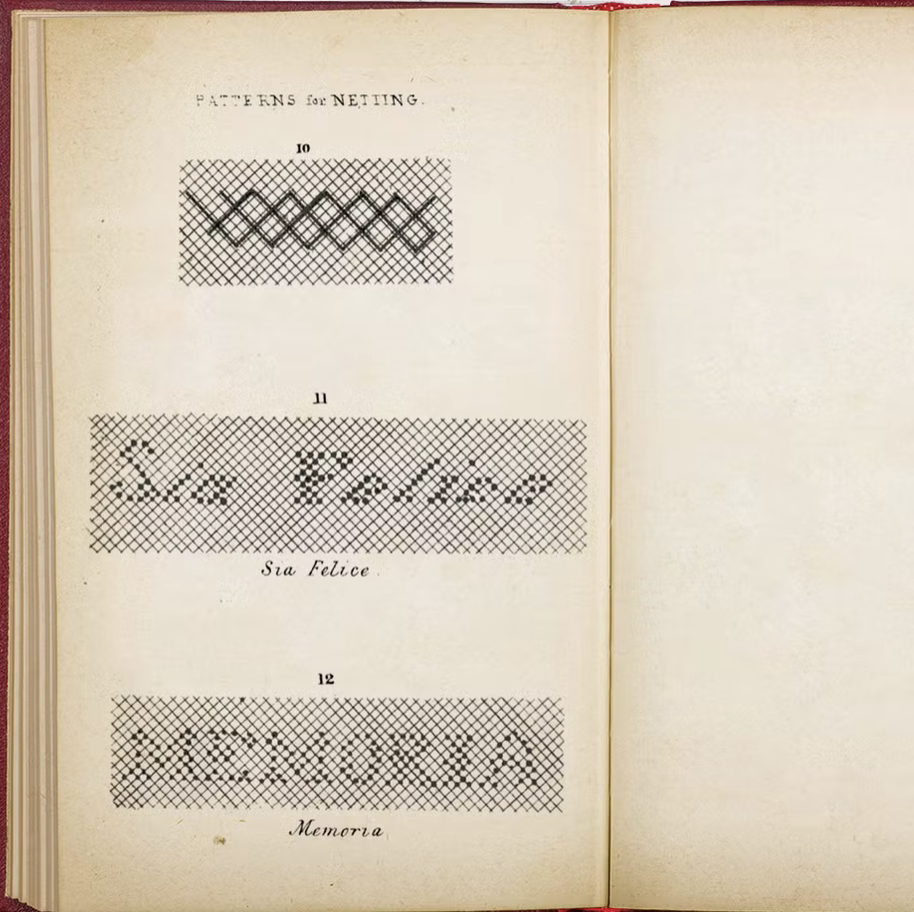
Two pages from the book Knitting, Crochet, and Netting.
Read the full book as ebook on https://www.gutenberg.org/ebooks/36669
Her publications contributed significantly to the development and popularisation of crochet lace, offering detailed instructions that allowed increasingly sophisticated designs to be reproduced by skilled needleworkers.
Riego de la Branchardière became particularly associated with the development and dissemination of Irish crochet lace, helping to establish crochet as a technique capable of producing ornamental textiles of remarkable refinement.
Late 19th century crochet sampler books
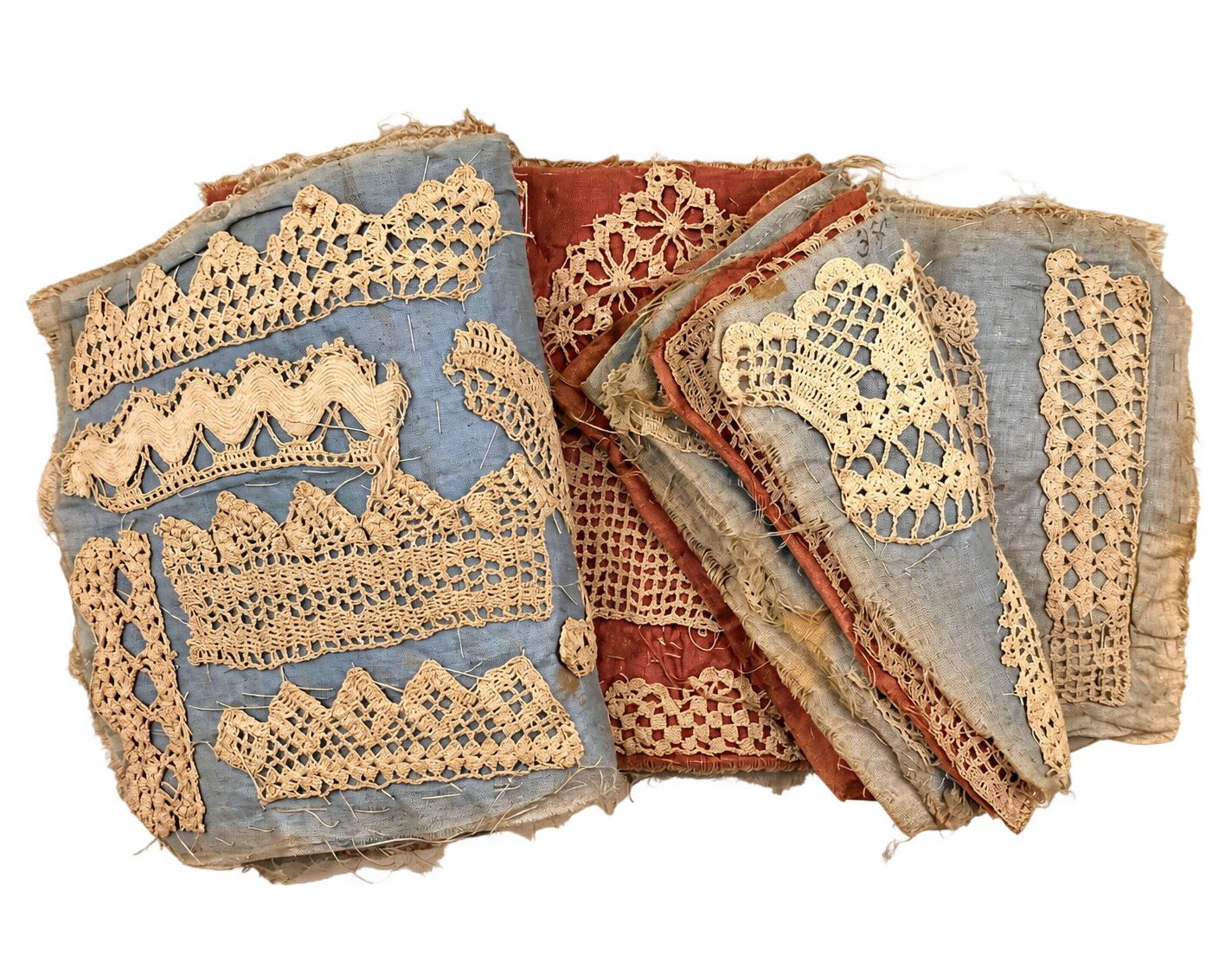
Crochet sampler book, c. 1885
During the late Victorian era and the early 20th century, crochet artists would compile sample stitches of their hand crochet work
Sometimes small pieces of completed stitches were simply stored loosely together in a box. Other artists would neatly place their samples in homemade books. The more elaborate books were covered in cloth and embellished with beautiful needlework. The books would be displayed to family, friends, or even potential customers.
By the middle of the nineteenth century, crochet had evolved from a relatively simple form of needlework into a versatile craft with an increasingly important place in European textile culture and fashion.
The age of lace — elegance and social distinction
Long before crochet became fashionable, lace had already established itself as one of Europe's most prestigious decorative textiles.
During the seventeenth and eighteenth centuries, elaborate needle lace and bobbin lace adorned the clothing of royalty, aristocracy and wealthy members of society.
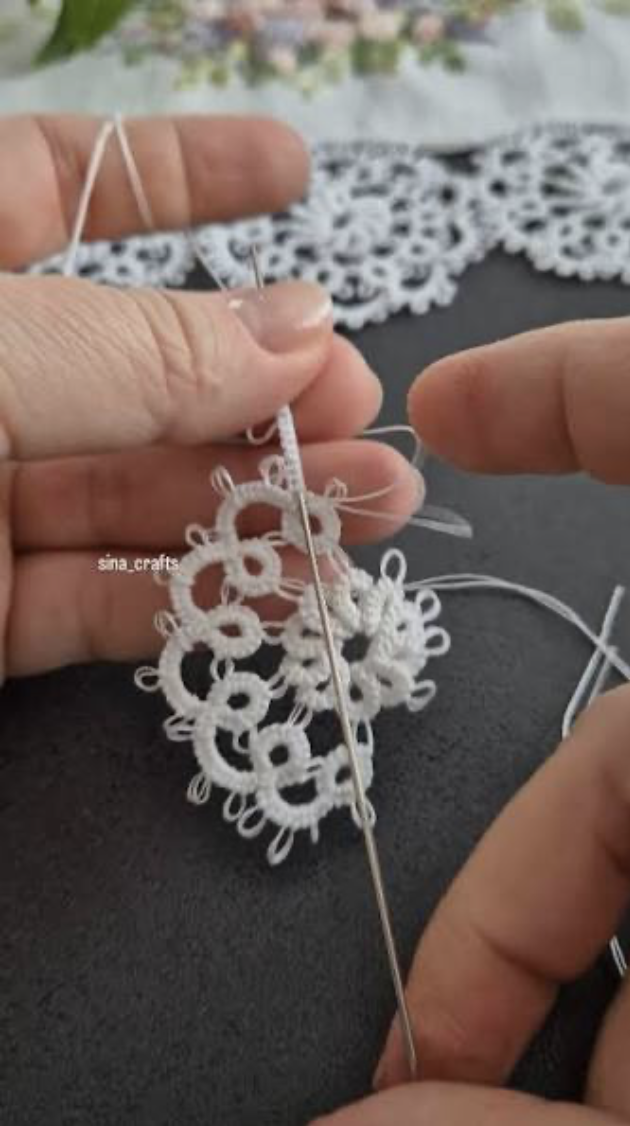
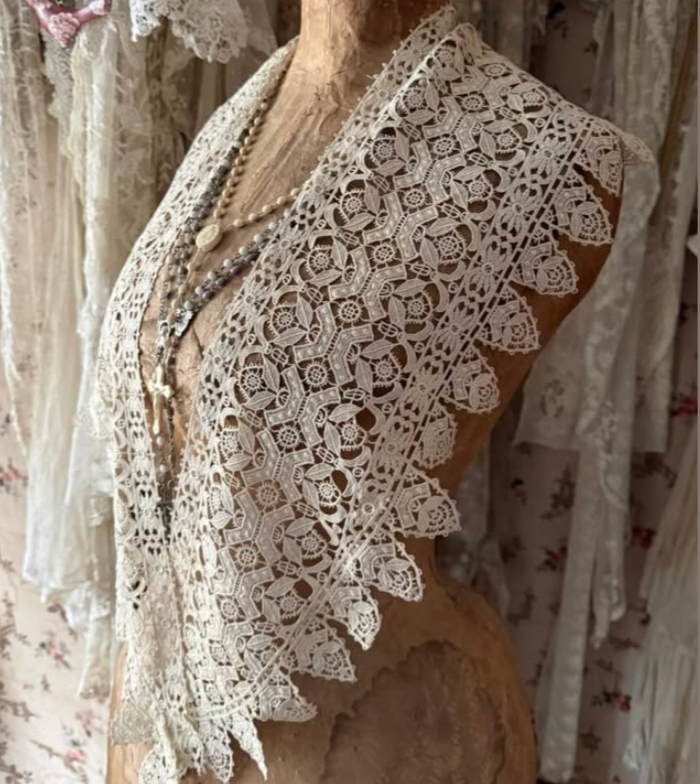
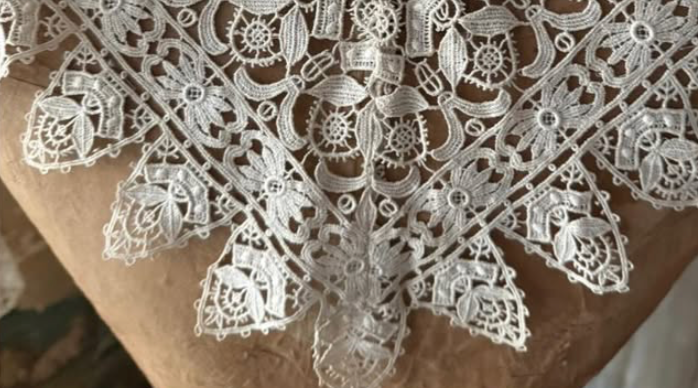
Traditional needle lace making and examples of Venetian needle lace
Fine lace appeared on collars, cuffs, elaborate neckwear and ceremonial garments. Its intricate patterns demonstrated not only the wealth of the wearer but also the remarkable skills of the craftspeople who produced it.
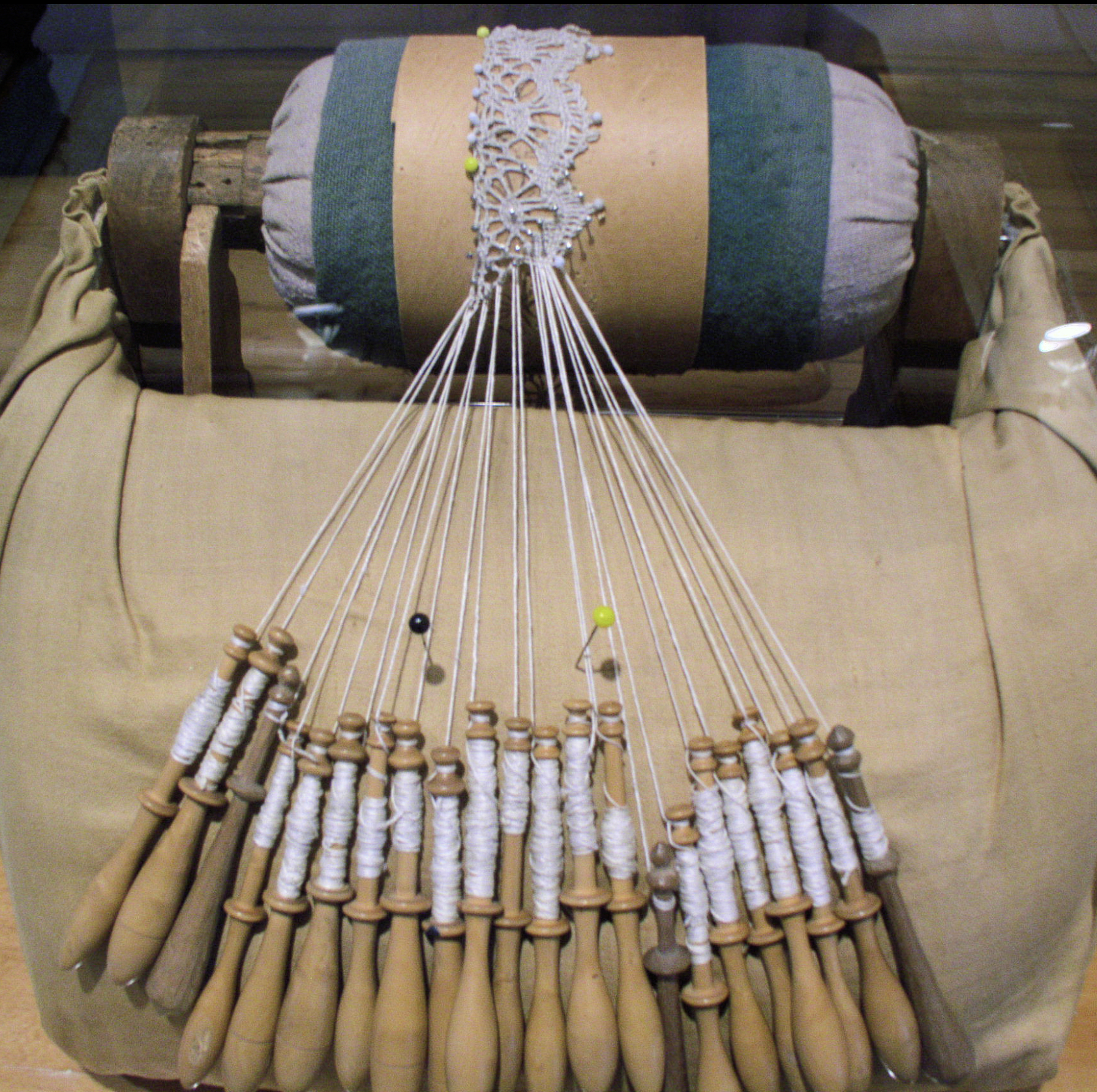
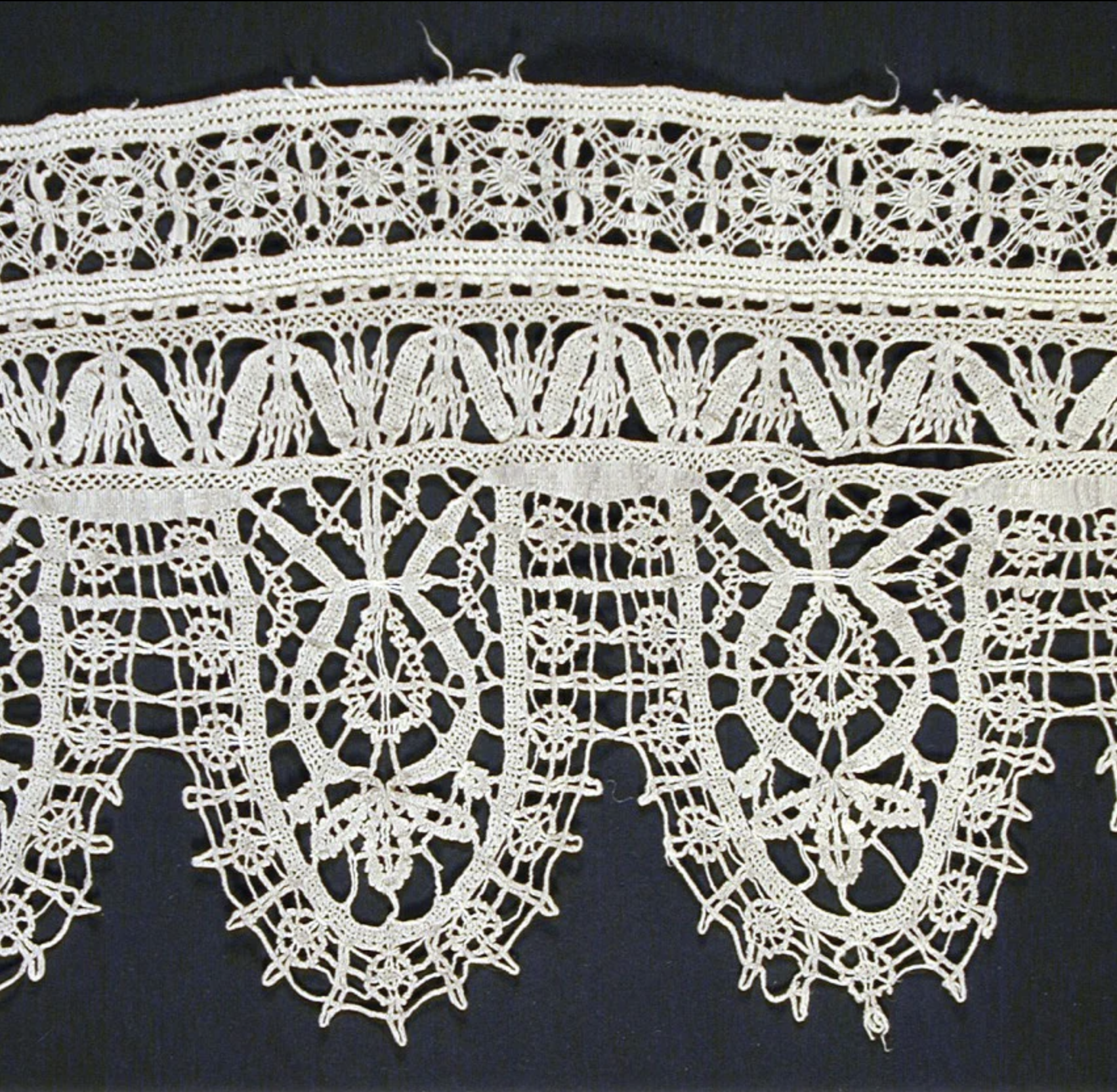
Traditional bobbin lace making (left) and seventeenth-century Flemish bobbin lace (right). Collection Museum Boijmans Van Beuningen, Rotterdam
In cities such as Venice, Brussels and other European centres of lacemaking, highly specialised techniques developed into important artistic and commercial traditions.
The finest examples required immense patience. Some were made over many weeks or months, using exceptionally delicate threads and complicated patterns.
Although these historical laces were not necessarily crocheted, their ornamental language would later influence the development of crochet lace.
Floral motifs, scrolling lines, elaborate borders and the interplay between solid and open spaces became part of a decorative vocabulary that continued to inspire generations of textile makers.
It is this historical richness — rather than the literal reproduction of period costume — that remains particularly relevant to contemporary design.
The nineteenth century — crochet enters the world of fashion
The nineteenth century marked a decisive chapter in the history of crochet.
As the technique became more widely practised, increasingly sophisticated patterns appeared in women's magazines and needlework publications.
Crochet was used to make decorative collars, shawls, bonnets, gloves, bags and household textiles. Fine cotton and linen threads made it possible to create intricate openwork patterns, while wool was used for warmer and more substantial garments.
One of the most influential developments was the emergence of Irish crochet lace.
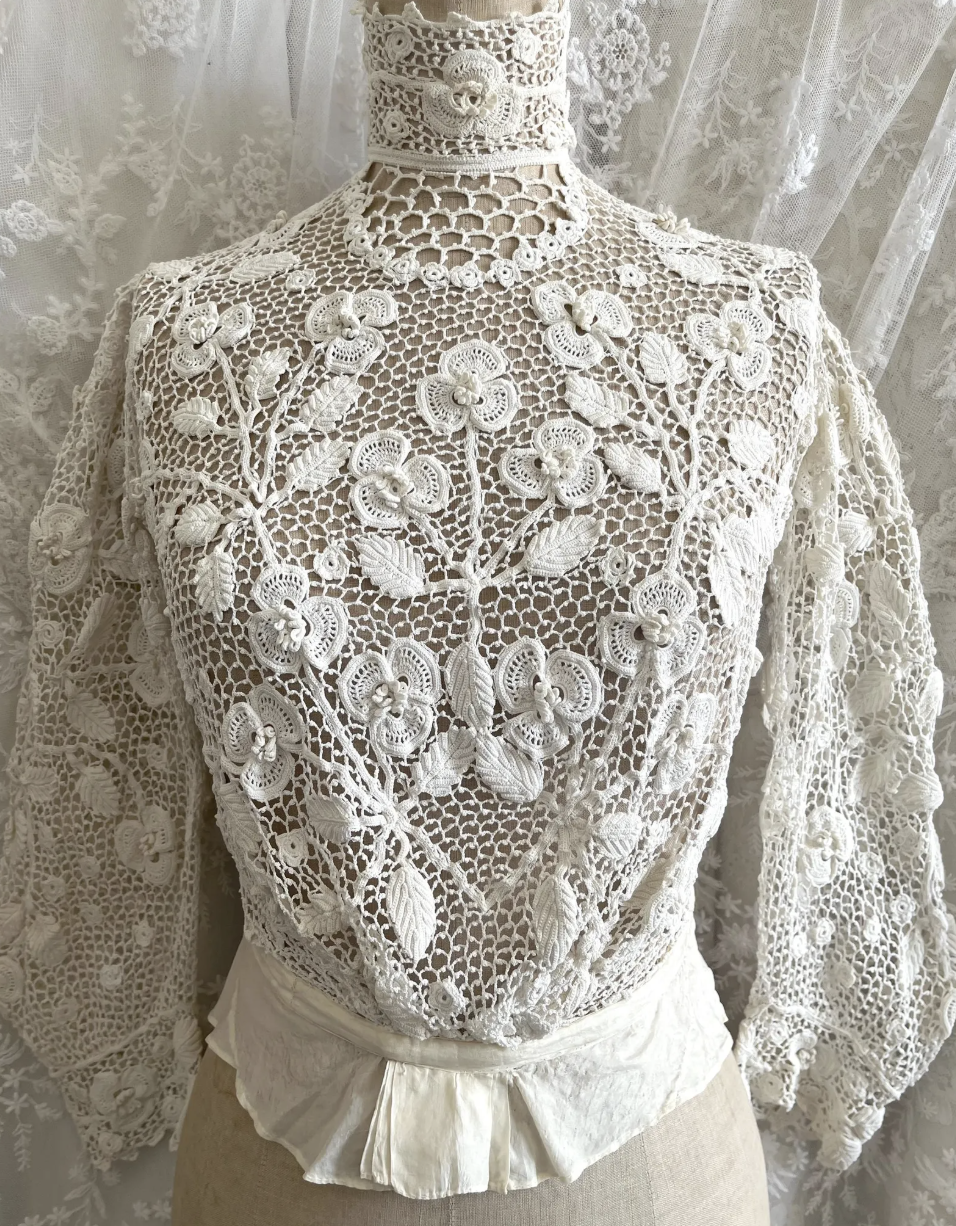
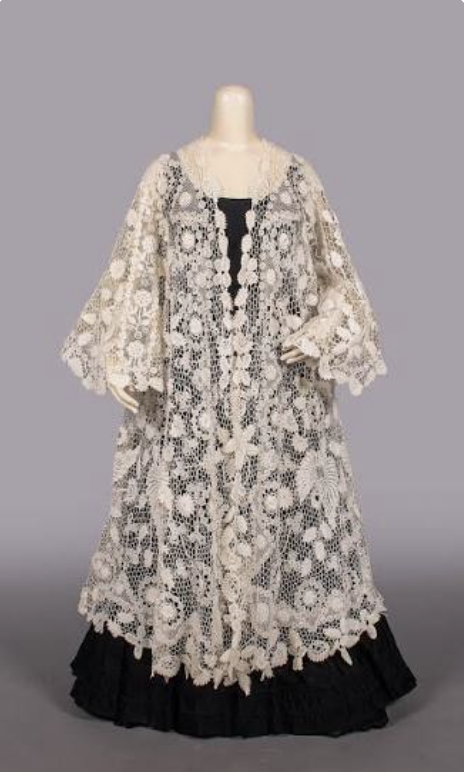
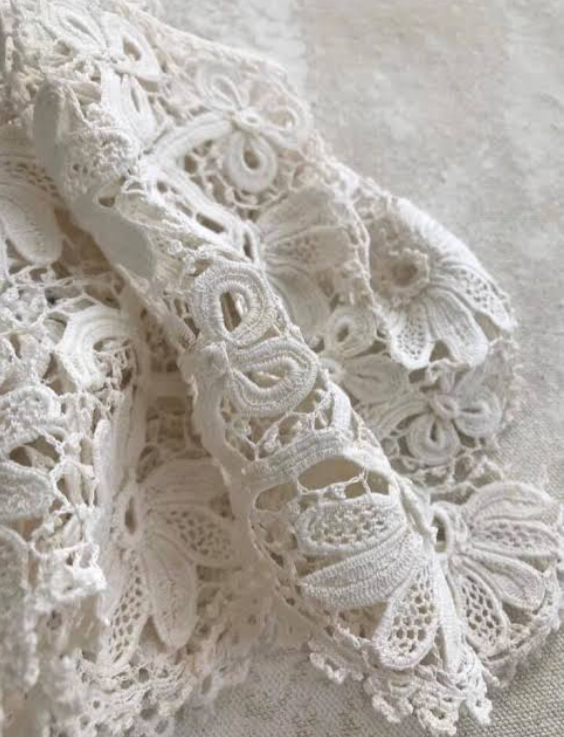
Examples of antique Irish crochet lace, featuring elaborate floral motifs and intricate openwork
During the devastating Irish Famine of the 1840s, lacemaking became an important source of income for many women and families. Crochet offered a comparatively accessible way of producing elaborate lace that could be sold beyond local communities.
Irish crochet developed a distinctive visual language.
Flowers, leaves and raised ornamental motifs were often worked separately and then connected through delicate networks of crocheted stitches. Some designs drew inspiration from the elaborate Venetian needle laces of earlier centuries.
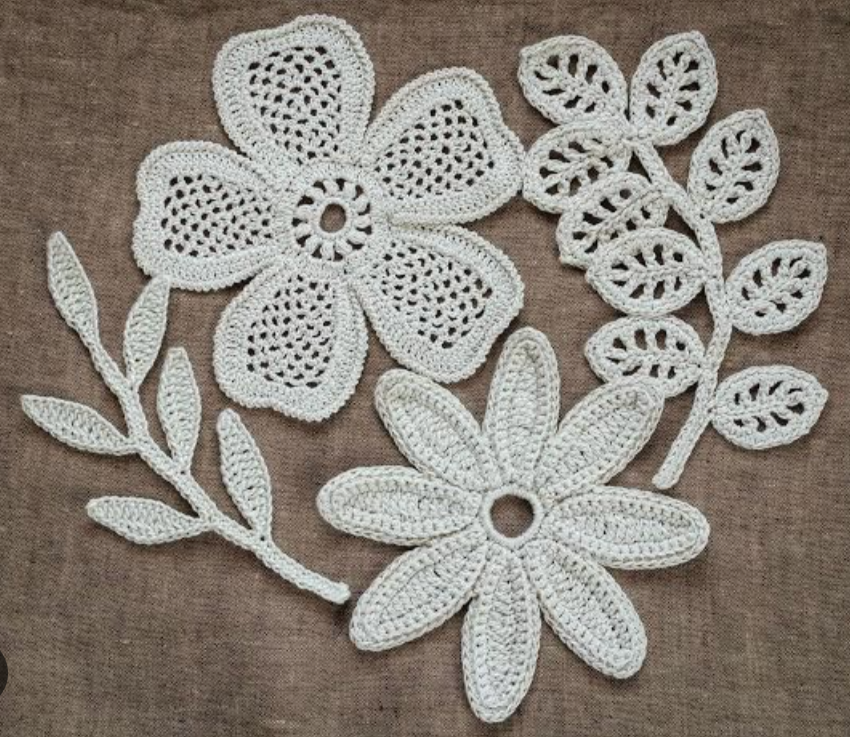
Floral and leaf motifs in traditional Irish crochet lace
The result was a fabric of extraordinary complexity, combining transparent openwork with richly textured, sometimes almost three-dimensional ornament.
Irish crochet lace gradually reached an international market. It appeared in fashionable clothing and accessories, particularly during the second half of the nineteenth century and the early twentieth century.
Its success demonstrated that a technique associated with domestic handwork could also become an important element of luxury fashion.
From Victorian elegance to the Belle Époque
By the late nineteenth century, lace had become an essential feature of fashionable women's dress.
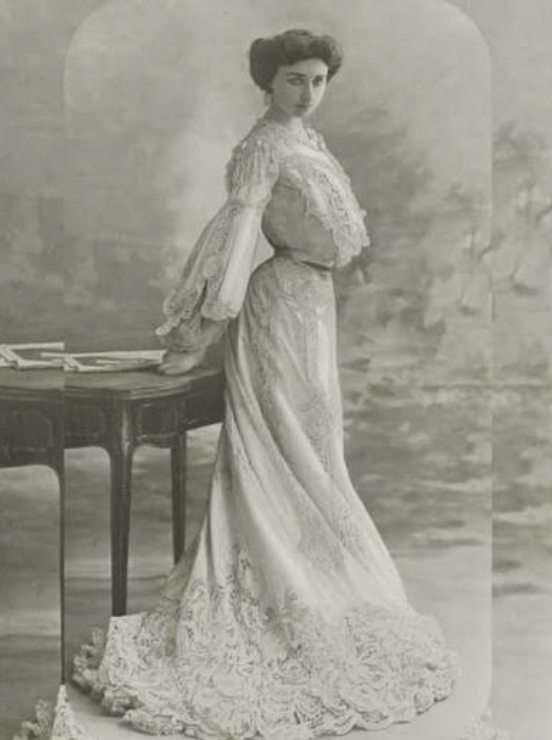
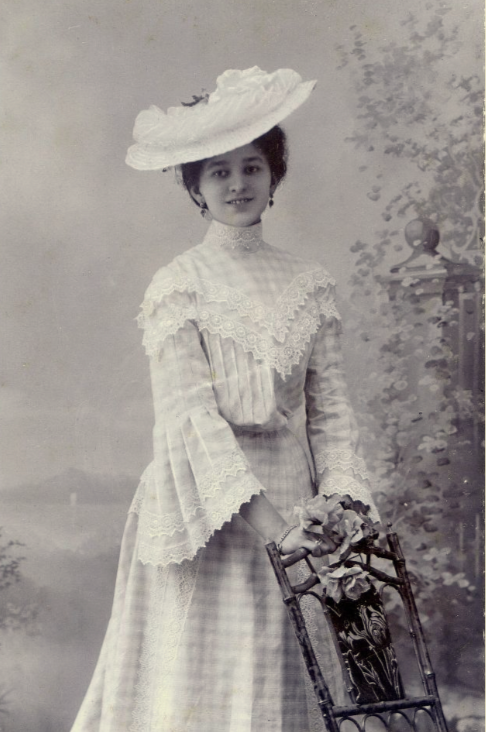
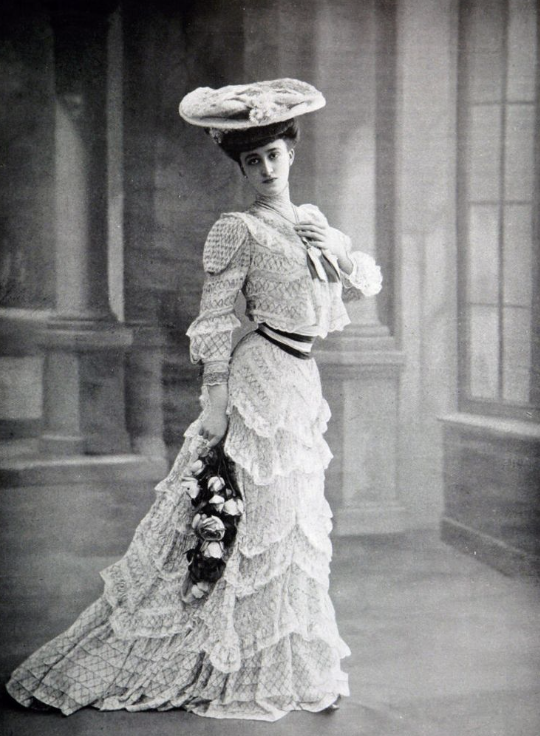
Belle Époque and Edwardian fashion, c. 1900–1910
Delicate crochet appeared in collars, bodices, blouses, cuffs and decorative inserts. The elaborate fashions of the Belle Époque and Edwardian period offered particularly suitable settings for finely worked lace.
High-necked blouses, flowing skirts and intricately decorated dresses reflected a taste for refinement and ornamental detail.
The contrast between transparent lace and more substantial fabrics created visual richness without necessarily relying on bright colour.
A beautifully worked lace collar could transform an otherwise simple garment into something distinctive.
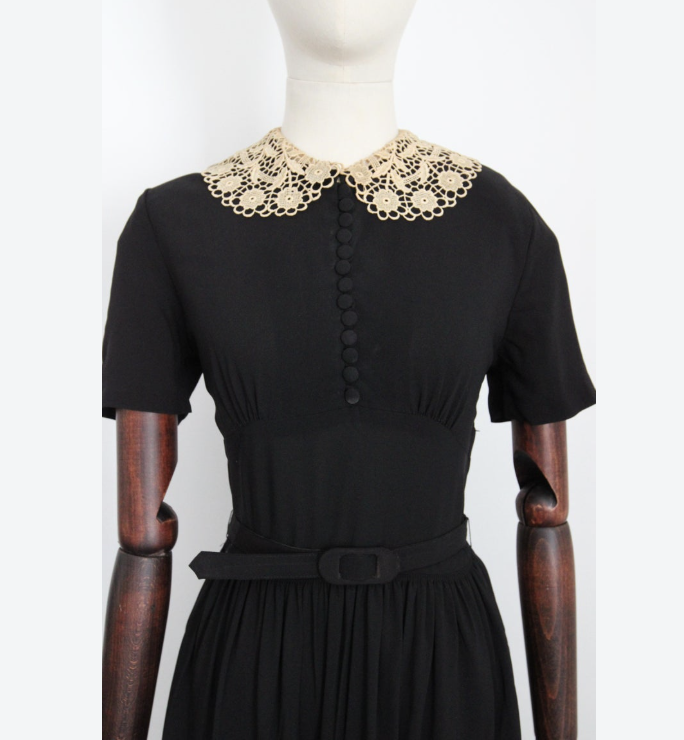
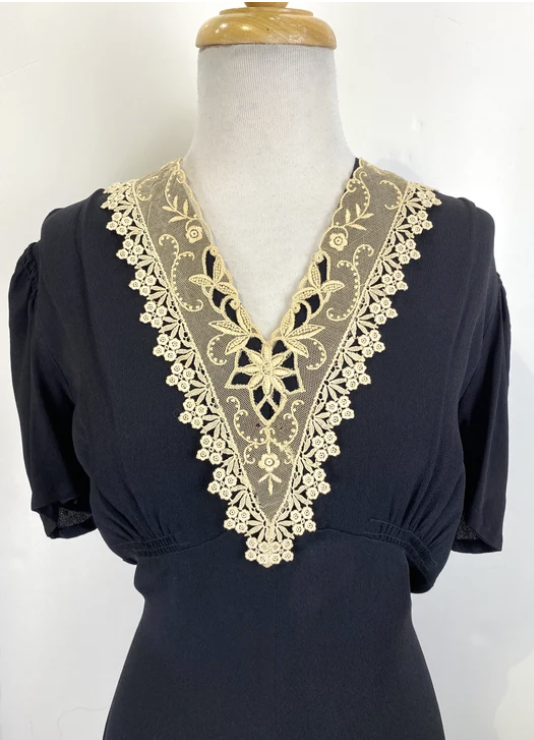
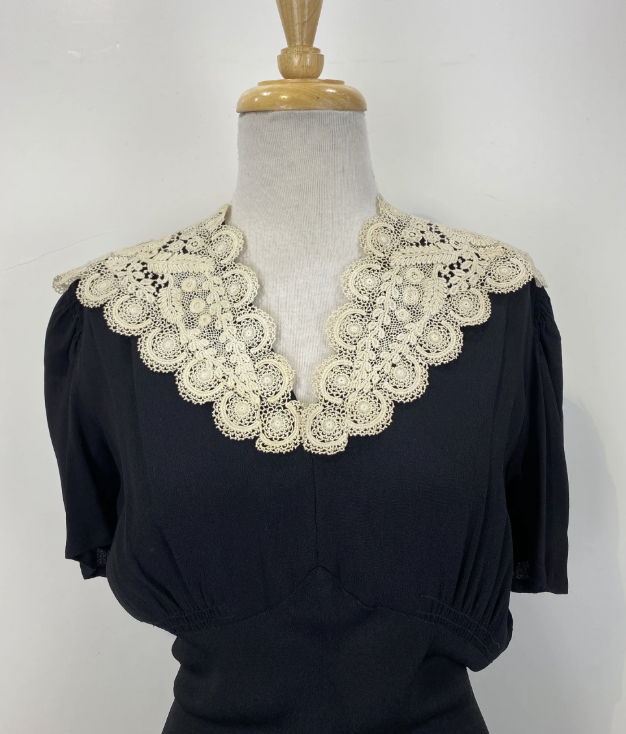
Decorative lace collars on women's dresses from the 1930s
Crochet was valued not merely for its appearance but for the craftsmanship it represented.
Every motif demanded time, dexterity and concentration. The finest work revealed an intimate understanding of thread, structure and proportion.
In an era when the making of clothing still involved considerable hand labour, lace could embody an exceptional degree of human skill.
The twentieth century — changing fashions, changing meanings
The beginning of the twentieth century brought profound changes to fashion.
Following the First World War, women's clothing became increasingly practical and less heavily ornamented. The elaborate lace garments associated with the Belle Époque gradually gave way to simpler silhouettes.
Crochet nevertheless remained part of textile culture.
It continued to be practised in homes, taught through patterns and publications, and used for clothing, accessories and decorative textiles.
During the 1960s and 1970s, crochet experienced a remarkable revival.
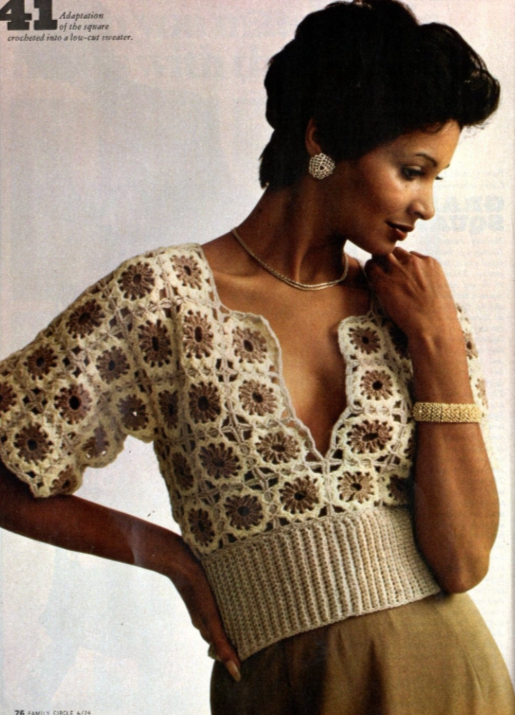
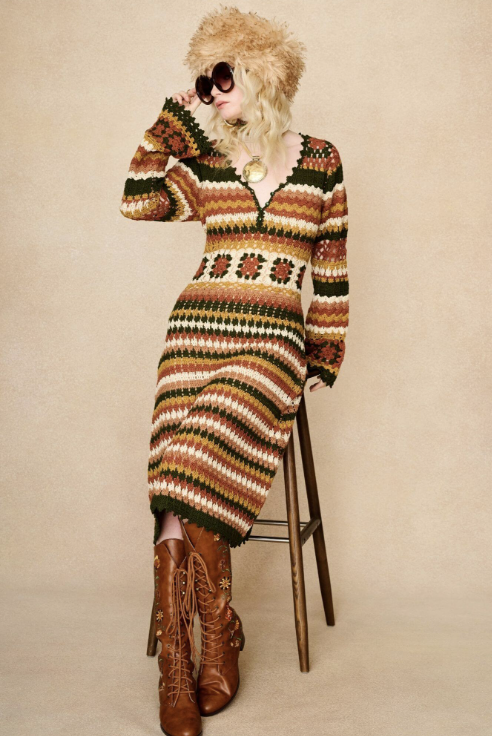
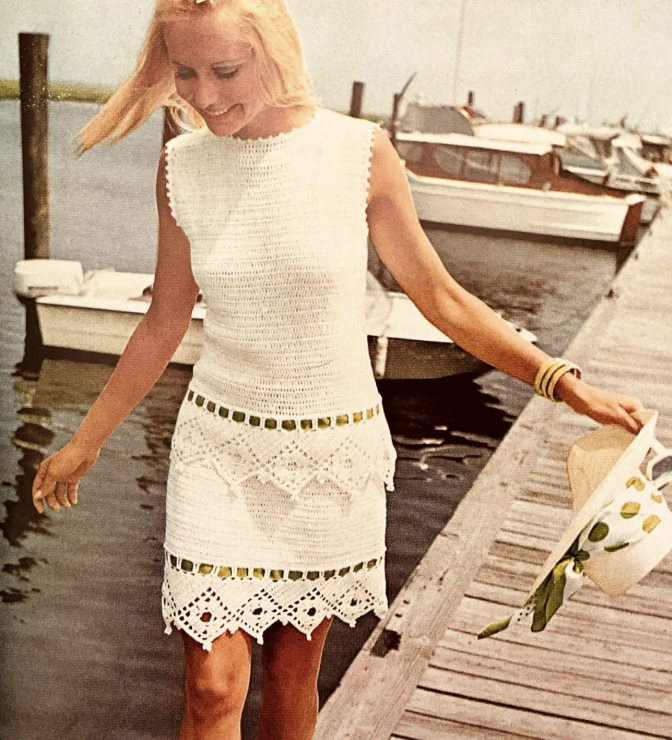
Crochet fashion of the 1970s — colour, texture and individual expression
The growing interest in individuality, artistic freedom and handmade clothing brought traditional textile techniques into a new cultural context.
Crocheted dresses, waistcoats, tunics, shawls and accessories became characteristic elements of the period.
The emphasis shifted from the refined imitation of expensive lace towards a more expressive use of colour, texture and pattern.
Crochet was no longer associated exclusively with tradition or domestic craftsmanship. It became a visible expression of personal style.
Designers began exploring its potential beyond familiar forms, creating garments that celebrated the distinctive qualities of handmade textiles.
Among them was the Belgian designer Ann Salens, whose experimental crocheted creations from the late 1960s and 1970s occupied a remarkable position between fashion, craft and art.
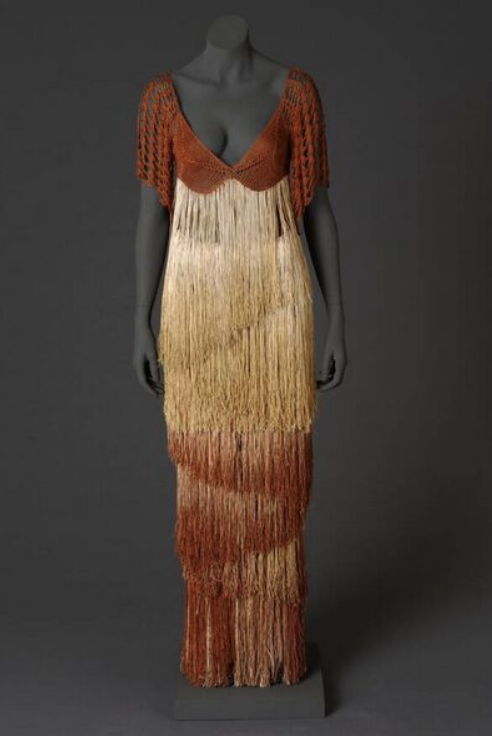
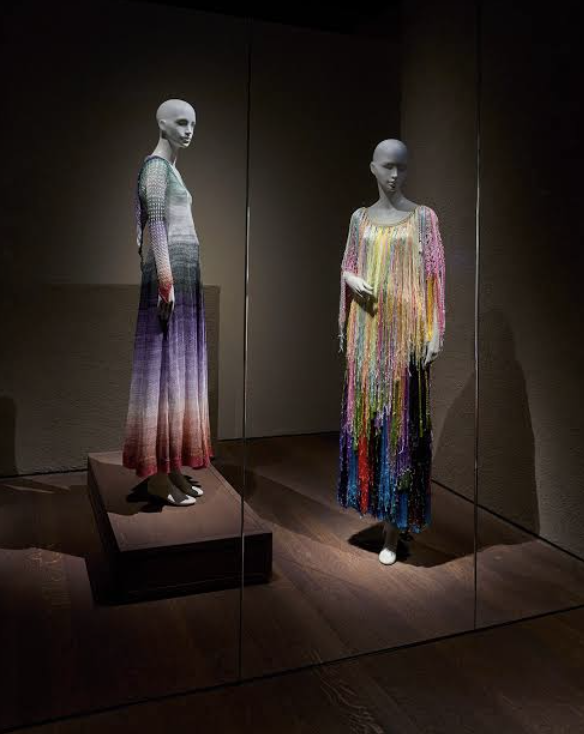
Experimental textile designs by Belgian fashion designer Ann Salens (1940–1994)
Her work demonstrated how a traditional hand technique could become the foundation for an entirely contemporary design language.
Crochet in contemporary fashion
Today, crochet continues to occupy a distinctive place in fashion.
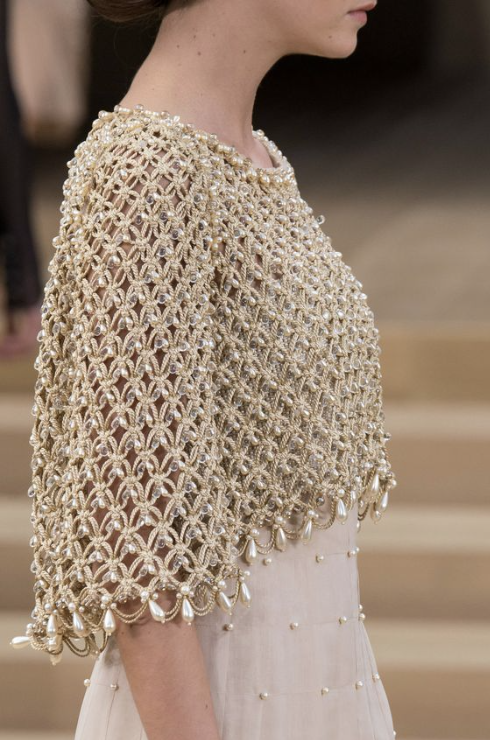
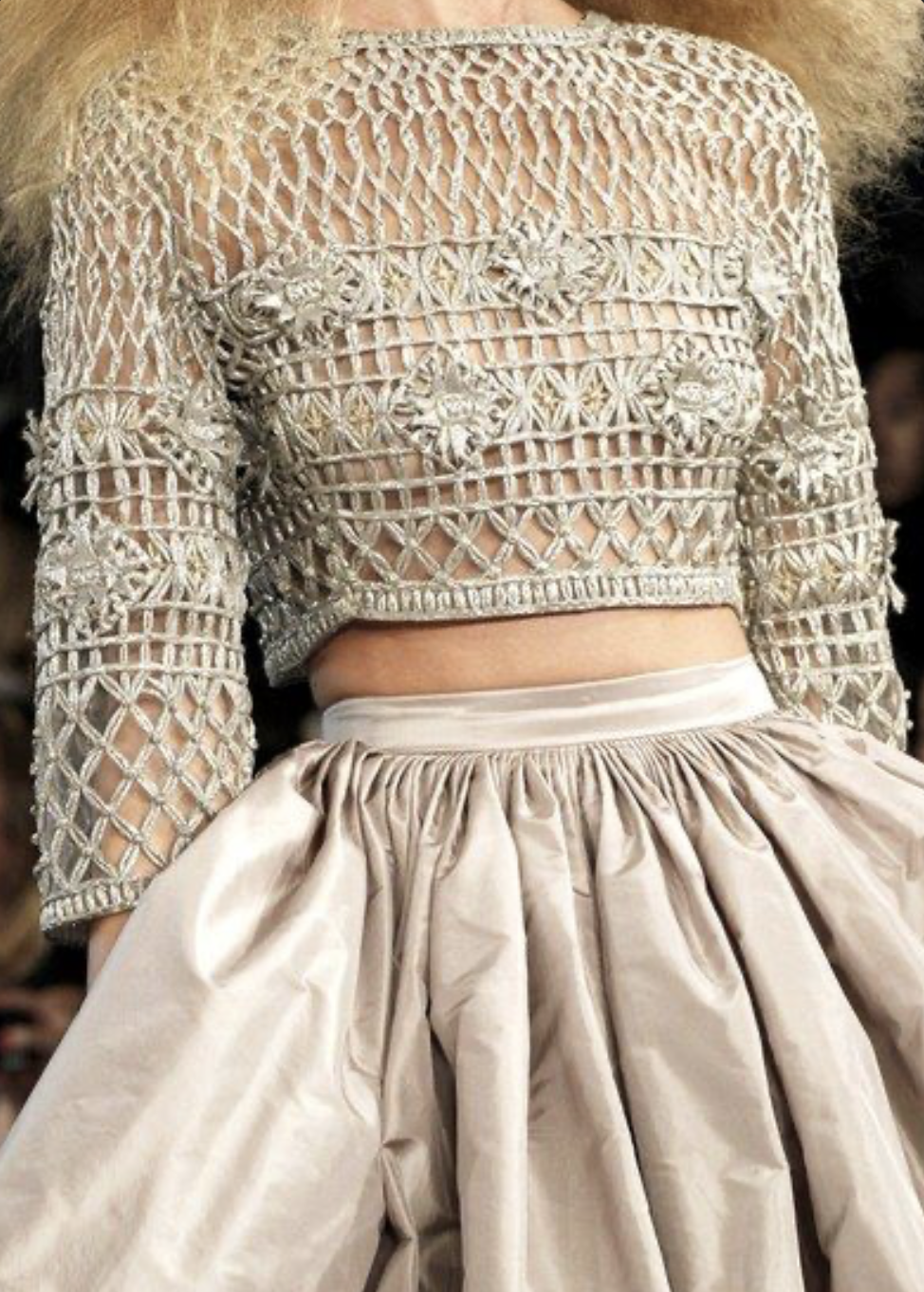
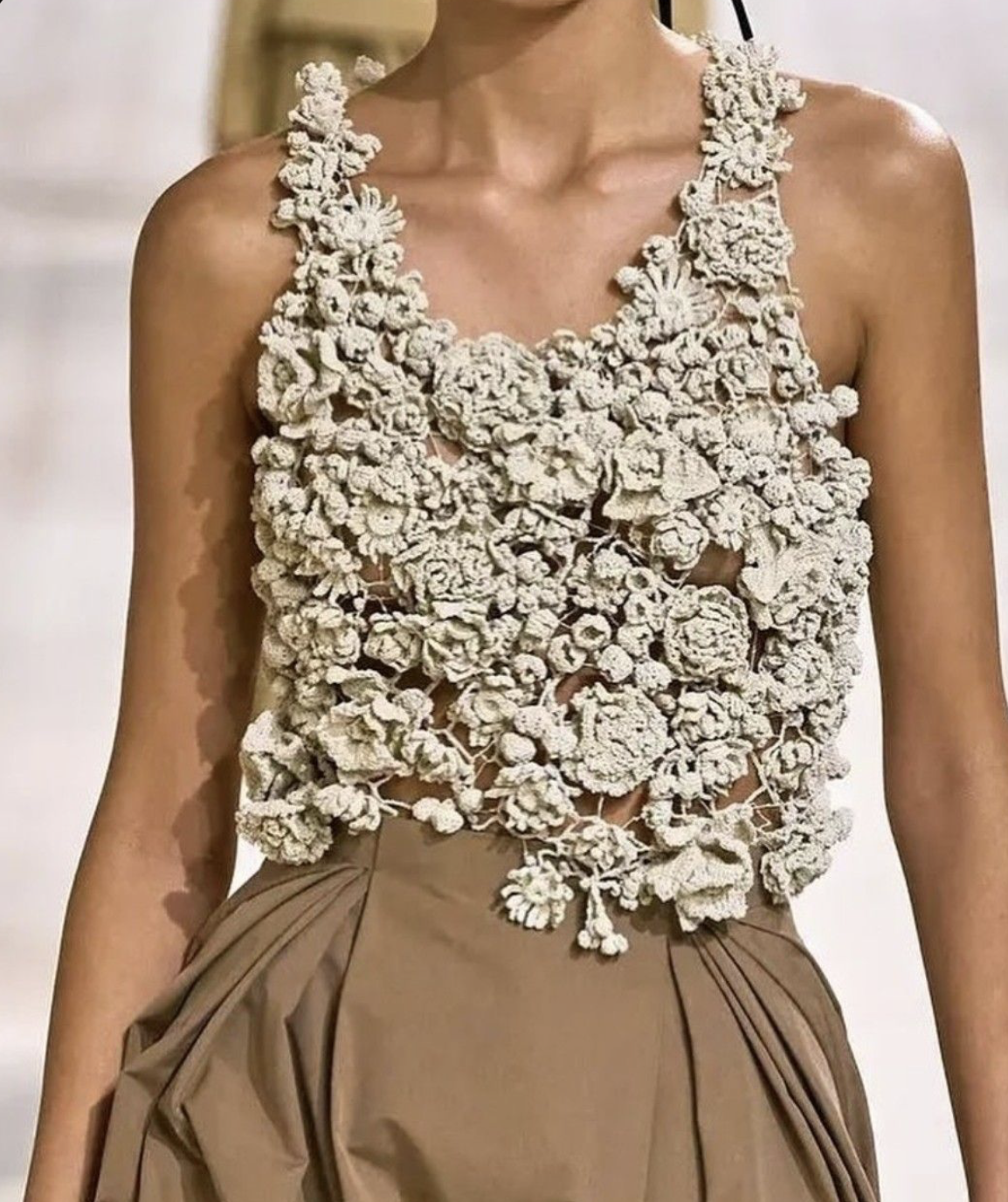
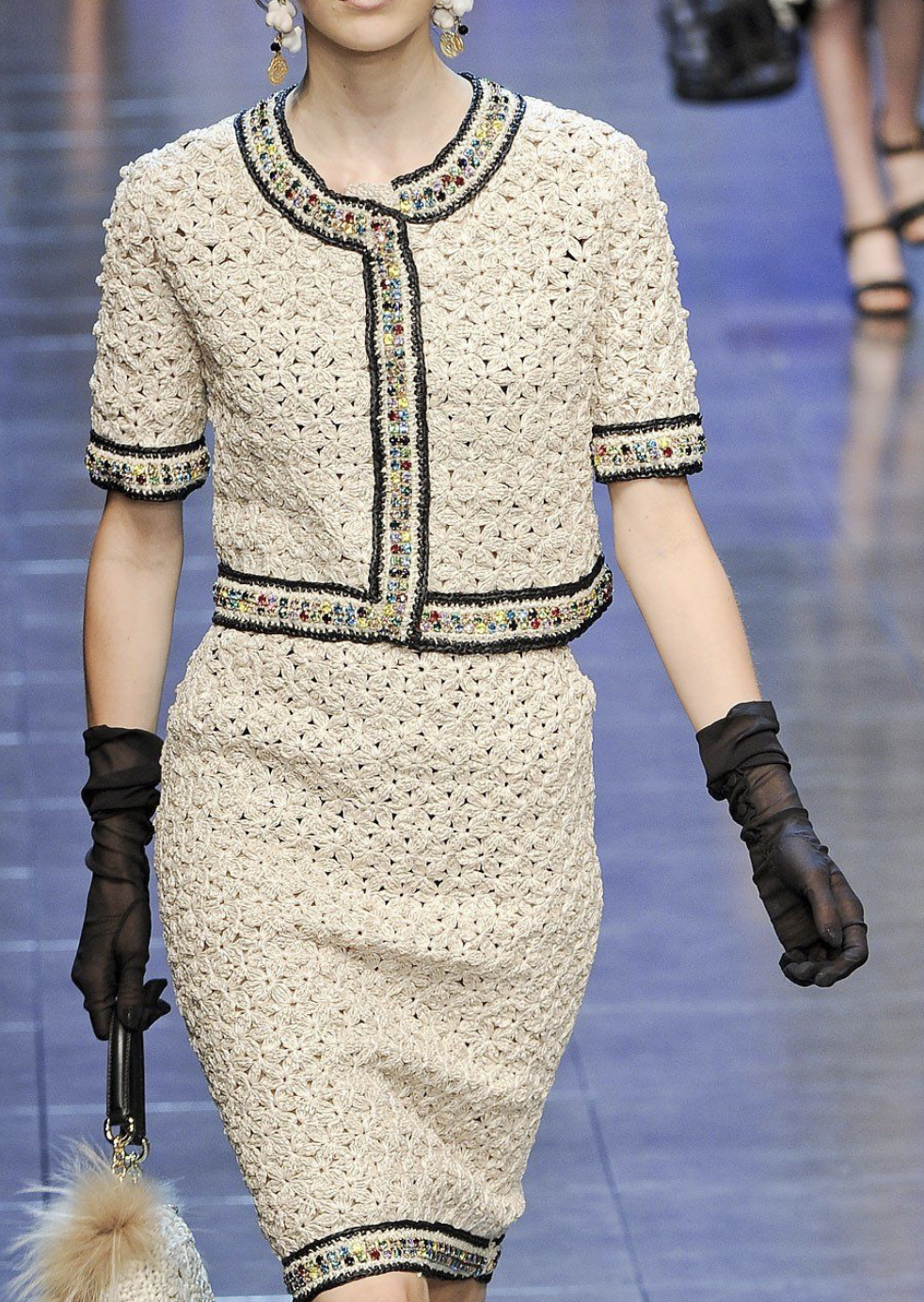
It appears in everything from relaxed summer clothing and accessories to highly elaborate runway creations.
Contemporary designers use it to explore transparency, texture, volume and the relationship between the body and the fabric.
The technique allows an unusual degree of freedom. Patterns can be built directly through the movement of the hook, and individual motifs can be combined into complex surfaces.
Crochet can be delicate and restrained, or bold and sculptural.
Its character is determined not only by the pattern but also by the material. Fine cotton produces a crisp and clearly defined structure, while wool, silk or alpaca can introduce softness, warmth and a different sense of volume.
In this way, the same traditional technique can produce radically different expressions.
For independent designers and textile artists, crochet offers the opportunity to work directly with the material, allowing ideas to develop through experimentation rather than through industrial processes alone.
The human hand in an age of machines
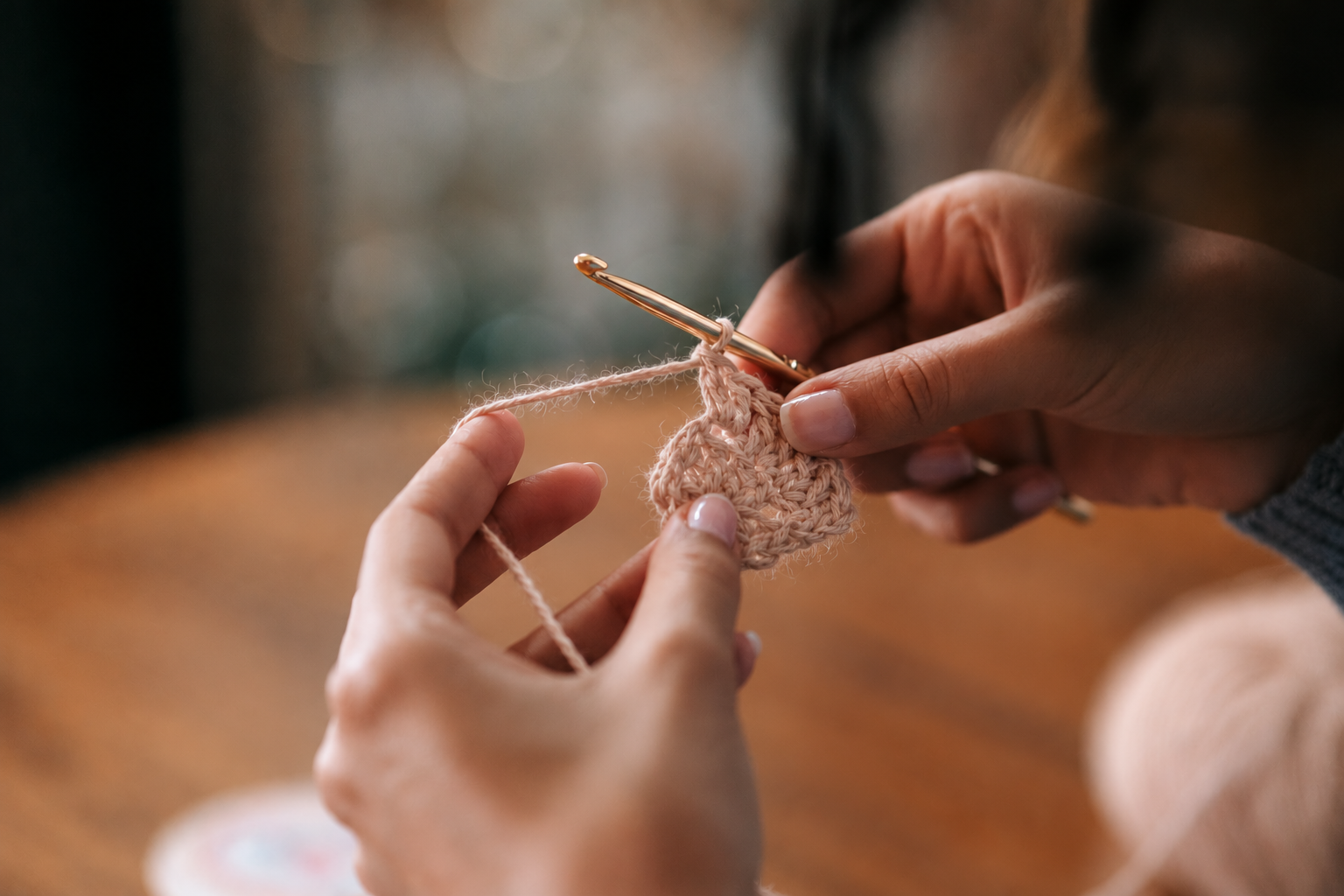
One of the most fascinating aspects of crochet is its relationship with technology.
While knitting and weaving have been extensively mechanised, reproducing the movements of traditional hand crochet has proved considerably more challenging.
Industrial machines can produce knitted lace, decorative trimmings and openwork textiles that resemble crochet. Specialised machines known as crochet machines have also existed for many decades, particularly for the production of narrow fabrics and technical textiles.
However, these processes are not necessarily equivalent to traditional hand crochet.
The formation of individual crochet stitches requires a precise sequence of movements, including inserting the hook, controlling the thread and drawing loops through one another.
Researchers have made progress towards automating these movements, and experimental machines capable of producing genuine crochet stitches have been developed.
Nevertheless, complex decorative hand crochet remains a highly labour-intensive process.
Its beauty is inseparable from the time required to make it.
A single motif may contain numerous stitches. A decorative border may require dozens of motifs, each carefully executed and assembled.
Unlike an industrial process in which hundreds of identical elements can be produced simultaneously, hand crochet progresses through the repeated movements of an individual maker.
It is a process in which time becomes part of the material itself.
A nearly forgotten piece of lace
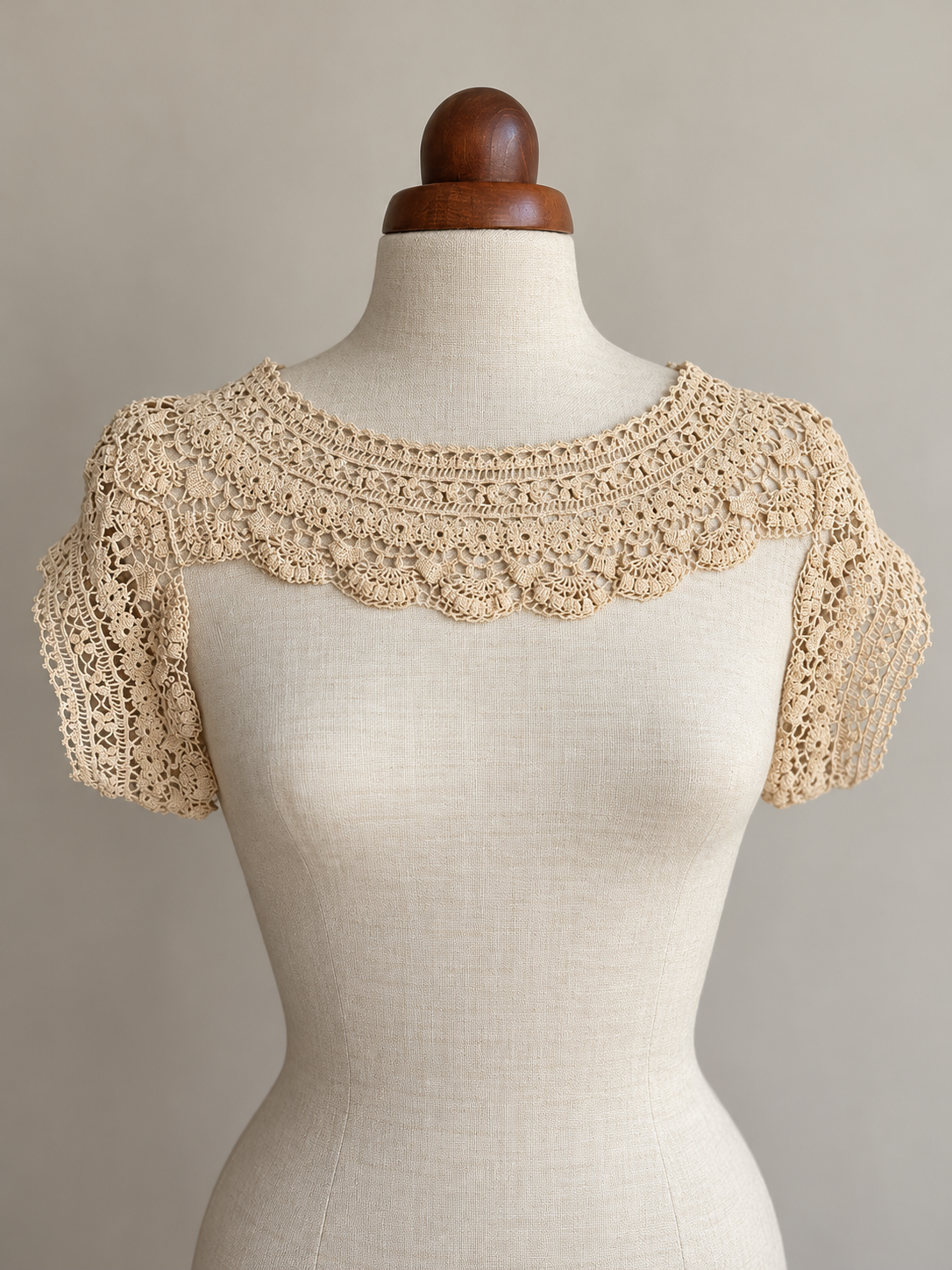
For Studio Myr, the inspiration for the BAROQUE Collection began not with a fashion trend, but with a remarkable piece of antique crochet.
Several years ago, a friend gave me the finely crocheted bodice of a dress made by his grandmother when she was a young woman in the 1920s.
Originally intended to be combined with a fabric skirt, the piece had survived for almost a century.
Its intricate patterns, delicate floral motifs and beautifully balanced openwork immediately fascinated me.
I was struck not only by its beauty, but also by the patience and technical ability required to create it.
Every detail had been worked by hand, using fine thread and a small crochet hook.
The bodice remained in my studio for several years.
I often returned to it, studying the structure of the patterns and admiring the precision of the work, without yet knowing how its traditional character might find a place in my own designs.
Eventually, the idea began to take shape.
Reinterpreting tradition — the beginnings of BAROQUE
During a particularly hot summer, I began experimenting with traditional crochet patterns while working outdoors in the shade of the cherry tree in my garden.
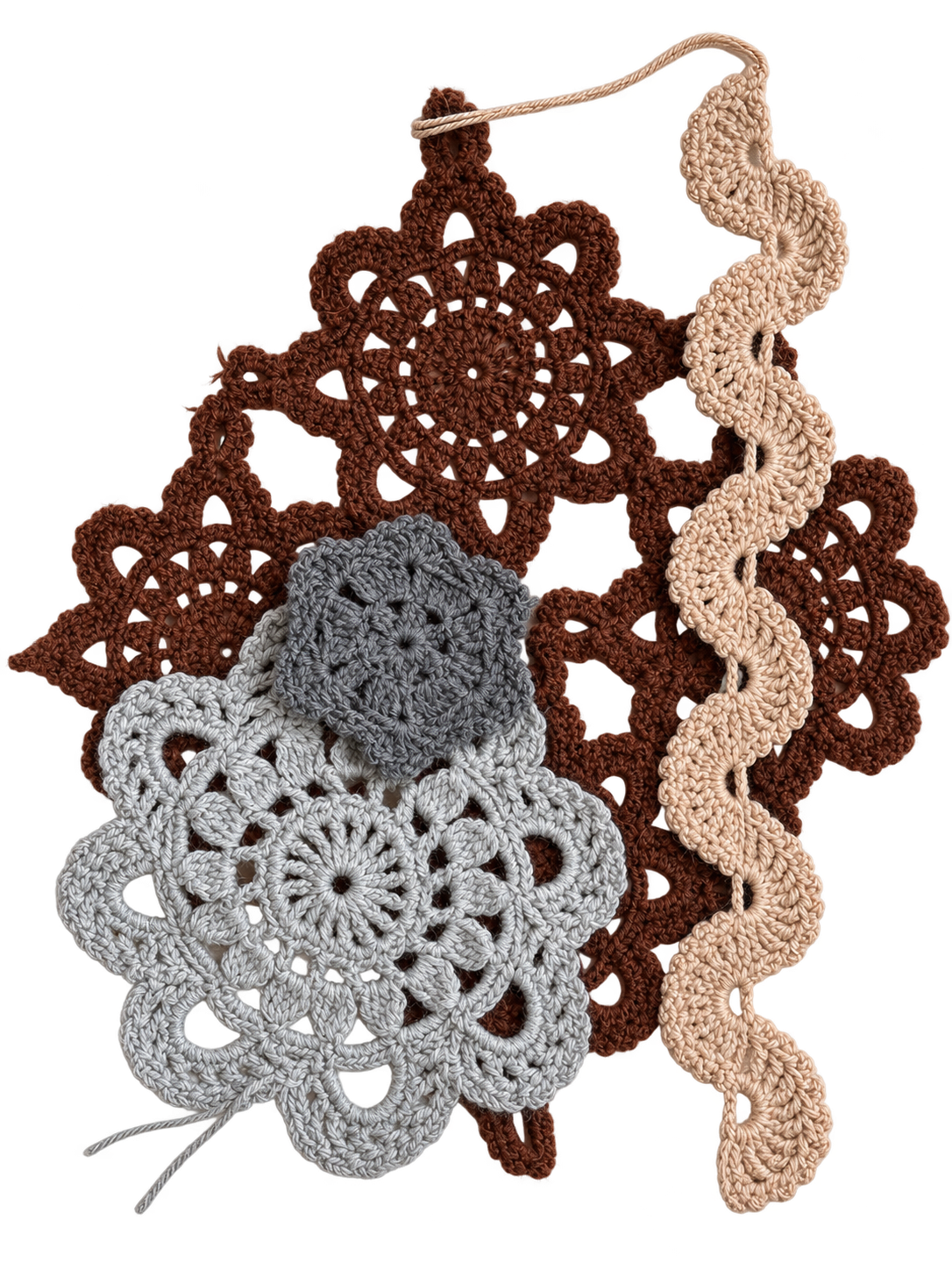
Several experiments with traditional crochet patterns
Rather than attempting to reproduce the delicate antique lace, I wanted to explore what would happen if its ornamental character were translated into a different material and scale.
Instead of the fine cotton traditionally used for lacework, I chose First Class Baby Alpaca.
Working with a heavier yarn, sometimes doubled, transformed the appearance of the patterns.
Delicate floral structures became more pronounced. The stitches acquired volume, and the lace developed an almost sculptural quality.
I experimented with numerous motifs, searching for a pattern that would retain the refinement of traditional crochet while becoming expressive enough to define a contemporary garment.
Gradually, an undulating border emerged.
Its rhythm of curved lines and raised details became the distinctive element of the BAROQUE Collection.
A dialogue between crochet and knitting
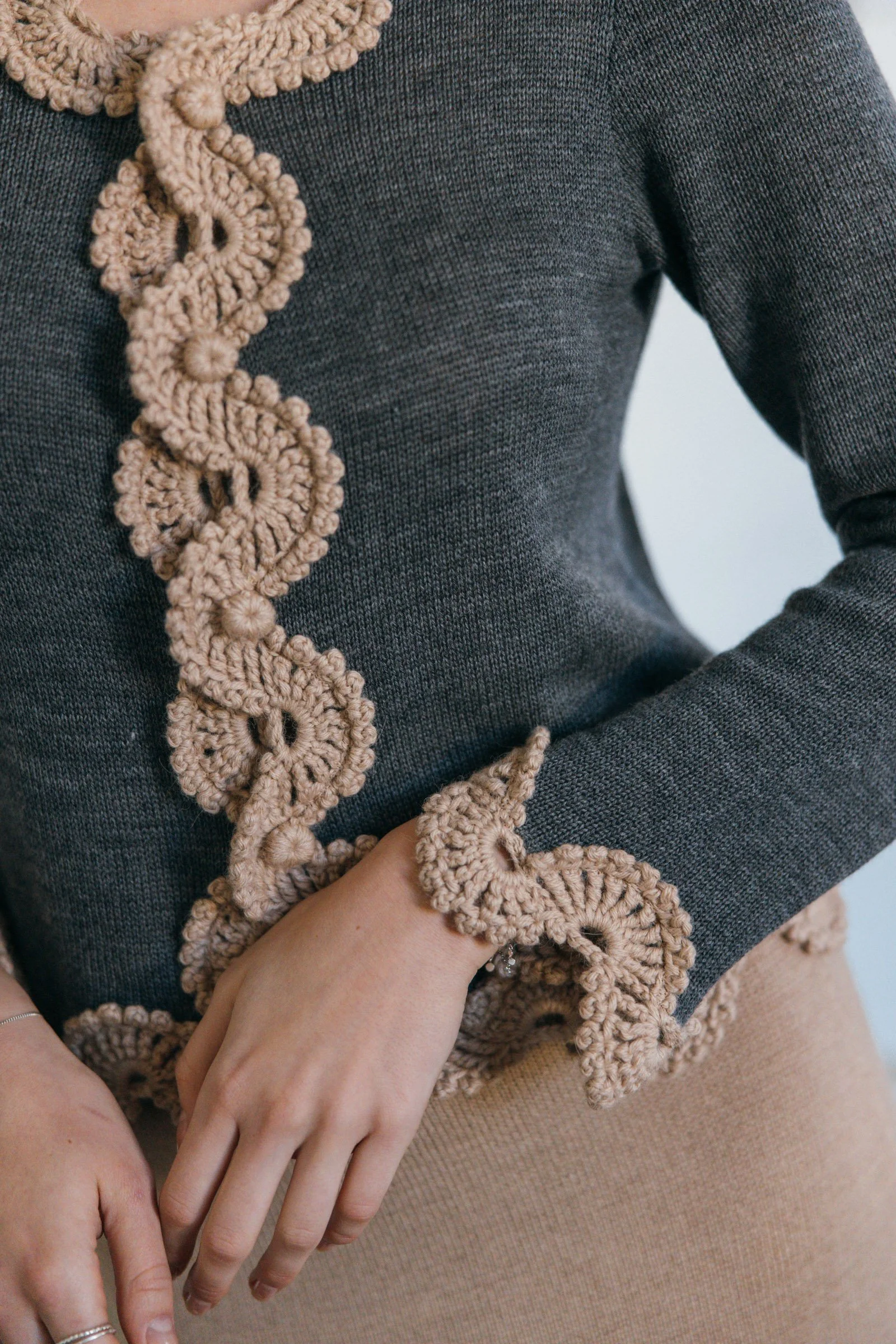
Rather than creating entire garments in crochet, I wanted to combine the richness of the handwork with the simplicity of finely knitted fabric.
The contrast became central to the collection.
The soft, sculptural texture of hand-crocheted Baby Alpaca lace is set against the smooth, refined surface of Extra Fine Merino Wool.
The jacket was the first design to emerge.
Its neckline, front opening, hem and cuffs are framed by individually hand-crocheted motifs. Approximately 64 motifs are incorporated into a single jacket.
Each motif requires careful attention, and the complete border represents many hours of patient work.
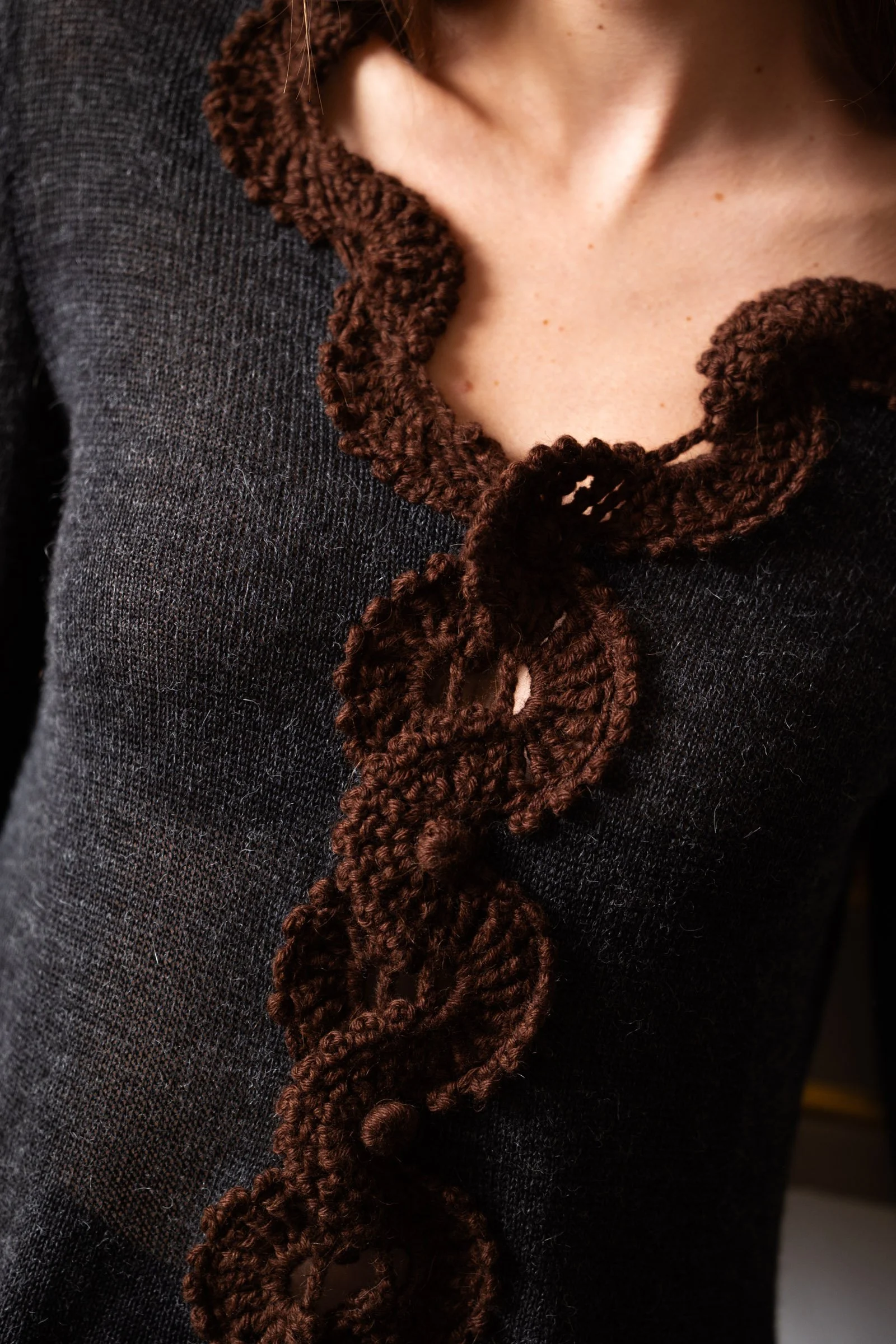
The knitted foundation demanded an equally considered approach.
Every section was calculated, knitted and tested on my own knitting machine to achieve the correct balance between the weight of the crochet and the softness and stability of the finer knit.
The process involved repeated adjustments to proportions, structure and finishing.
From the jacket, the collection developed into a more understated jumper with a decorative crocheted hem, followed by a coordinating skirt.
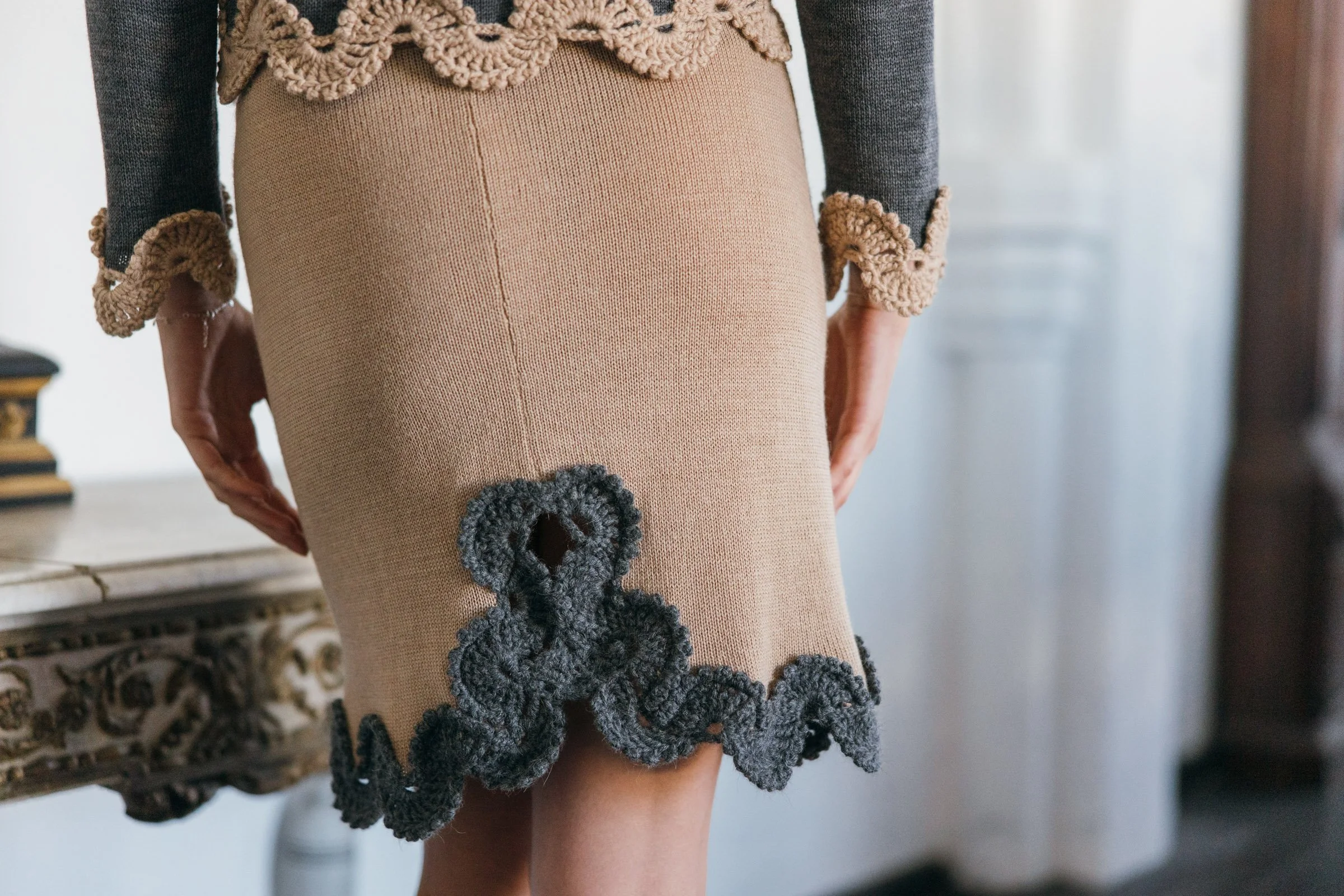
A small slit at the back of the skirt is framed with the same lace, introducing an unexpected ornamental detail.
Delicate hand-crocheted scarves complete the collection. Inspired by historical lace head coverings, they can be worn loosely over the hair or tied around the neck.
Together, the pieces explore the relationship between ornament and restraint, traditional craftsmanship and contemporary design.
The historical elegance of Thorn
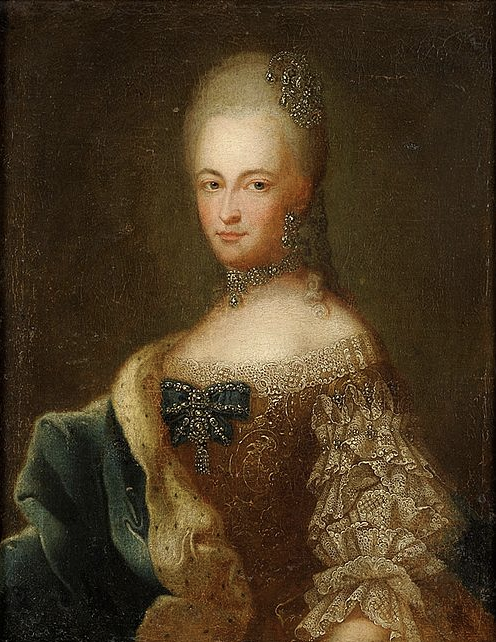
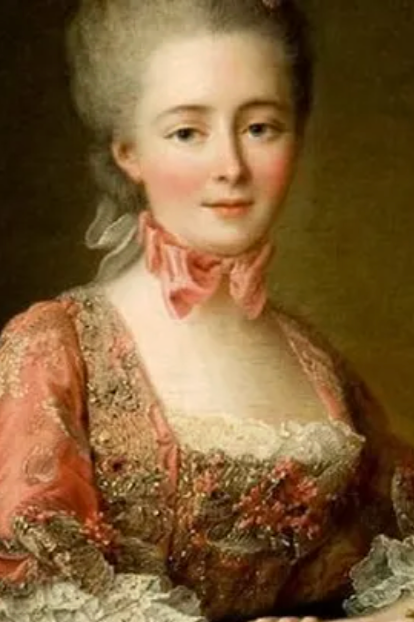
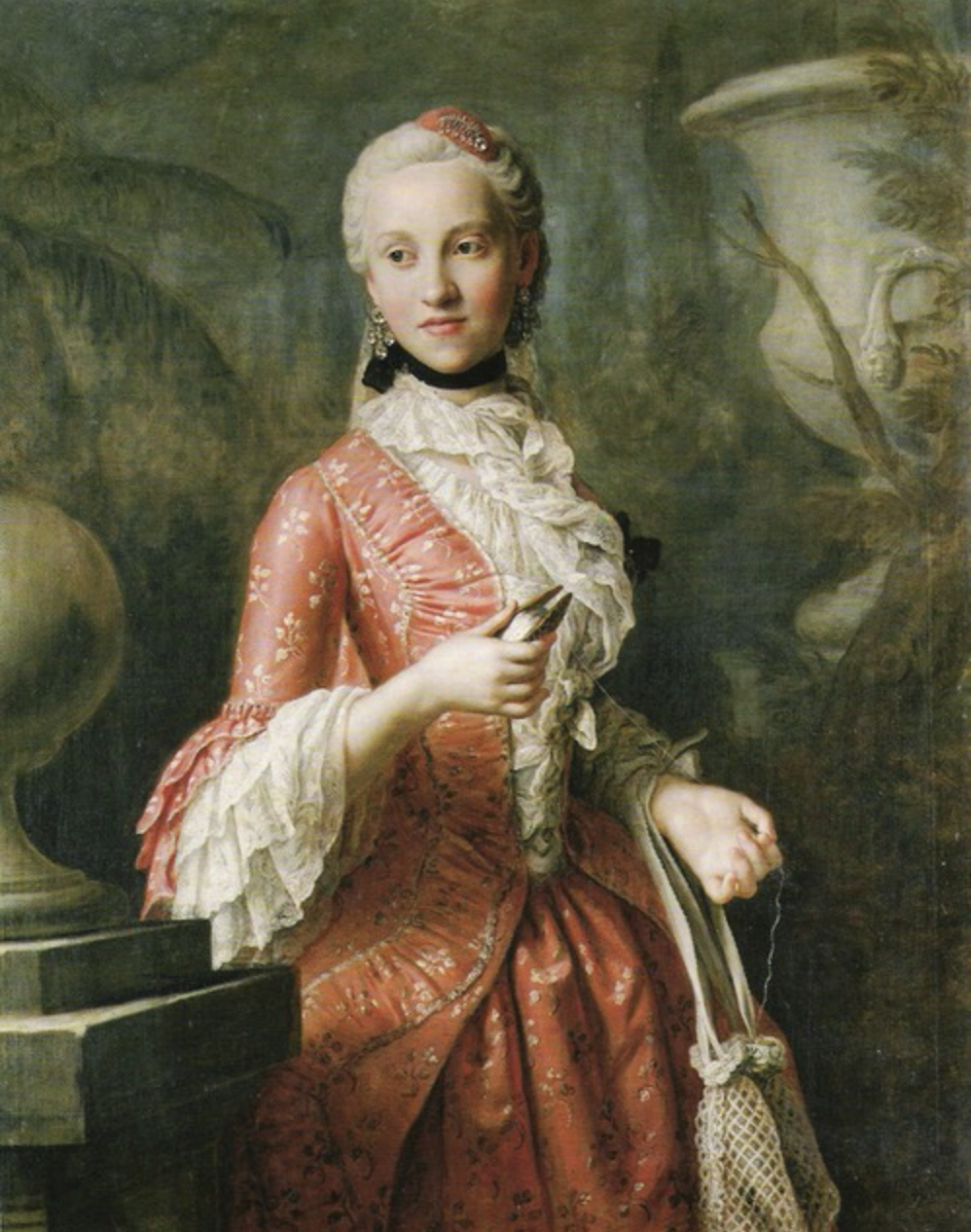
18th-century princesses of the Imperial Abbey of Thorn
Another source of inspiration lies in the historical surroundings of Thorn, the small Dutch town where Studio Myr is based.
For centuries, Thorn was home to a prestigious religious foundation for noblewomen.
Its aristocratic residents, often referred to as the princesses of Thorn, formed part of a remarkable cultural and social history that remains visible in the town's architecture and heritage.
The elegance, individuality and historical presence of these women contributed to the character of BAROQUE.
The collection does not attempt to recreate historical clothing.
Instead, it interprets the decorative richness associated with the past through contemporary silhouettes, natural materials and refined textile techniques.
The relationship between history and modernity is expressed not through costume, but through texture, proportion and carefully considered detail.
BAROQUE — craftsmanship made personal
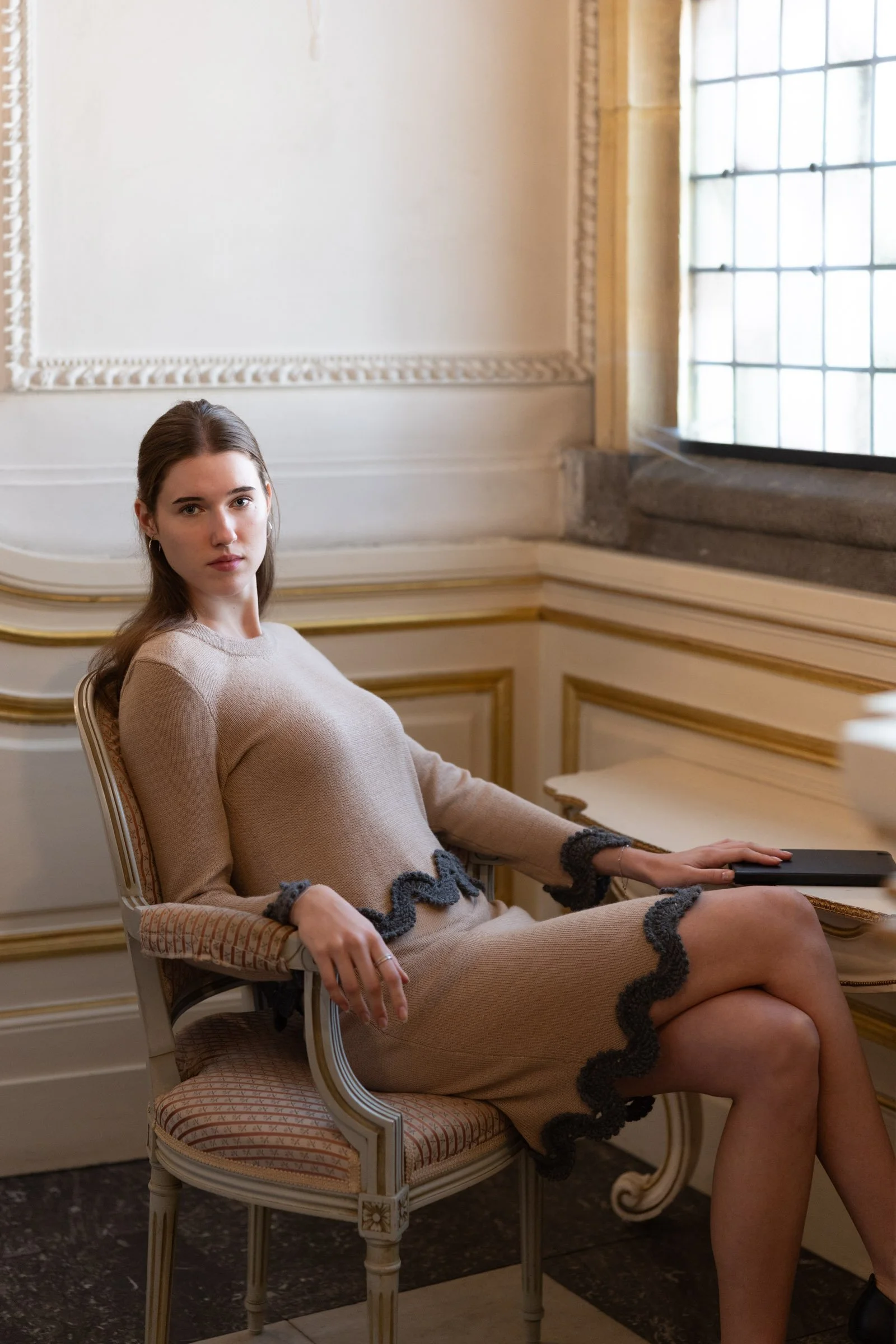
The collection is presented in three colour stories, each revealing a different aspect of the designs.
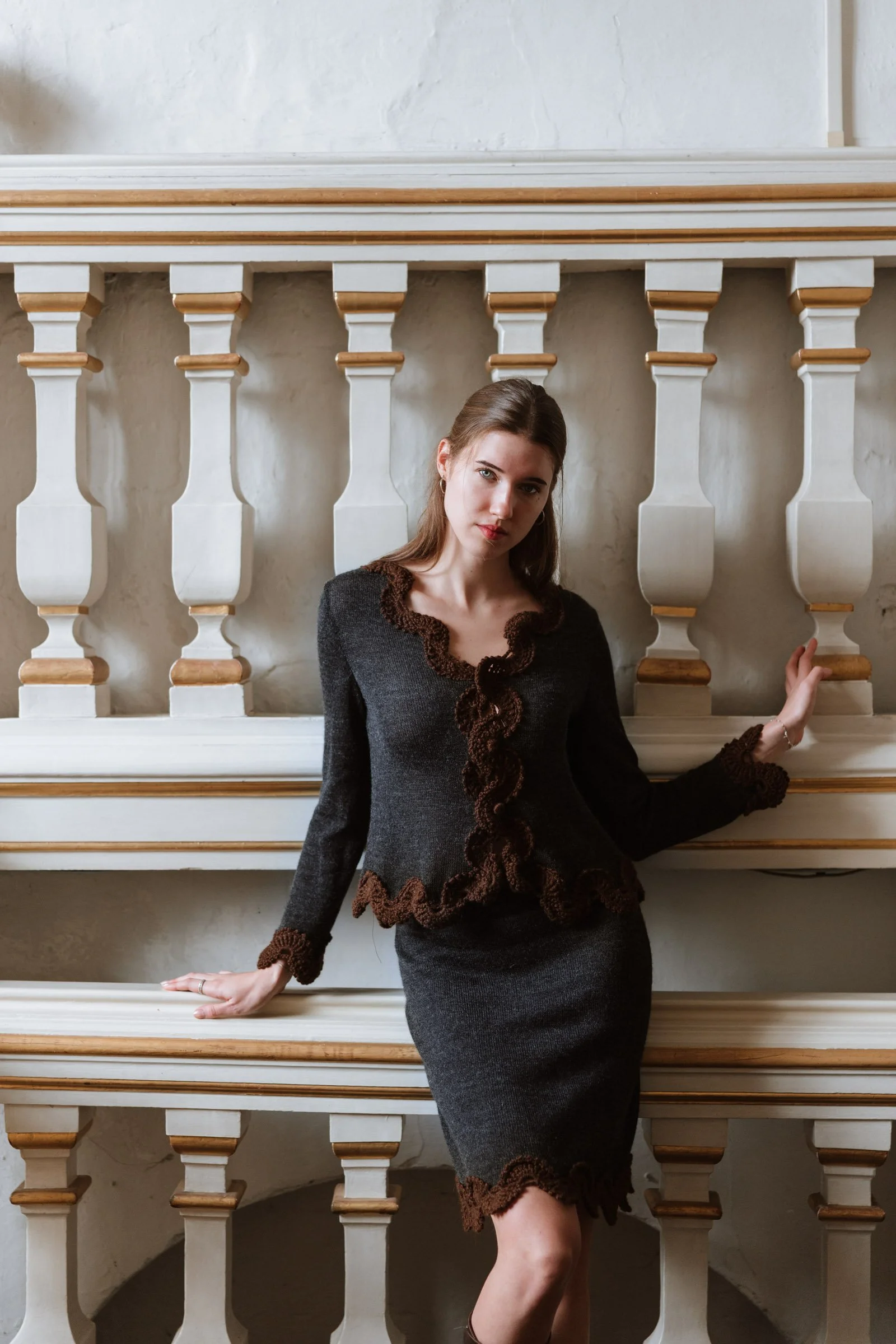
FRANCISCA — BAROQUE Collection by Studio Myr
FRANCISCA combines deep anthracite with chocolate brown, creating a dramatic contrast that emphasises the sculptural lace.
FRANCISCA — BAROQUE Collection by Studio Myr
GABRIELLA brings together soft beige and medium grey, offering a quieter, more understated interpretation.
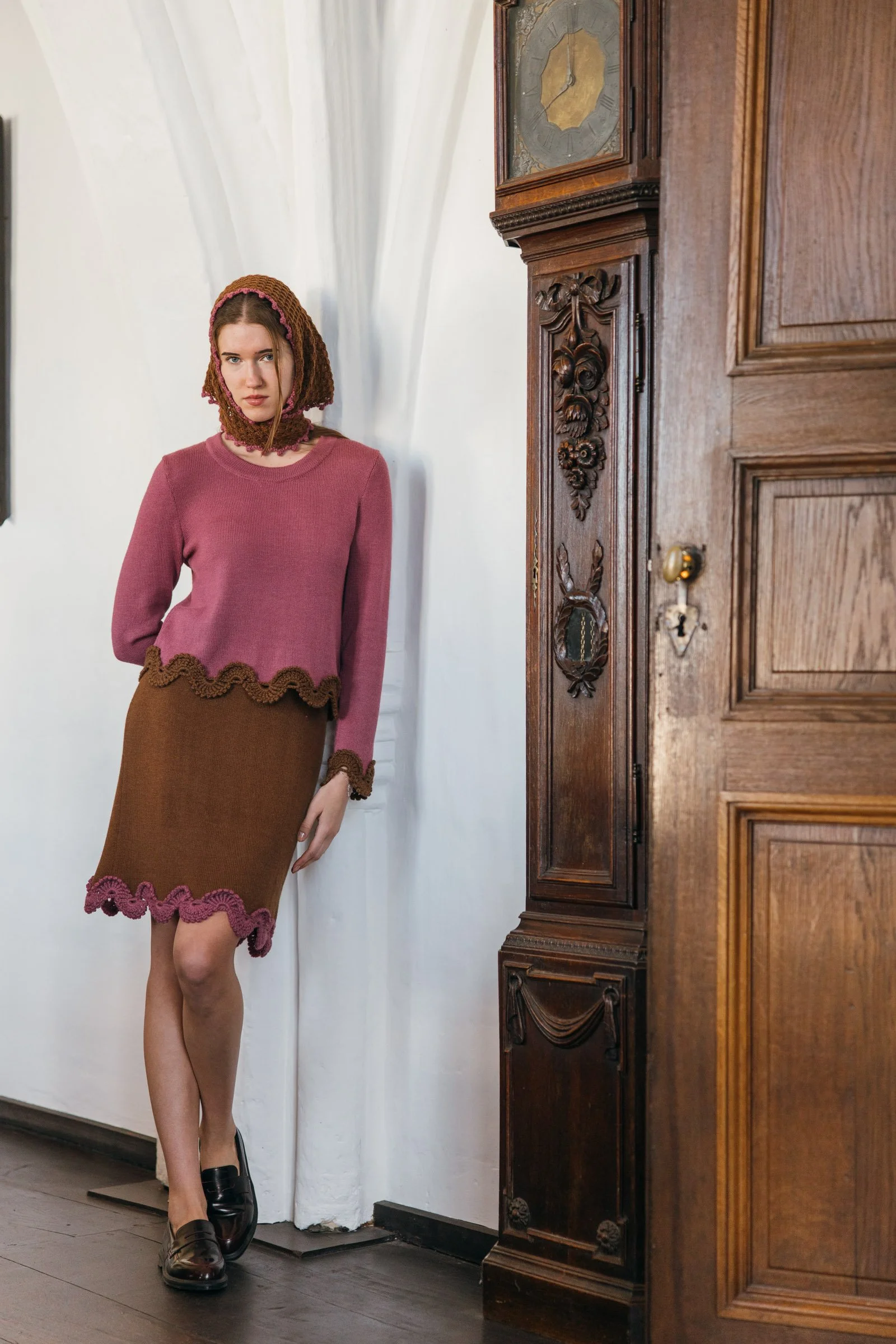
FRANCISCA — BAROQUE Collection by Studio Myr
ELEONORA combines deep dusty rose with warm brown, introducing a romantic yet contemporary expression.
Each combination can also be reversed, allowing the knitted body and crocheted borders to exchange colours.
The collection comprises a jacket, jumper, skirt and hand-crocheted lace scarf, designed to be worn individually or combined.
BAROQUE is available exclusively on a Made-to-Order basis.
The garments are produced in Small, Medium and Large, with an estimated delivery time of three weeks following order confirmation.
The knitted components are developed and made using my own knitting machine, while every lace motif is crocheted entirely by hand.
The collection reflects a deliberate approach to production, in which material, craftsmanship and personal choice are given precedence over volume and speed.
A history continued by hand
The story of crochet is not simply the history of a textile technique.
It is also the story of the people who have worked with it: women who used their skills to support their families, artisans who created extraordinary lace, designers who discovered new possibilities in traditional methods, and makers who continue to value the expressive potential of the human hand.
Across generations, crochet has changed in appearance and meaning, yet its essential principle remains remarkably consistent.
A thread, a hook and the patient formation of one stitch after another.
For me, BAROQUE represents a continuation of that history.
What began with a nearly century-old piece of hand-crocheted lace has evolved into a contemporary collection in which historical inspiration, natural materials and personal craftsmanship come together.
The result is not a reproduction of the past, but a new expression of an enduring tradition.
A tradition written, quite literally, by hand.
Studio Myr — Designed and handcrafted in the Netherlands.